
Vinyasa Flow · Slow to Power · 45–60 min · English
Vinyasa Flow · Slow to Power · 45–60 min · English
Vinyasa Flow · Slow to Power · 45–60 min · English
Vinyasa Flow · Slow to Power · 45–60 min · English
Vinyasa Flow · Slow to Power · 45–60 min · English
Vinyasa Flow · Slow to Power · 45–60 min · English
What is Vinyasa Yoga?
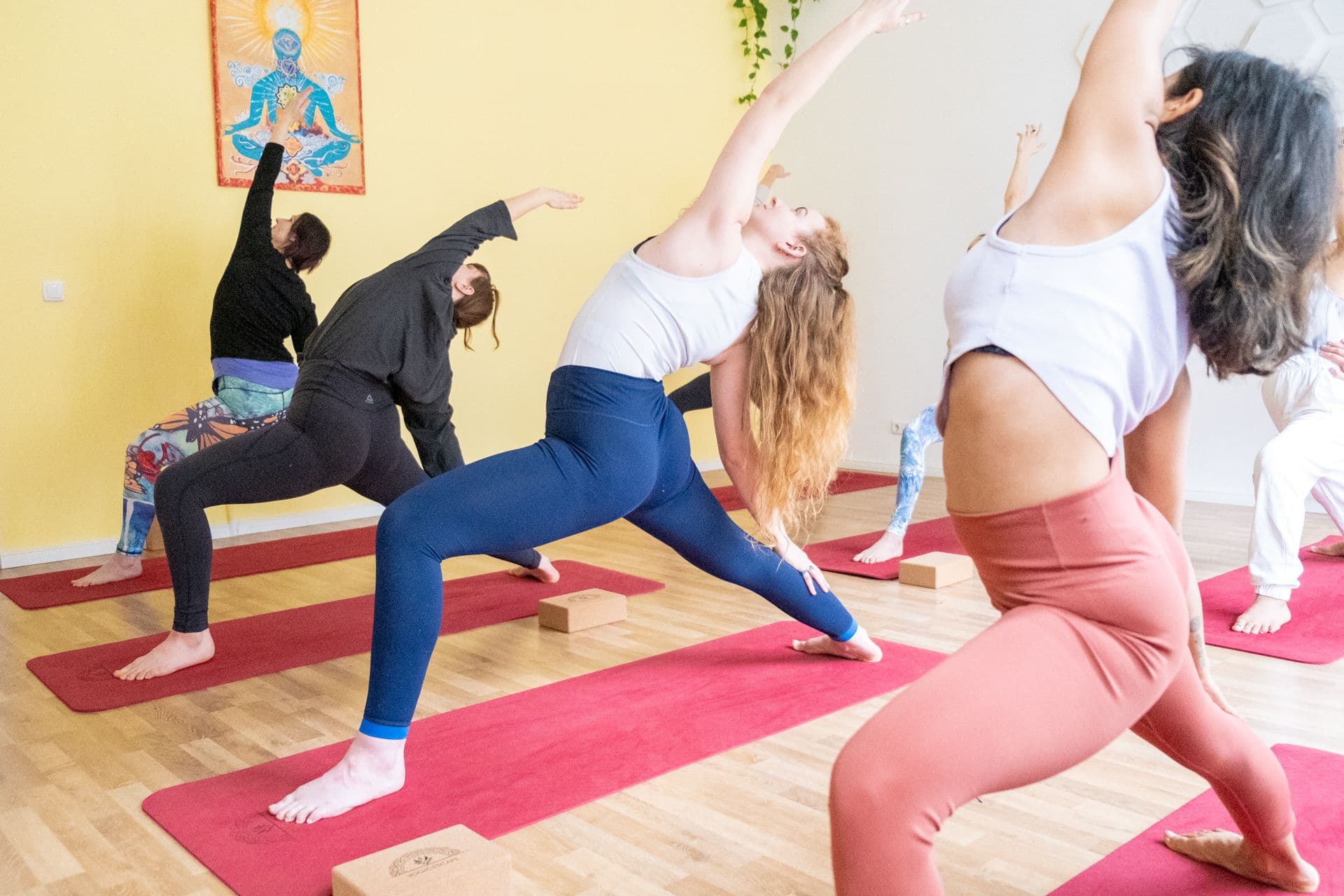
Vinyasa Yoga is a flowing style of yoga in which every movement is linked to an inhale or an exhale, so one pose leads straight into the next. The Sanskrit word vinyāsa roughly means "placing in a special way". Instead of holding each posture for a long time, you move through a sequence that the teacher builds fresh for each class.
The style goes back to T. Krishnamacharya, who taught a dynamic, breath-linked practice at the Mysore Palace in the 1930s. He said it came from an ancient text, the Yoga Korunta, that ants had destroyed. No copy has ever been found, and historians such as Mark Singleton point to 19th-century sources and the gymnastics of the time instead. His student K. Pattabhi Jois fixed the method into set series, known today as Ashtanga Vinyasa. Modern Vinyasa Flow kept the breath and the transitions but dropped the fixed order. Power Yoga followed in the US in the mid-1990s, when teachers such as Beryl Bender Birch, Bryan Kest and Baron Baptiste turned the Ashtanga heat into a fitness-leaning flow.
In practice, the first Sun Salutations warm you up fast. After ten minutes you are breathing audibly, and after twenty the thinking part of your day has usually gone quiet, because there is no room for it between one breath and the next move. Faster classes make you sweat, slower ones give you time to find each shape.
Vinyasa is the style we teach most at Yogicescape, and the classes are not all the same. Slow Vinyasa and Feel Good Vinyasa let beginners learn the shapes, while Power, Strength and Intermediate classes ask a lot more. Many start before 9:00, several last just 45 minutes so they fit before work or at lunchtime, and every class is taught in English at both studios.
What happens in a Vinyasa Flow class
0–5 min
Arriving and breath
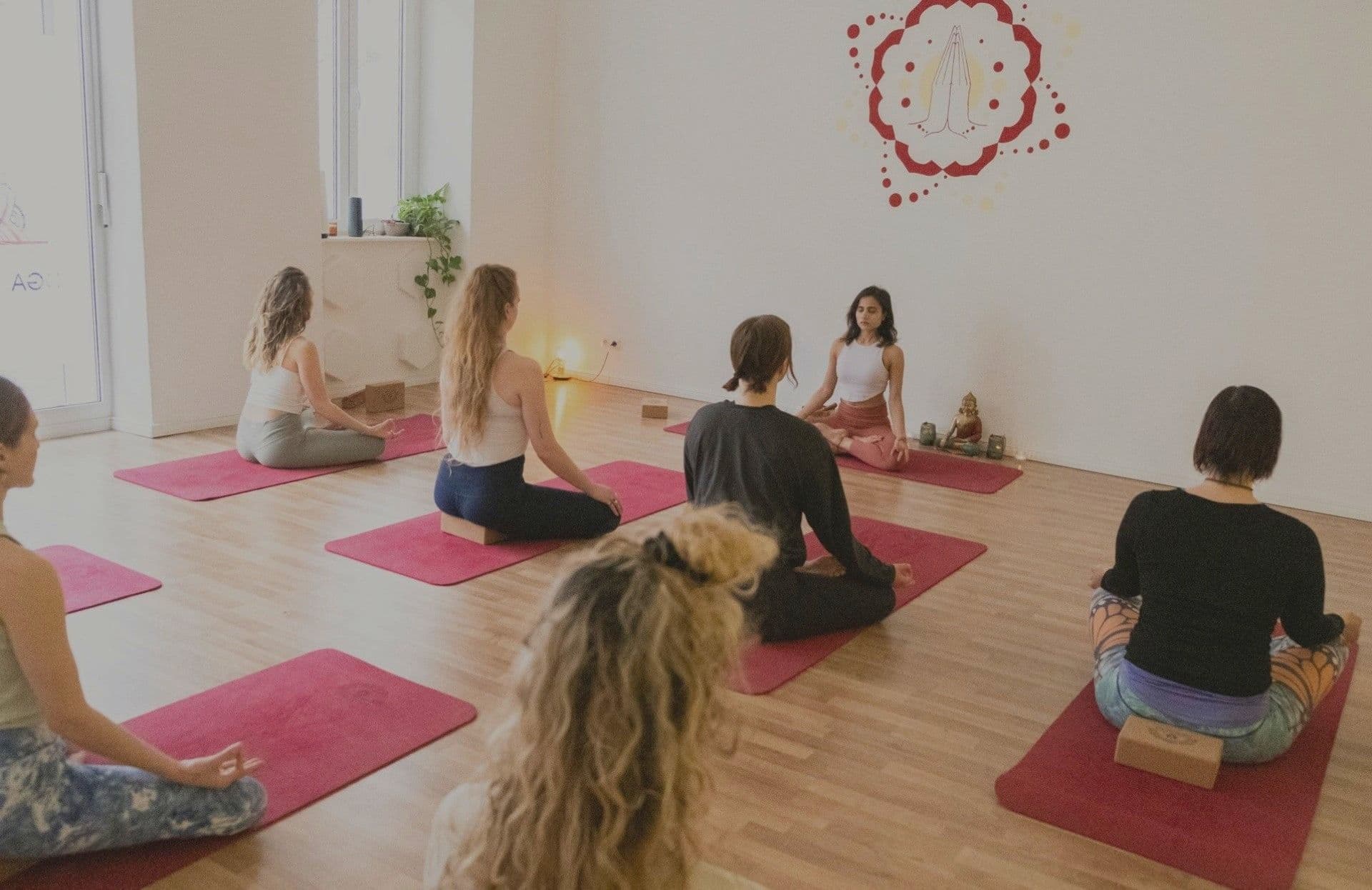
You sit or lie down and find a steady nose breath. Many teachers introduce Ujjayi here, the slightly audible breath that sets the rhythm for the whole class.
5–15 min
Sun Salutations
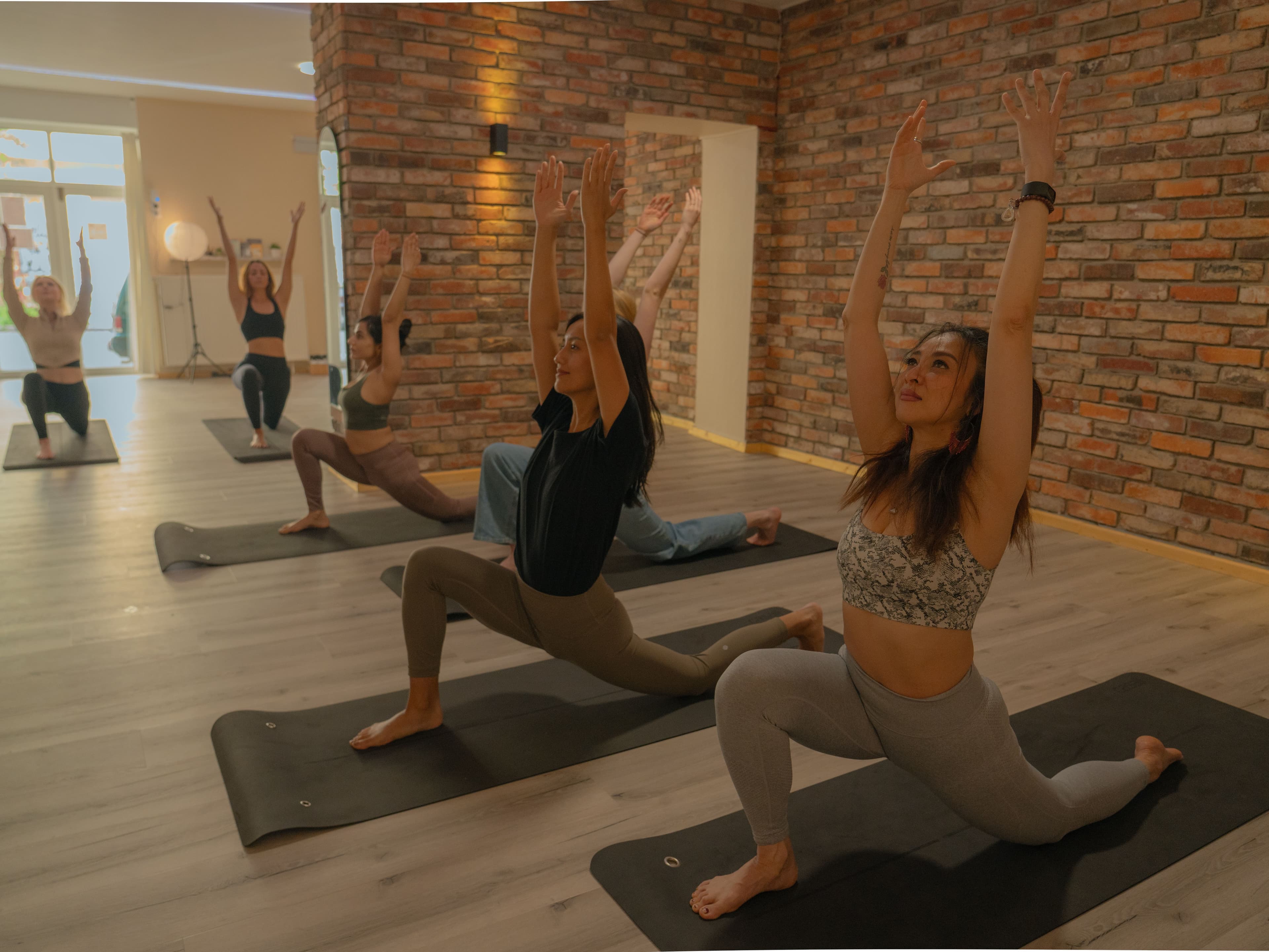
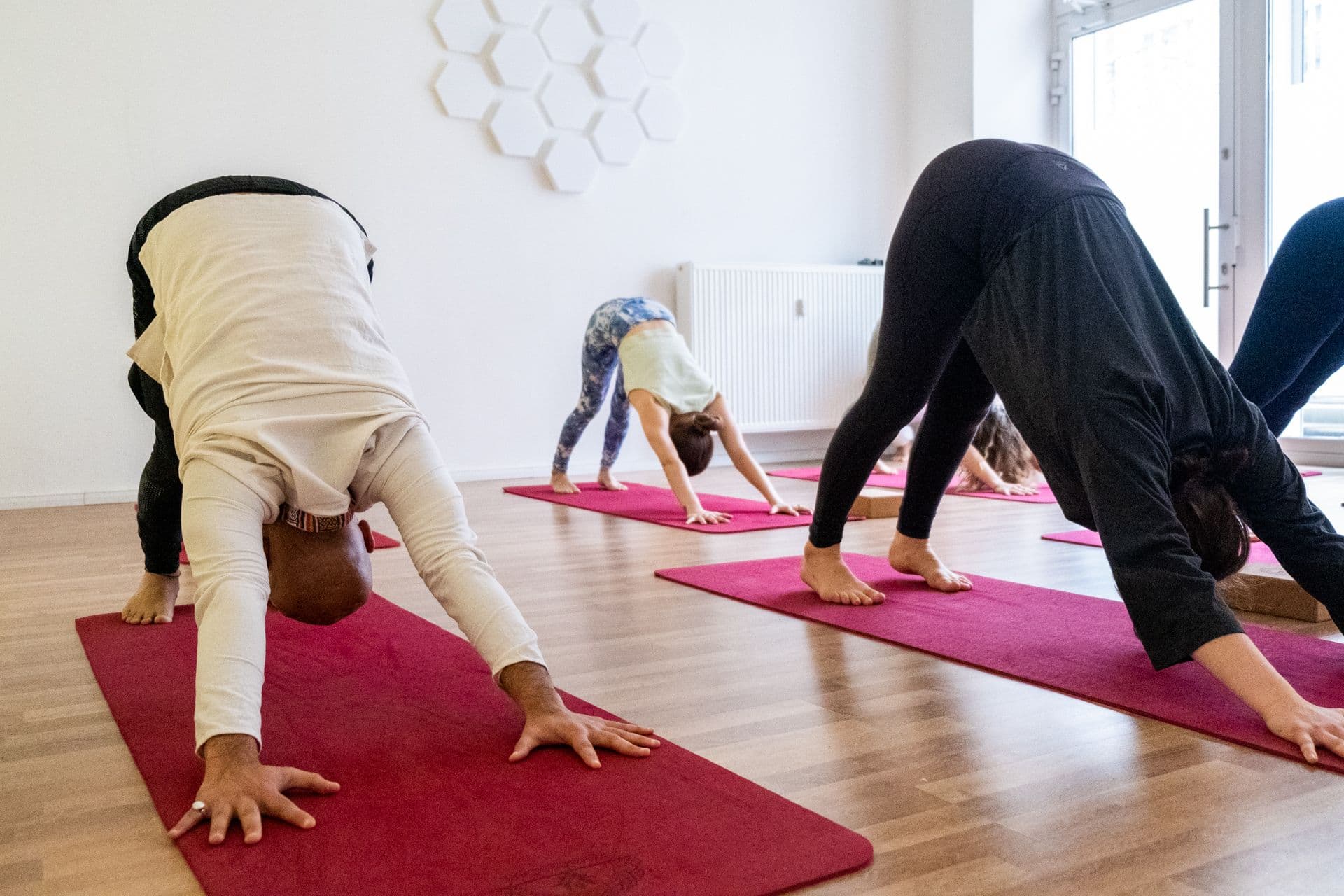
A few rounds of Sun Salutations build heat, one movement per breath. The teacher demonstrates the first rounds, and lowering with knees down in Chaturanga is completely normal.
15–45 min
Standing flow and peak
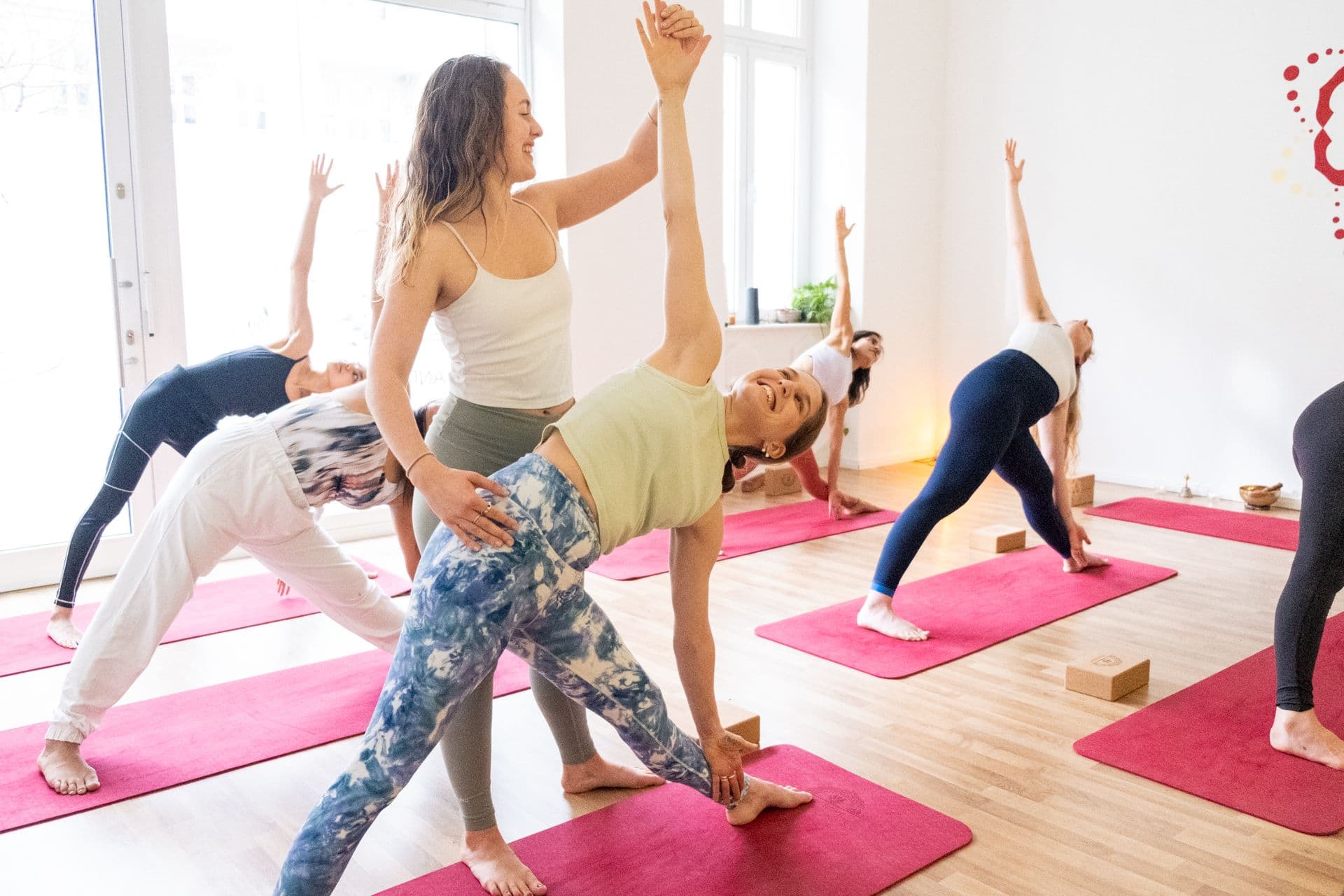
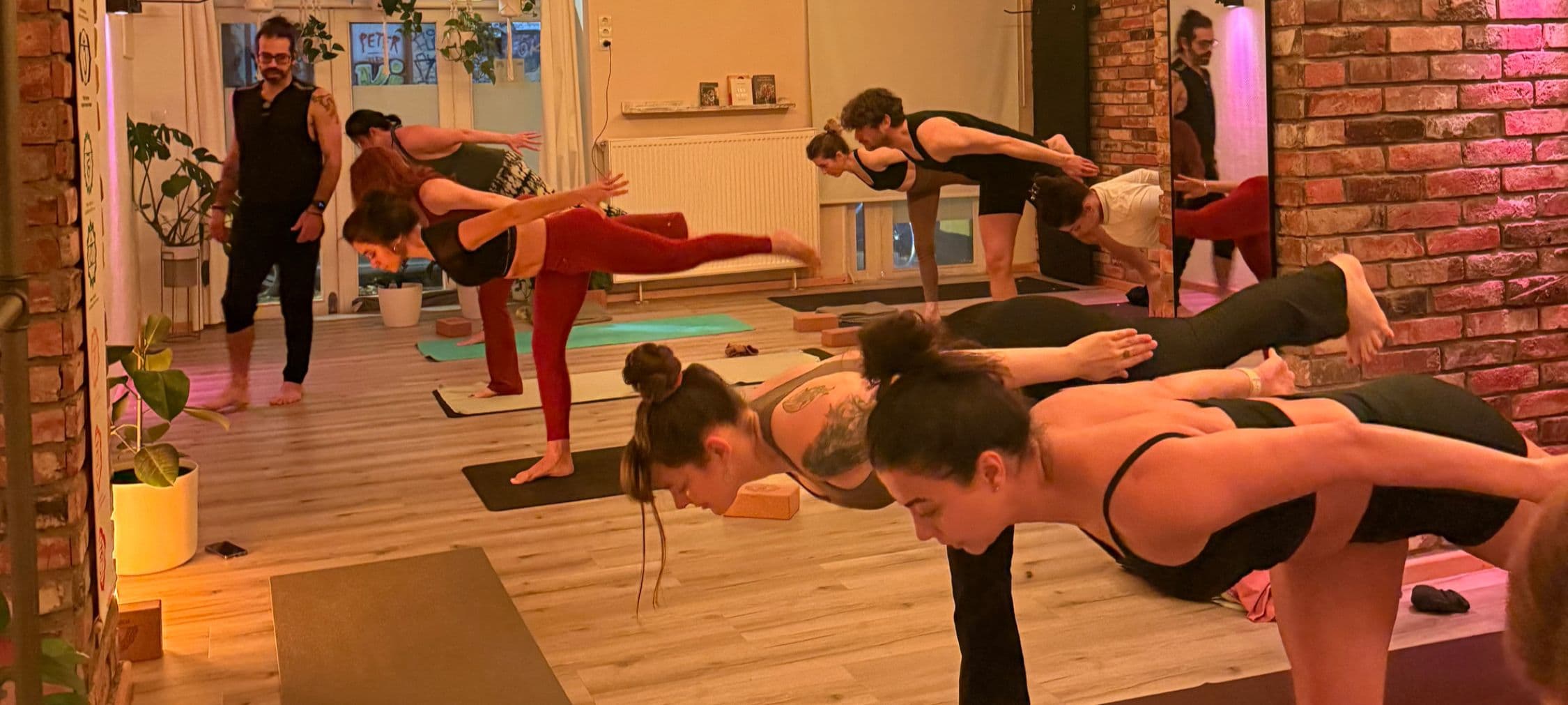
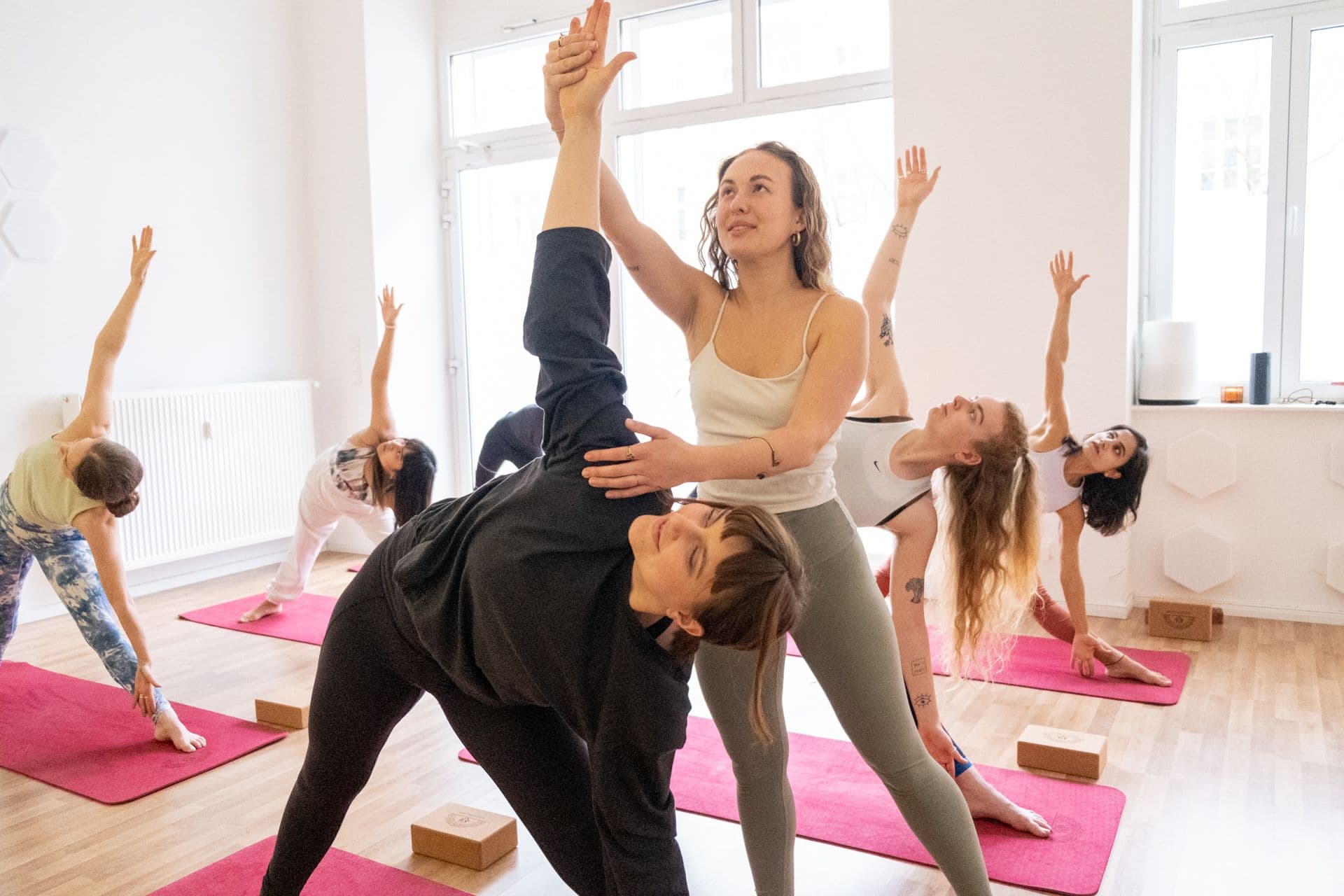
Lunges, warriors and balances strung together into a sequence, often building towards a peak pose such as a twist, a backbend or, in advanced classes, an arm balance. This is the most demanding part of the class.
45–55 min
Floor, hips and twists
The pace slows down. Seated stretches, hip openers and twists let your heart rate come back down.
55–60 min
Savasana
A few minutes lying still. In 45-minute classes the standing and floor parts are shorter, but this rest stays.
Which Vinyasa class is yours?
"Vinyasa" on a schedule can mean a gentle flow or a full hour of sweat. Here is how our classes line up, from calm to demanding. The class name tells you which one you are booking.
What Vinyasa can do, and what it can't
Vinyasa is often sold as a calorie burner and a stress cure at once. Here is what studies actually show, in plain language, with the sources linked.
Counting as exercise
Some evidenceA 60-minute Vinyasa class reached moderate intensity, the level exercise guidelines ask for. It still burned less energy than a brisk walk of the same length. It is real movement, but not a replacement for cardio. Sherman 2017
Faster flows working harder
Limited evidenceIn a small crossover trial, Sun Salutations done at high speed burned significantly more energy than the same sequence at normal speed. Power classes are more demanding than slow flows, not just in feel. Potiaumpai 2016
Getting stronger and more flexible
Limited evidenceSmall studies found better strength, flexibility and aerobic fitness after eight to ten weeks of regular yoga, usually twice a week. The groups were tiny and mostly had no control group, so treat the numbers as a direction, not a promise. Tran 2001
Unwinding after a stressful day
Limited evidenceReviews show small short-term effects of yoga on anxiety. The pace matters, though: in a small pilot study a single power-style session did not lower anxiety or cortisol, while a slow, meditative session did. For acute stress, pick a slow flow or Yin. Marshall 2020
Heart health and blood pressure
Some evidenceYoga in general is linked to lower blood pressure, resting heart rate and blood lipids. The studies were not specific to Vinyasa and many had a high risk of bias. Cramer 2014
Losing weight
Limited evidenceAcross studies, yoga showed no effect on weight in general populations. BMI dropped slightly only in people who were already overweight, and that result was not robust. Vinyasa can support an active routine, but it is not a weight-loss programme. Lauche 2016
Detox and "heat releasing blockages"
Traditional viewThere is no data showing that sweating in class detoxifies the body. The idea that heat releases emotional blockages or opens chakras is a traditional way of talking about practice, not something research supports.
Is Vinyasa Flow for you?
A good fit if you …
- like to keep moving and get bored holding one pose for minutes
- want exercise and a clear head in 45 to 60 minutes, often before work
- already run, cycle or lift and want mobility plus strength endurance: try the Strength or Power classes
- are new to yoga but reasonably fit: start with Slow Vinyasa, Feel Good Vinyasa or Vinyasa Hatha Flow
- find it easier to switch off when your body is busy than when you sit still
- prefer a class taught in English
Choose something else, or adapt, if you …
- are a complete beginner with low fitness or stiff wrists and shoulders: start with Hatha or Slow Vinyasa, not Power or Intermediate, and lower your knees in Chaturanga
- mainly want to calm down after a stressful day: a power session did not lower acute stress in a pilot study, so choose Yin or Slow Vinyasa
- are pregnant: speak to your midwife or doctor and the teacher first, avoid overheating, and start with prenatal yoga
- are 65 or older, have osteoporosis or a recent injury: talk to the teacher before class and start with gentler classes such as Hatha
- have severe high blood pressure or glaucoma: some poses, especially inversions, need to be skipped or modified, so Hatha or Yin may suit you better
- feel sharp pain in your wrists, shoulders or lower back: come out of the pose and rest in Child's Pose, which is always allowed
Vinyasa Flow compared
| Style | Pace | How it feels | Best for |
|---|---|---|---|
| Vinyasa Flow | Continuous, breath-linked, 1–5 breaths per pose | Warmth, steady effort, sequence changes every class | Fitness, mobility and focus for most people with some fitness |
| Hatha Yoga | Pose by pose, 5–10 breaths | Light effort, time for alignment | Beginners and learning the basics |
| Yin Yoga | Very slow, 3–5 min holds | Muscles relaxed, stillness, passive stretch | Stress and recovery |
| Ashtanga Yoga | Continuous, fixed series | Same sequence every time, moderate effort | People who love structure and repetition |
| Pilates | Controlled repetitions | Precise, core-focused, light to moderate | Core strength and posture |
When and where
Vinyasa runs throughout the week at both studios: early-morning classes before work, a lunchtime flow and evening classes. Classes last 45 or 60 minutes, and you book a single drop-in or use any class pass.
Teachers who teach Vinyasa Flow


Updated: September 2026
Frequently Asked Questions