
Yin Yoga · All levels · 45–60 min · English
Yin Yoga · All levels · 45–60 min · English
Yin Yoga · All levels · 45–60 min · English
Yin Yoga · All levels · 45–60 min · English
Yin Yoga · All levels · 45–60 min · English
Yin Yoga · All levels · 45–60 min · English
What is Yin Yoga?
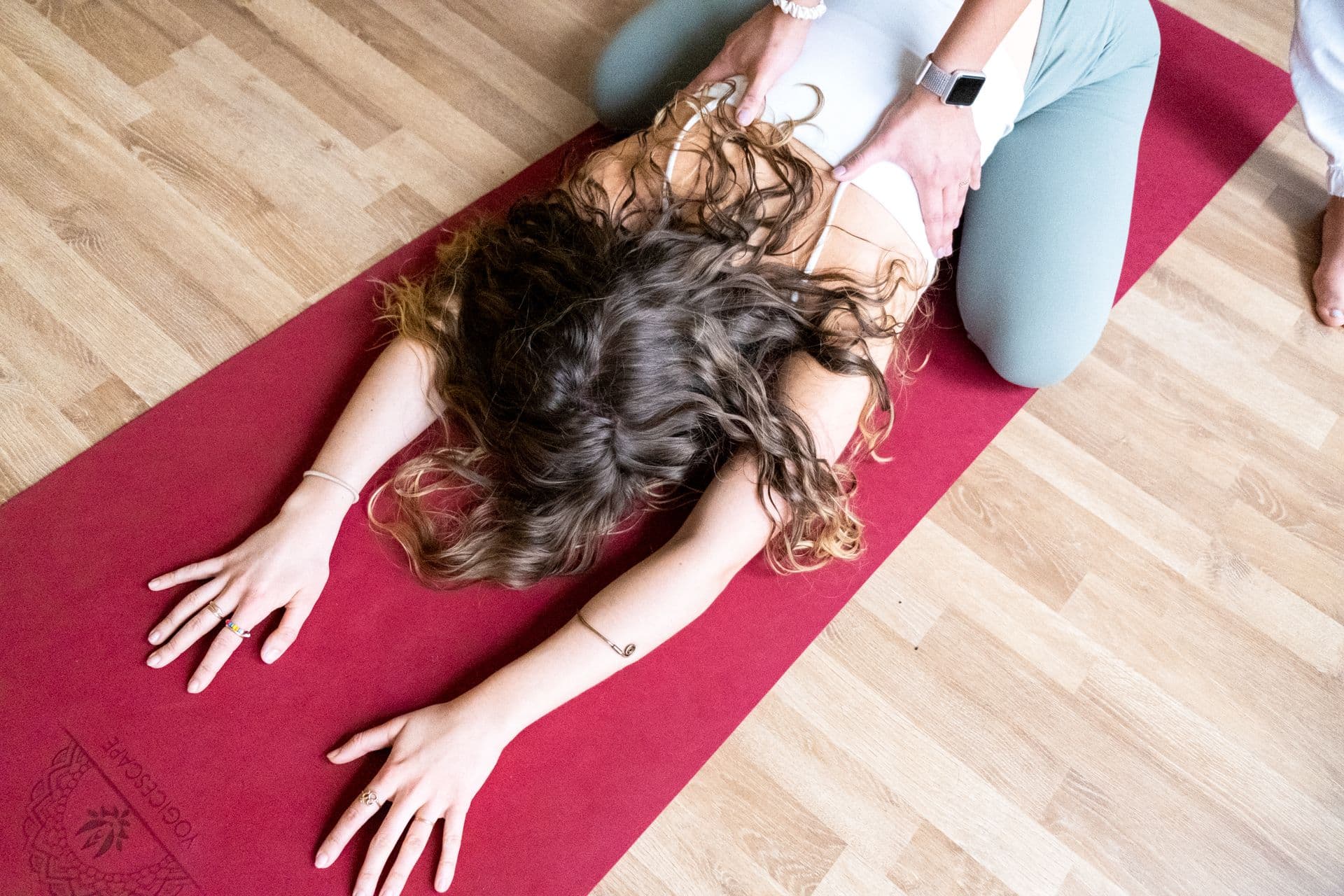
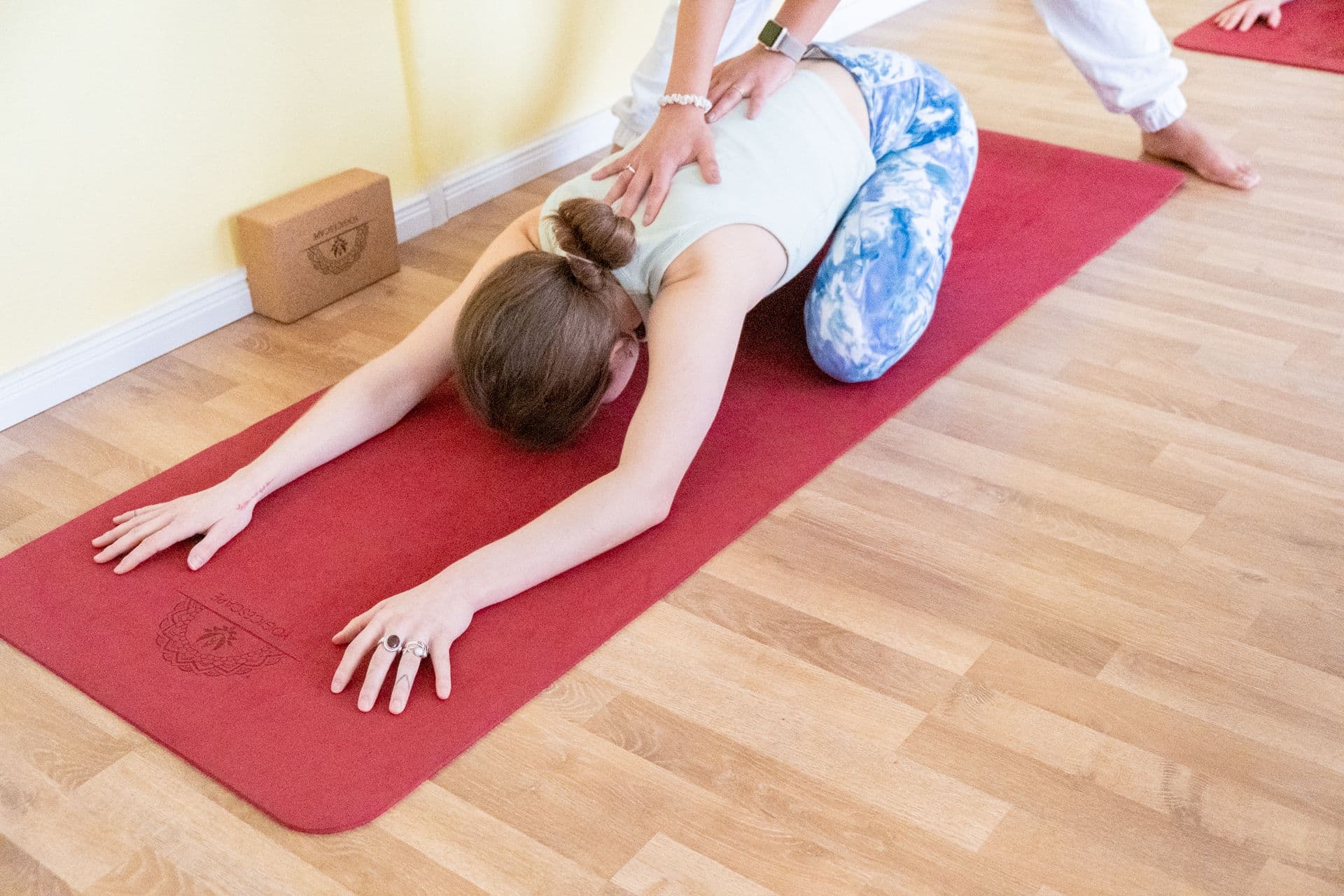
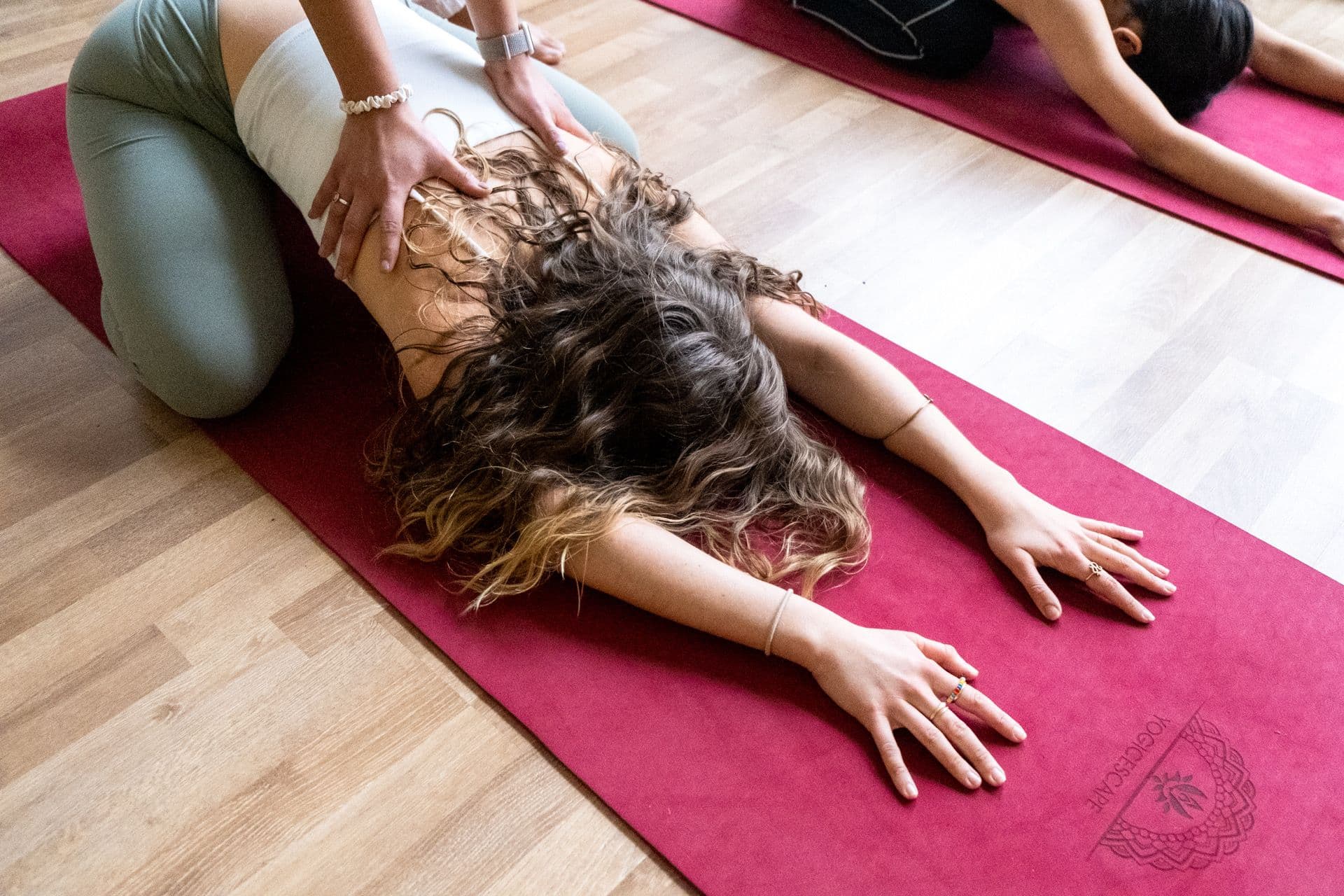
Yin Yoga is a slow style of yoga in which you hold passive floor poses for three to five minutes while your muscles stay relaxed. Instead of building heat, you find a moderate edge in the stretch, stay still and let time do the work.
It is younger than it sounds. The American teachers Paulie Zink and Paul Grilley shaped it from the late 1970s onwards, drawing on Daoist ideas and older hatha postures. Grilley's original aim was simple: to be able to sit comfortably in meditation. Sarah Powers gave it the name Yin Yoga.
The first minute of a hold usually feels easy. Minutes three and four are where it gets interesting: the body settles, the mind gets restless, and you practise staying anyway. That is why people leave a Yin class feeling calm rather than tired.
At Yogicescape, Yin is our quiet counterweight to the Vinyasa and Pilates classes. Almost every Yin class ends with live singing bowls or a sound bath, and every class is taught in English.
What happens in a Yin Yoga class
0–5 min
Arriving
You lie or sit down, notice your breath and let the day drop away. No warm-up flow, no standing sequences.
5–45 min
Five to eight long holds
Poses such as Butterfly, Sphinx, Dragon or a supine twist, each held for about three to five minutes with bolsters and blocks. Between poses you rest for a few breaths to feel the after-effect.
45–55 min
Sound and rest
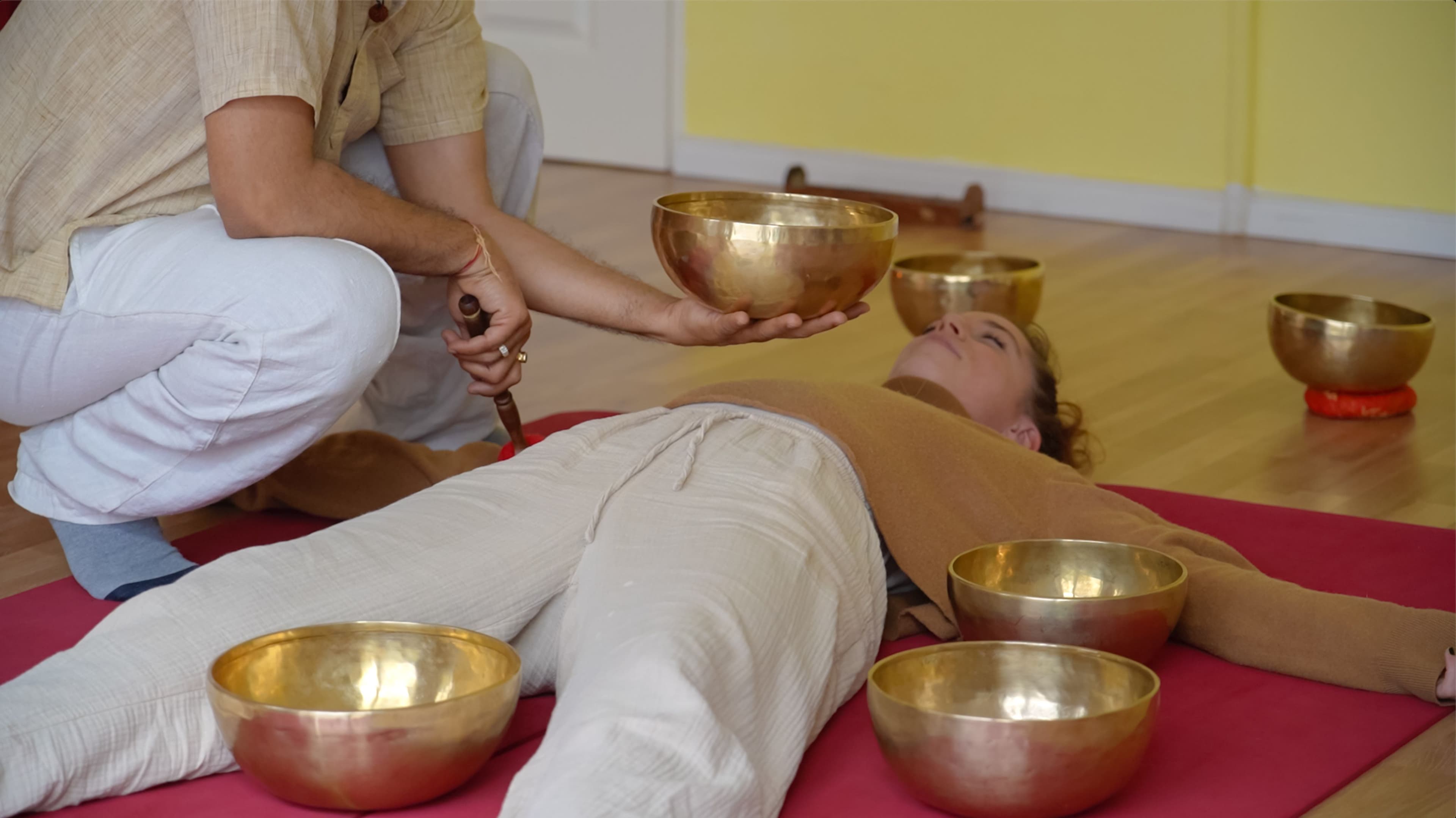
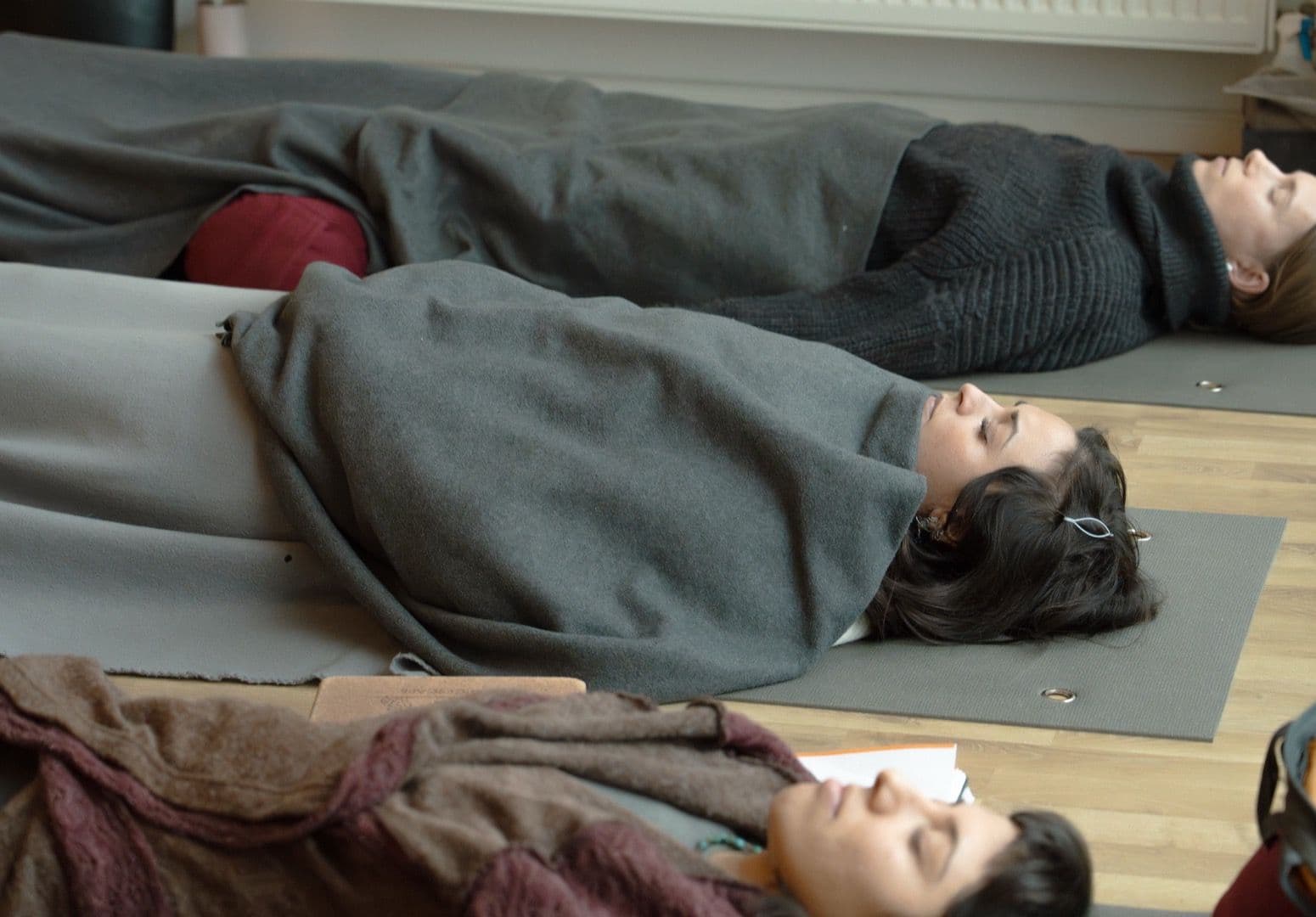
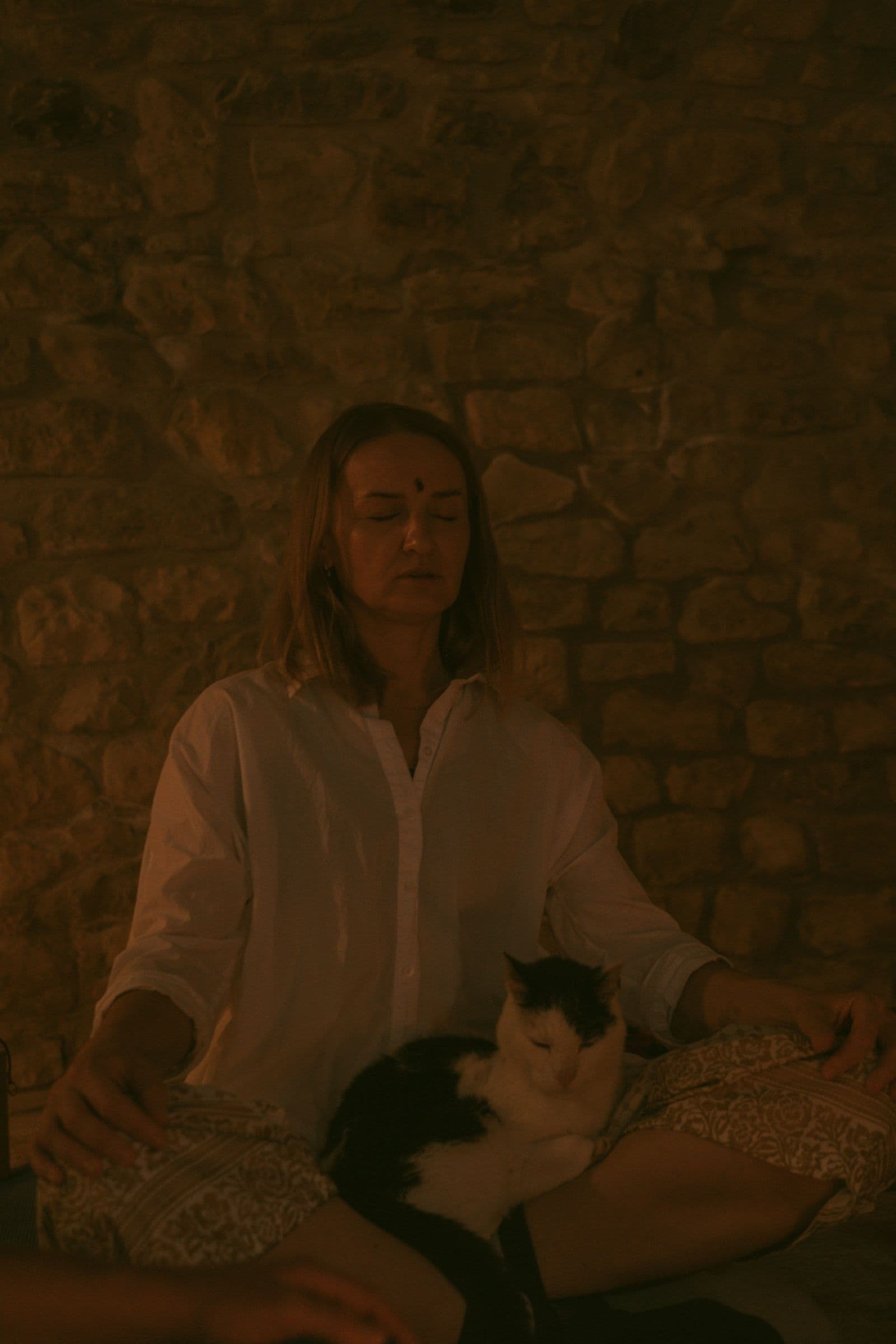
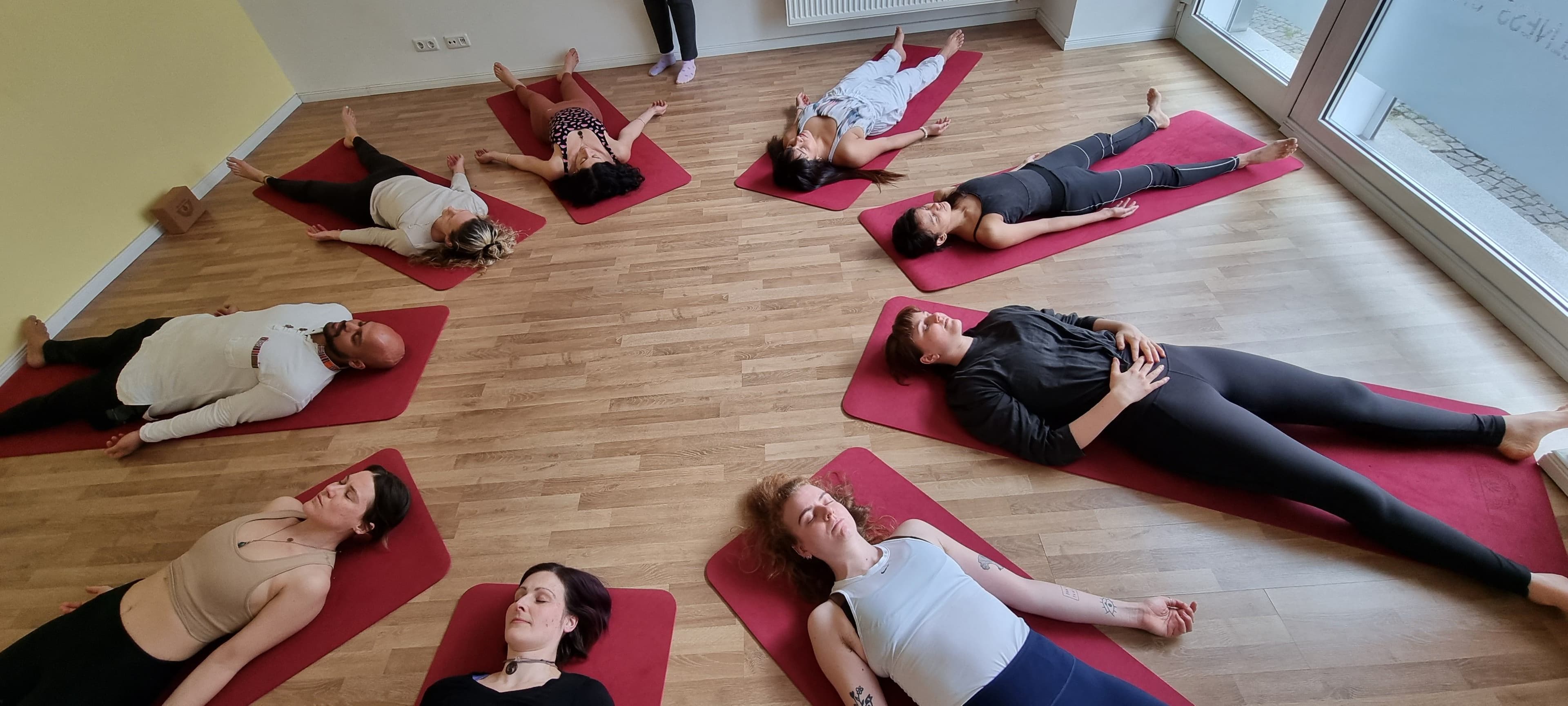
In most of our Yin classes the teacher plays singing bowls while you rest. Some formats bring the bowls onto or near your body, others add a scent.
55–60 min
Slowly back
You come up gently. Hips and back may feel stiff for a moment after the stillness. That is normal and passes quickly.
Yin with live sound: our formats
Same slow principle, different finish. The class names on the schedule tell you which one you are booking.
What Yin can do, and what it can't
Yin Yoga is surrounded by big promises. Here is what studies actually show, in plain language, with the sources linked.
Feeling less anxious and stressed
Some evidenceIn a randomised trial with stressed adults, five weeks of Yin reduced anxiety and sleep problems compared with a control group. Stress and low mood improved clearly only when Yin was combined with mindfulness. A second trial found lower anxiety after online Yin sessions. Both studies were small. Daukantaitė 2018
Feeling more flexible
Good evidenceRegular static stretching reliably increases how far you can move. In the first weeks this mostly comes from your nervous system tolerating more stretch, not from the tissue itself changing. Freitas 2018
Calming your body down
Some evidenceYoga in general is linked to lower cortisol, heart rate and blood pressure. No study has measured this for Yin specifically, and none has shown that Yin "activates the vagus nerve". Pascoe 2017
Singing bowls deepening relaxation
Limited evidenceEarly studies are encouraging: in one trial a single singing-bowl session lowered anxiety more than a waiting-list control. Reviews still call the evidence limited. Rio-Alamos 2023
Releasing fascia or "adhesions"
Not supportedThere is no human evidence that passive holds dissolve adhesions or remodel fascia. Stretching studies of up to eight weeks show only trivial changes in muscle and tendon structure. Freitas 2018
Building strength or losing weight
Not supportedYin is not a workout. In one trial it did not improve upper-body strength, and yoga overall shows no effect on weight in general populations. Lauche 2016
Meridians and energy lines
Traditional viewMany Yin teachers use the meridian map from Chinese medicine as a way of thinking about the poses. It is a traditional framework, not something anatomy or research has confirmed.
Is Yin Yoga for you?
A good fit if you …
- feel wired, stressed or restless by the evening and want to come down without a workout
- are new to yoga or not very flexible: everything happens on the floor, with props
- already run, climb, lift or do Vinyasa and want a slow counterweight
- find sitting meditation hard and want something for the body to do while the mind settles
- sleep badly and like the idea of an evening class that ends lying down
- prefer a class taught in English
Choose something else, or adapt, if you …
- want to sweat, build strength or lose weight: try Vinyasa, Power Vinyasa or Pilates instead
- are hypermobile: you can come, but stay well inside your range and keep your muscles lightly engaged
- are pregnant: start with prenatal yoga and speak to your midwife or doctor; avoid deep hip openers and long holds on your back
- have osteoporosis: avoid rounded forward folds and deep twists, and ask for upright variations
- have an acute injury, recent surgery or glaucoma: check with your doctor first and skip head-down poses
- feel sharp, electric or tingling sensations in a pose: come out straight away, that is never the goal
Yin Yoga compared
| Style | Pace | How it feels | Best for |
|---|---|---|---|
| Yin Yoga | Very slow, 3–5 min holds | Muscles relaxed, moderate stretch, mentally demanding | Winding down, stretch tolerance, practising stillness |
| Hatha Yoga | Moderate, holds of a few breaths | Muscles engaged, standing and floor poses | A balanced foundation |
| Restorative Yoga | Very slow, fully supported | As little sensation as possible, lots of props | Deep rest and recovery |
| Yin Yang Yoga | Active first, then long holds | Warm-up effort, then stillness | Easing into Yin |
| Vinyasa Flow | Flowing, breath-linked | Heat, effort, movement | Fitness and energy |
When and where
Yin runs several times a week at both studios, mostly between 16:30 and 20:30, with a late-morning class on some days. Classes last 45 or 60 minutes, and you book a single drop-in or use any class pass.
Teachers who teach Yin Yoga


Updated: September 2026
Frequently Asked Questions