
Ashtanga · Mysore style · All levels · 60–90 min · English
Ashtanga · Mysore style · All levels · 60–90 min · English
Ashtanga · Mysore style · All levels · 60–90 min · English
Ashtanga · Mysore style · All levels · 60–90 min · English
Ashtanga · Mysore style · All levels · 60–90 min · English
Ashtanga · Mysore style · All levels · 60–90 min · English
What is Ashtanga Yoga?
Ashtanga Yoga is a dynamic style in which you practise the same set sequence of poses every time, with each movement linked to an inhale or an exhale. Three things hold your attention throughout, often called tristhana: the breath, the bandhas (a gentle lift in the pelvic floor and lower belly) and a fixed gaze point for each pose. Because the sequence never changes, you stop thinking about what comes next and start noticing how you move.
The name comes from Patanjali's Yoga Sutra, where "ashtanga" means the eight limbs of yoga. The sequence itself is a modern method. In the 1930s Tirumalai Krishnamacharya taught a vigorous, breath-linked practice at the Mysore palace in southern India, and his student K. Pattabhi Jois founded his own institute in Mysore in 1948. Jois said the sequences came from an old text that has never been found. Historians such as Mark Singleton also see early 20th-century gymnastics in them, so "a modern method with old roots" is the honest description.
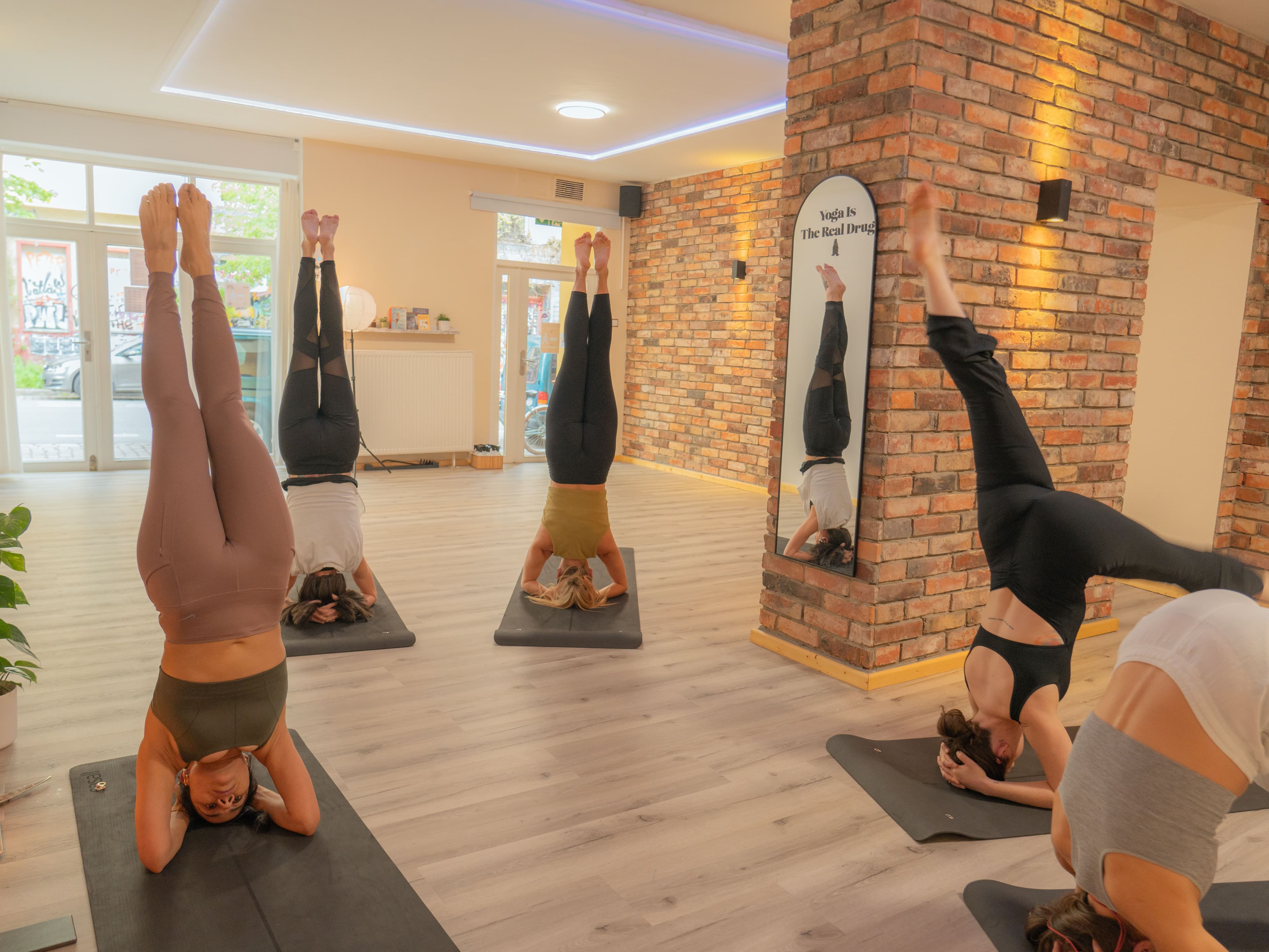
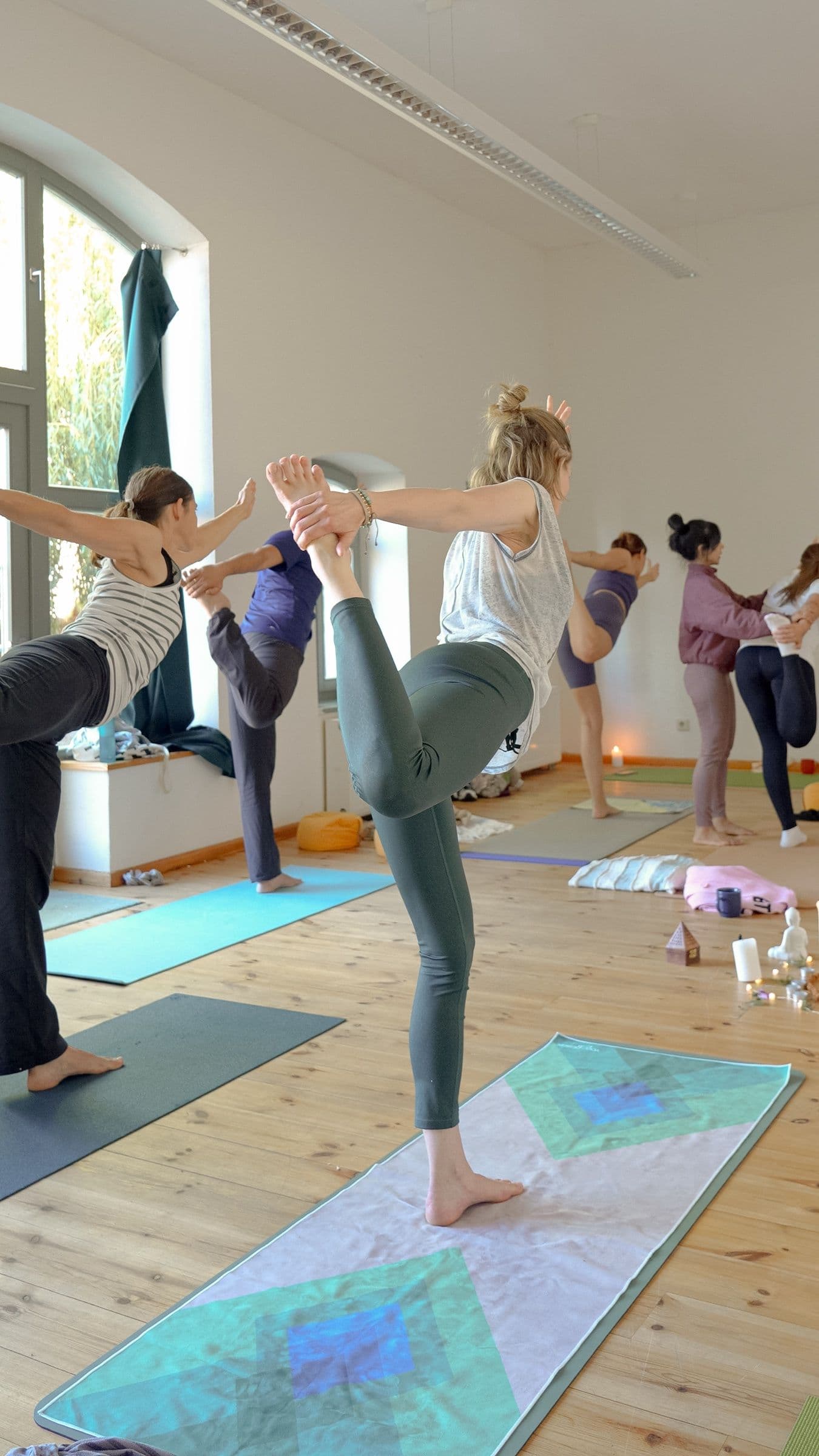
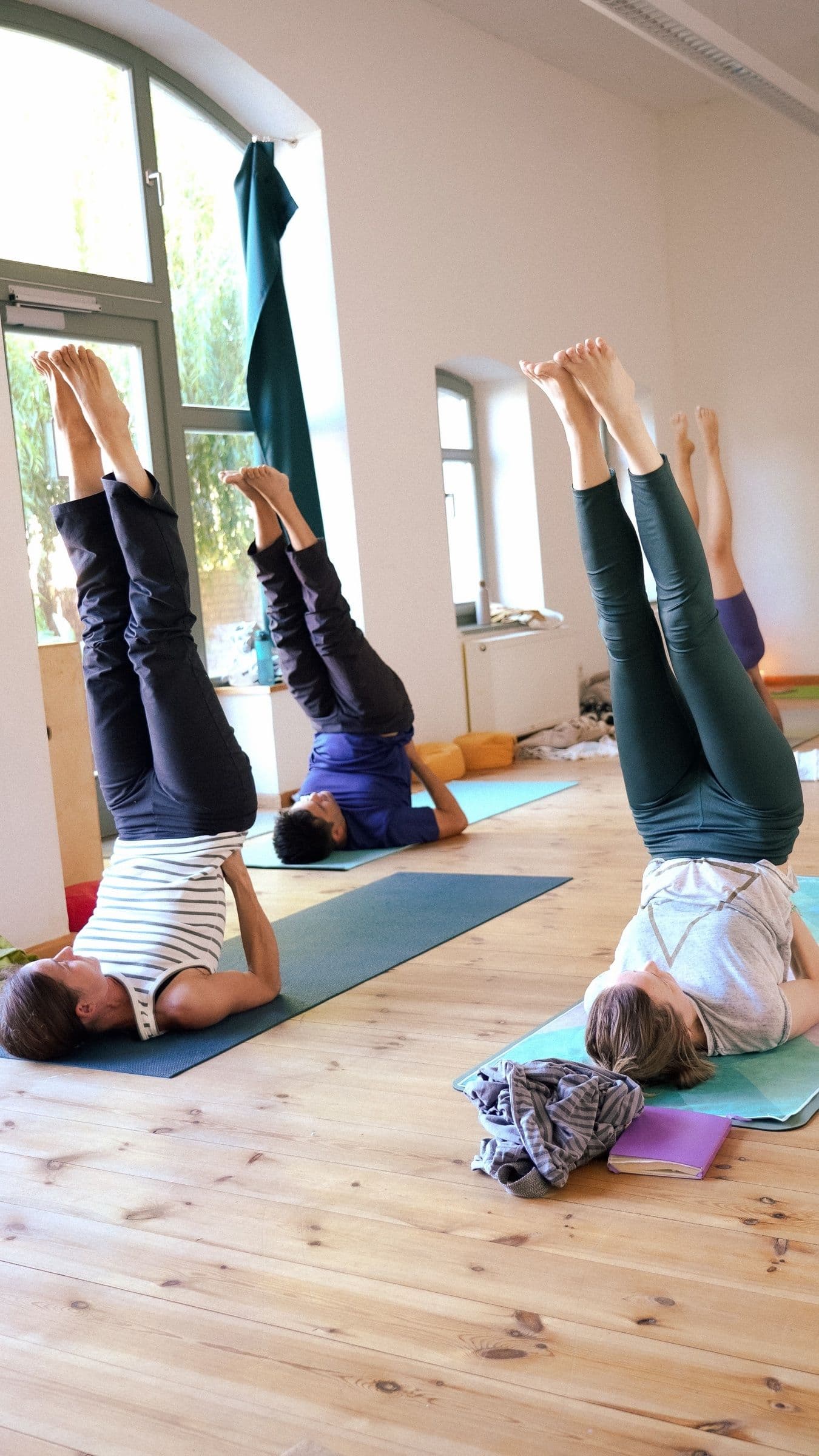
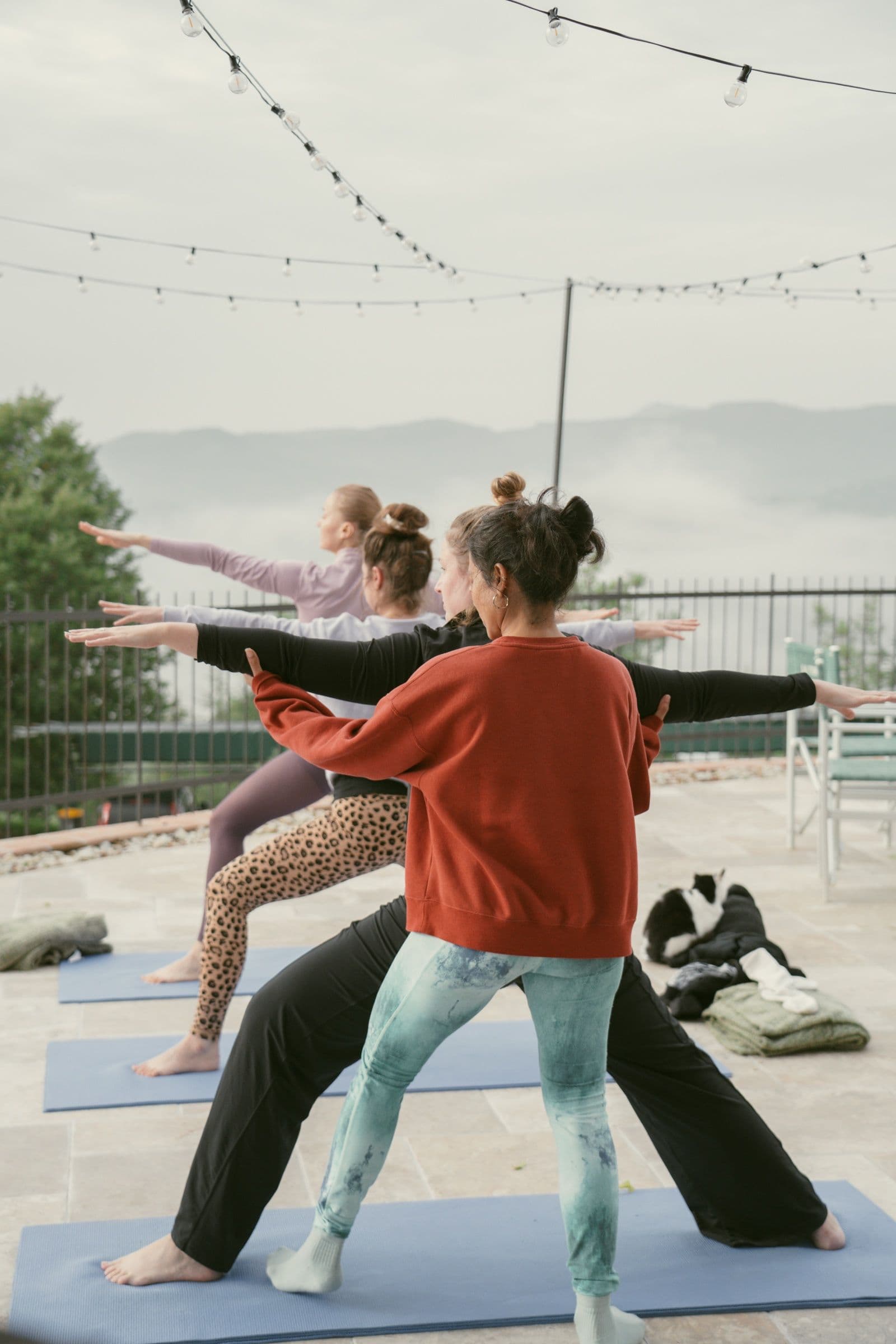
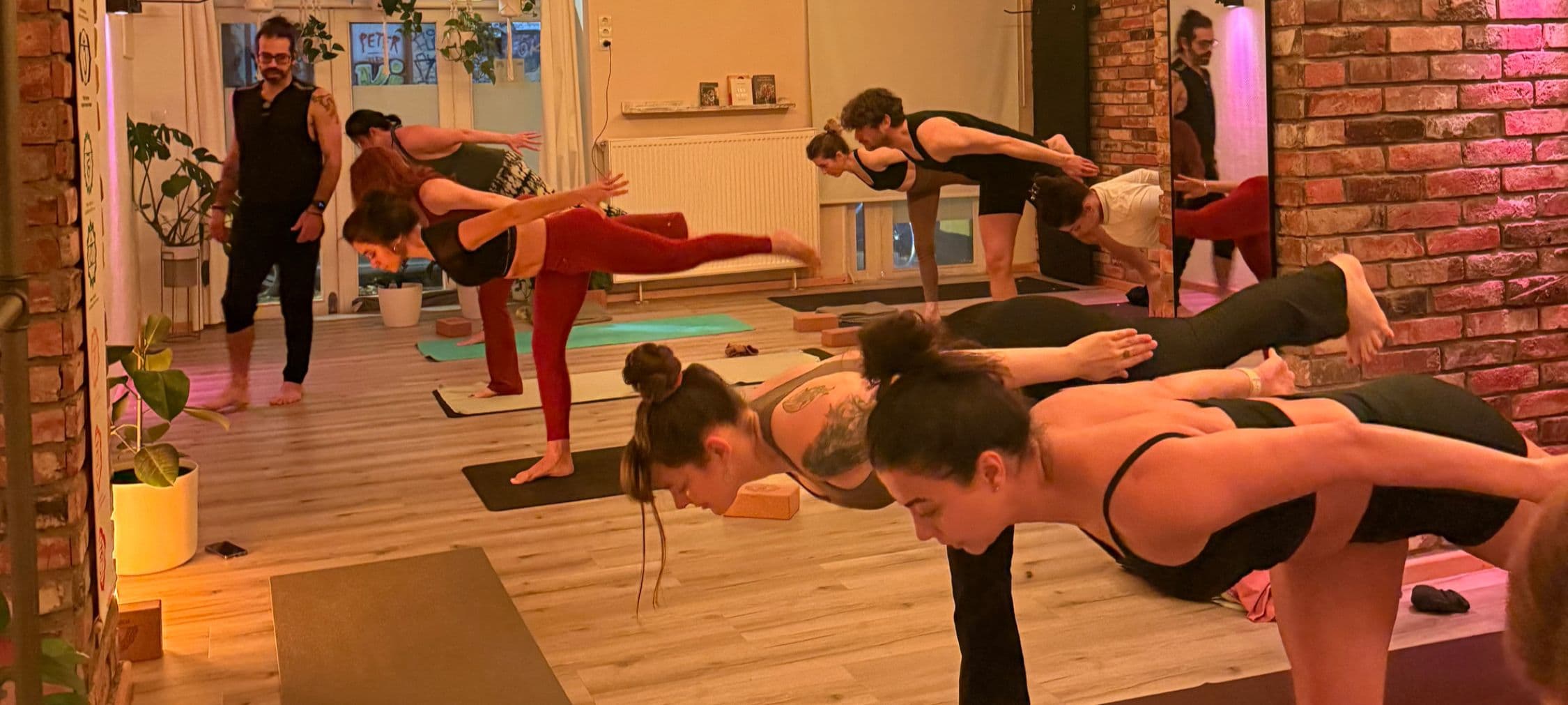
Mysore style is the way Ashtanga was originally taught. There is no teacher calling out poses at the front. Everyone in the room works through their own part of the sequence at their own breathing pace, while the teacher moves between students, shows the next pose and helps where it is needed. On your first morning you learn a short sequence one-to-one, inside a quiet group. That makes Mysore one of the easiest ways to start Ashtanga, not the hardest.
At Yogicescape, Shambhu teaches early-morning Mysore sessions in Prenzlauer Berg, and every session is in English. Many Berlin shalas teach mainly in German; here you learn the method in English, before work. You also stay flexible: the same pass covers Vinyasa, Yin and sound classes at both of our studios, so Ashtanga can sit next to whatever else you practise.
What happens in a Ashtanga Yoga class
Arrival
Come in within the start window
The room is quiet and others are already practising, each at a different point in the sequence. There is no music and no one counting at the front. Roll out your mat and wait for the teacher to come to you.
Before you start
Tell the teacher you are new
Mention any injuries, and say whether you are happy with hands-on help or prefer verbal cues only. Both are completely fine.
First 15 min
Learn a short sequence
You do not need to know anything in advance. The teacher shows you Sun Salutation A, perhaps B, and a few standing poses, and how the breath fits each movement.
15–35 min
Practise at your own pace
You repeat that short sequence to the rhythm of your own breath. The teacher checks in regularly, corrects gently and answers questions quietly.
After 20–40 min
Rest and go
You finish lying down, then you are done for the day, even if others keep practising. Next time you repeat what you learned, and new poses are added once the previous ones feel steady.
Breath, bandha, gaze: how the method works
Ashtanga looks like a sequence of poses. What actually makes it work is what you do with your attention inside them.
What Ashtanga can do, and what it can't
Ashtanga attracts bold claims, from "the hardest yoga" to detox. Here is what research actually supports, in plain language, with sources linked where they exist.
Getting fitter and stronger
Limited evidenceSun salutations reach moderate exercise intensity, but a whole hatha-style session averaged only light intensity in the study that measured it. Continuous Ashtanga is likely at the higher end, yet direct measurements for Ashtanga are rare. Hagins 2007
Blood pressure and blood sugar
Some evidenceReviews show improvements in blood pressure and blood sugar for yoga in general, mostly styles with breathing and relaxation. None of these studies looked at Ashtanga, so the results cannot simply be transferred. Thind 2017
Better balance
Limited evidenceA small eight-week pilot trial of Ashtanga-based yoga with 21 visually impaired adults found improved postural stability. Encouraging, but far too small to generalise. Jeter 2015
Focus and a calmer mind
Limited evidenceA fixed sequence and steady breath focus make this plausible, and yoga in general shows mental-health benefits. No trial has tested it for Ashtanga specifically.
Injury risk
Limited evidenceIn one survey, 62% of Ashtanga practitioners reported an injury lasting over a month, most often knees, hamstrings or lower back. The survey had no comparison group. Across 94 randomised trials, yoga overall was as safe as usual care and exercise. Never force lotus or deep forward folds. Cramer 2015
Detox: "sweating out toxins"
Not supportedNot supported. Your liver and kidneys handle waste products; sweat does not flush out toxins in any meaningful amount.
Resting on moon days
Traditional viewMany Ashtanga schools skip practice on full and new moon days, explained with ideas about energy. It is a tradition some teachers keep, not something research has examined.
Is Ashtanga Yoga for you?
A good fit if you …
- like structure and repetition, and enjoy seeing clear progress from week to week
- are an early riser, or want your practice done before work starts
- come from Vinyasa or Power Vinyasa and want to learn the method flow yoga grew out of
- want individual attention from a teacher without paying for private classes
- are new to yoga and like learning one step at a time instead of keeping up with a group
- want to practise Ashtanga in English
Choose something else, or adapt, if you …
- have knee problems or very tight hips: you can come, but never force lotus, and tell the teacher so poses can be swapped
- have sore or weak wrists: sun salutations put a lot of weight on your hands, so start slowly and ask for modifications
- have acute back pain, a disc problem, a recent injury, high blood pressure or glaucoma: check with your doctor first, as forward folds, jumps and inversions need adapting
- are pregnant: this is not the time to start Ashtanga; speak to your midwife or doctor and try our prenatal classes instead
- want a different class every time: the fixed sequence is the point, so Vinyasa will suit you better
- feel very stiff and want a slower start: Yin Yoga or an all-levels Vinyasa class is a gentler first step
Ashtanga Yoga compared
| Style | Pace | How it feels | Best for |
|---|---|---|---|
| Ashtanga / Mysore | Breath-counted; your own pace in Mysore | Same sequence each time, individual guidance, warm and demanding | Structure, routine, learning step by step |
| Vinyasa Flow | Flowing, breath-linked, led | Different sequence each class, moderate to high effort | Variety, energy, all-round fitness |
| Power Vinyasa | Fast and intense, led | Strength focus, high effort | Experienced students who want a strong workout |
| Hatha Yoga | Moderate, holds of a few breaths | Light to moderate effort, focus on alignment | A calm, balanced foundation |
| Yin Yoga | Very slow, 3–5 min floor holds | Muscles relaxed, low effort, mentally demanding | Winding down and practising stillness |
When and where
Ashtanga runs as early-morning Mysore sessions, mainly at our Prenzlauer Berg studio, with a later slot on some days. Sessions last 60 to 90 minutes, and beginners often leave earlier. Book a single drop-in or use any class pass.
Teachers who teach Ashtanga Yoga


Updated: September 2026
Frequently Asked Questions