
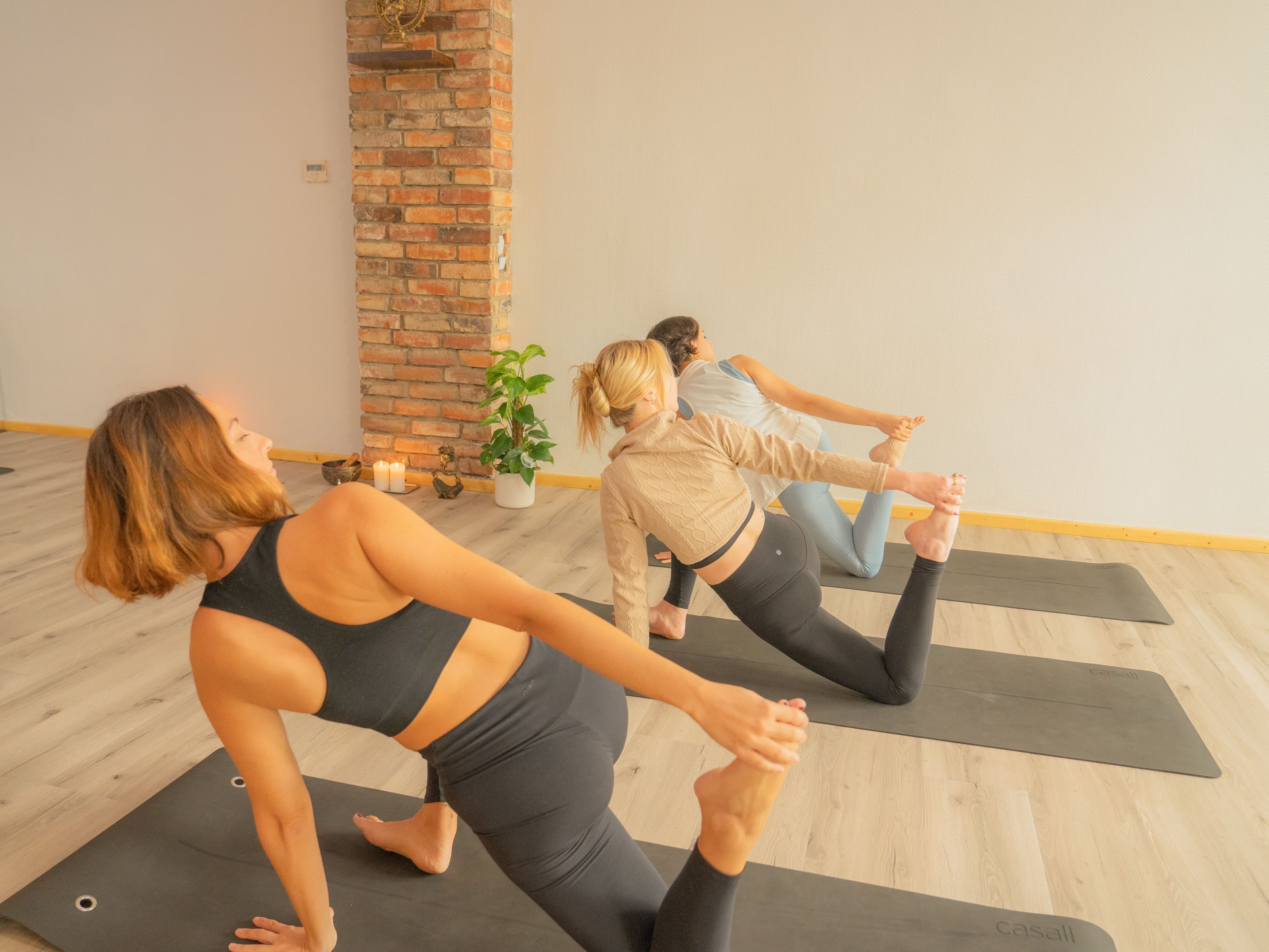
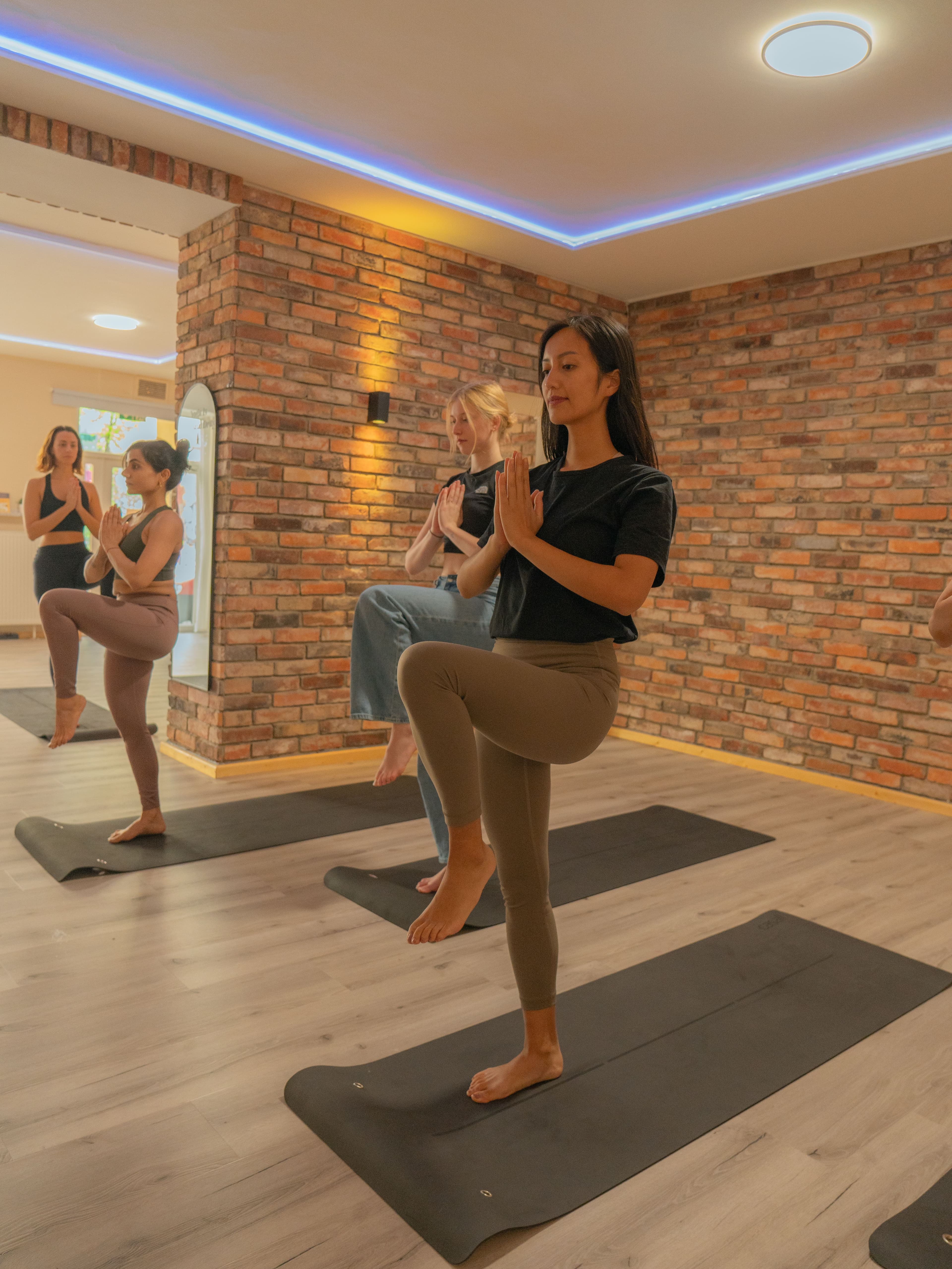
Mat Pilates · All levels · 45 min · English
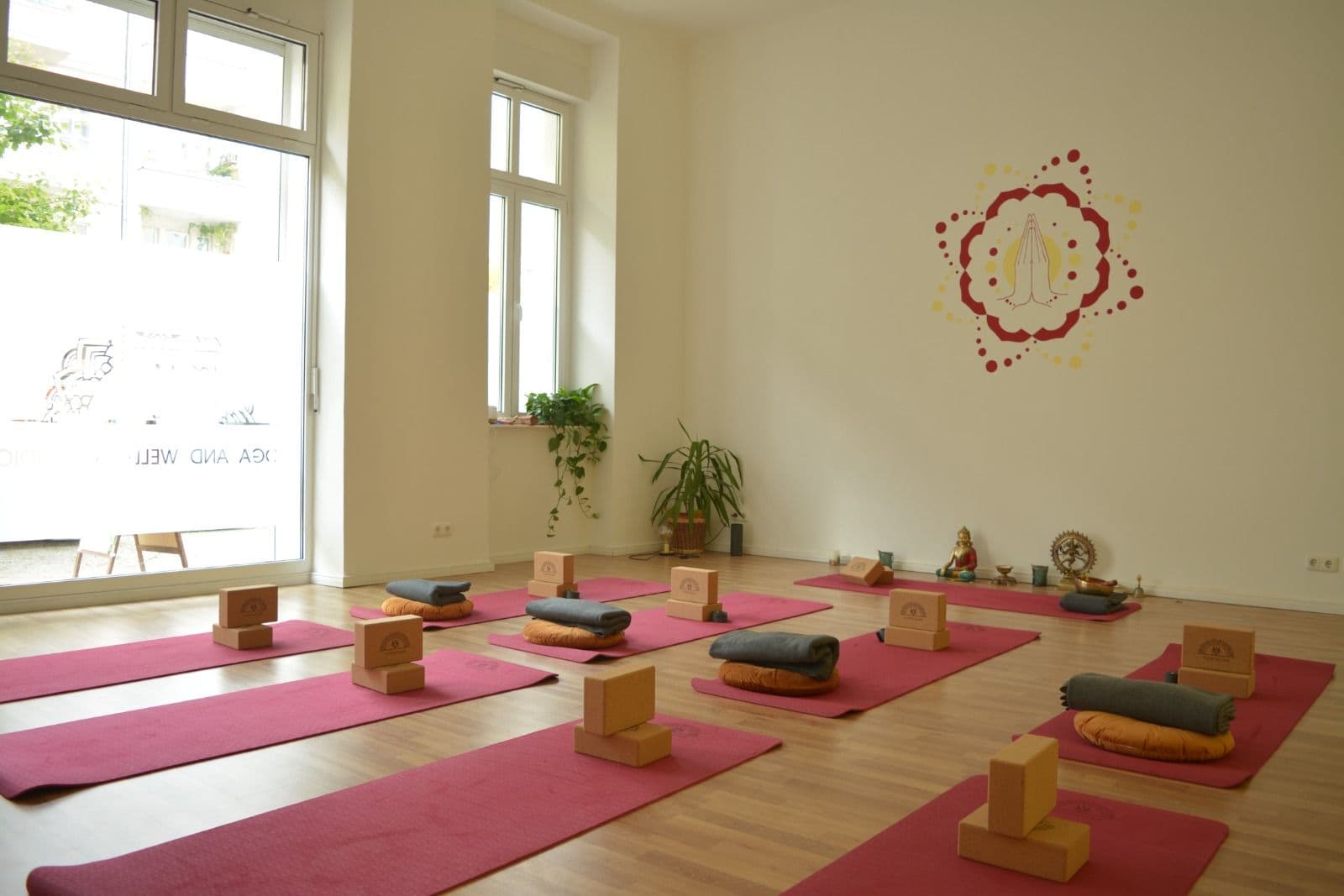
Mat Pilates · All levels · 45 min · English
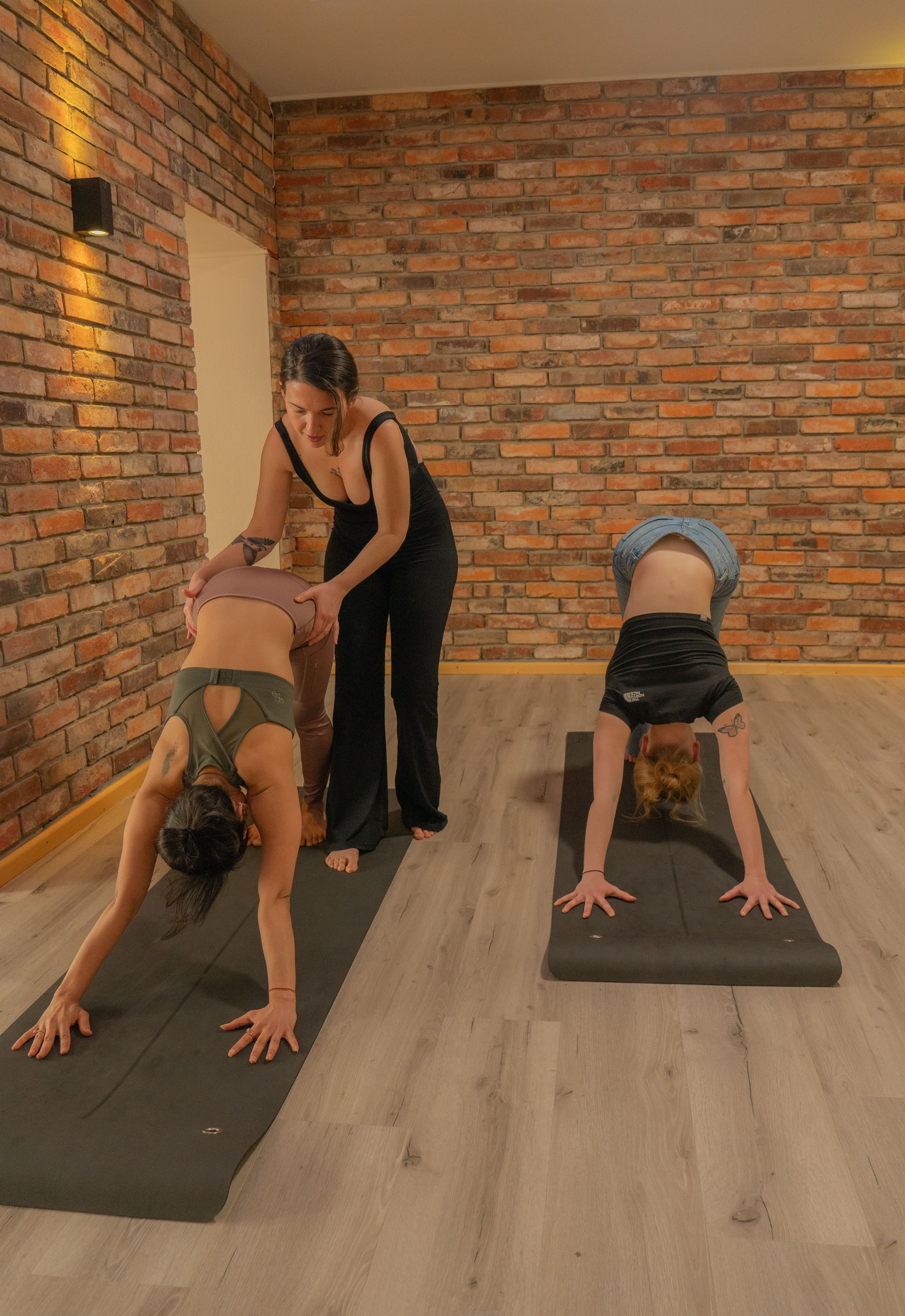
Mat Pilates · All levels · 45 min · English
Mat Pilates · All levels · 45 min · English
Mat Pilates · All levels · 45 min · English
Mat Pilates · All levels · 45 min · English
What is Pilates?
Pilates is a full-body training method built on slow, controlled movements that strengthen the deep muscles of your trunk. The work centres on what teachers call the powerhouse, the band between your ribs and hips, and every exercise is linked to your breath and to precise control of your pelvis and spine.
It is not an ancient practice and it has nothing spiritual about it. Joseph Pilates, born in Mönchengladbach in 1883, developed the method in the 1910s and 1920s, trained fellow internees with it during the First World War and later opened a studio in New York. He called it Contrology. His 1945 book Return to Life Through Contrology sets out 34 mat exercises in a fixed order, which classical Pilates still follows today.
A mat class looks calm from the outside. Inside, your abdominals may be shaking by minute fifteen, because on the mat nothing assists you: no springs, no sliding carriage, only your body weight and control. That is the honest difference from reformer Pilates. The machines can support or add load and make movements feel more guided; the mat asks you to hold everything yourself, works anywhere and needs no equipment. For recurring back pain, one trial found both versions helped, with the machines slightly ahead on a few long-term measures.
At Yogicescape, every Pilates class is mat Pilates and lasts 45 minutes, so it fits into a lunch break or before dinner. There are noon classes at both studios and evening slots between 17:30 and 19:30, in six formats from gentle Feel Good to Power, plus Classical and Techno Pilates. All classes are taught in English, and the same pass covers your yoga, breath and sound classes at both studios.
What happens in a Mat Pilates class
0–5 min
Breath and set-up
You lie on your back, find a steady breath and learn where your pelvis and lower back sit. Everything that follows builds on this position.
5–12 min
Waking up the spine
Bridging, cat-cow and spine curls move your back one vertebra at a time and get the deep trunk muscles switched on.
12–25 min
Core series
Classics such as the Hundred, the Roll-Up and Single-Leg Stretch, always with an easier version. Five to ten precise repetitions rather than many sloppy ones. This is usually where the shaking starts.
25–38 min
Hips, back and whole body
Side-lying leg work for the hips, then lying on your front for back extensions like Swan and Swimming, and finally planks or push-up variations.
38–45 min
Stretch and roll down
Stretches for hips, legs and back, then a slow roll-down to standing. You may feel your core the next day.
Six ways into mat Pilates
All formats are 45 minutes on the mat and taught in English. The class name on the schedule tells you how hard and how fast it will be.
What Pilates can do, and what it can't
Pilates is sold with a lot of promises, from a flat stomach to perfect posture. Here is what the research actually shows, in plain language, with the sources linked.
Easing recurring lower back pain
Good evidenceA Cochrane review found Pilates reduces pain and disability better than minimal intervention in the short and medium term. Network meta-analyses rank it among the most effective exercise types for chronic low back pain. It is not proven better than other forms of exercise, and the underlying studies are of low to moderate quality. Yamato 2015
Better balance in older adults
Some evidenceA meta-analysis of controlled trials found that Pilates improved balance in older adults compared with doing nothing or usual care. Barker 2015
Mat versus reformer machines
Some evidenceIn a randomised trial with chronic low back pain, mat and equipment-based Pilates both improved pain and disability. The equipment group did slightly better on some outcomes after six months. da Luz 2014
Better mood, less fatigue
Some evidenceA meta-analysis linked Pilates to less depression, anxiety and fatigue, with moderate to large effects. The studies were small, so treat this as promising rather than settled. Fleming 2018
Losing weight or belly fat
Limited evidenceA meta-analysis in adults with overweight found reductions in weight, BMI and body fat, but the evidence quality was low. Wang 2021
Fixing the pelvic floor or bladder leaks
Limited evidenceThere is no strong evidence that general exercise such as Pilates reduces stress incontinence. Targeted pelvic floor muscle training remains the treatment that works. Bø 2013
Building bone density
Not supportedPilates puts too little load on your bones for that. People with osteoporosis are advised to do impact and resistance training, and to avoid loaded forward bending like roll-ups and crunches. Giangregorio 2014
Is Mat Pilates for you?
A good fit if you …
- have a stiff or aching lower back from sitting and want exercise with a solid research record for it
- are new to exercise and want low impact with clear, precise instructions
- run, cycle, climb or do yoga and want more strength in your trunk and hips without gym weights
- are older and want to work on balance and control
- like structure, repetitions and measurable progress more than flowing sequences
- want a 45-minute class at lunchtime or after work, taught in English
Choose something else, or adapt, if you …
- are looking for reformer machines: all our Pilates classes are on the mat
- want maximal strength, muscle size, bone loading or cardio: gym strength training or Power Vinyasa fit better
- have acute back pain with pain or numbness running into your leg, or recent spinal surgery: get medical clearance first and tell the teacher
- have osteoporosis or osteopenia: you can often join, but skip loaded forward bending such as roll-ups, rollovers and crunches and ask for alternatives
- are pregnant or recently gave birth: talk to your midwife or doctor, avoid long periods on your back and intense ab work later in pregnancy, and start with prenatal or postnatal classes
- have bladder leaks or a weak pelvic floor: Pilates is not a replacement for targeted pelvic floor training with a physiotherapist
Mat Pilates compared
| Style | Pace | How it feels | Best for |
|---|---|---|---|
| Mat Pilates | Precise sets of 5–10 reps | Core control, body weight only, no spiritual element | Trunk strength, control, back-friendly training |
| Yoga (Vinyasa) | Flowing, breath-linked | Mobility, strength and breath, often with meditation | Mobility, energy and calming the mind |
| Power Vinyasa | Fast and sweaty | Strength, heat and flow | A full workout with a yoga base |
| Reformer Pilates | Precise, guided by the machine | Core control with springs that assist or add load | Guided Pilates with adjustable resistance |
| Gym strength training | Sets with rest | Heavy loads with weights | Maximal strength, muscle and bone |
When and where
Mat Pilates runs several times a week at both studios, with noon classes and evening slots between 17:30 and 19:30. Every class lasts 45 minutes, and you book a single drop-in or use any class pass.
Teachers who teach Mat Pilates


Updated: September 2026
Frequently Asked Questions