
16 November 2026 · Yogicescape Team
Yin Yang Yoga: What It Is and Who It Suits
Yin Yang Yoga mixes two opposite styles in one class. You move through active, muscle-warming postures (the "Yang" part), then settle into long, still holds where the muscles stay relaxed (the "Yin" part). It suits almost anyone: beginners who want variety, and stressed-out Berliners who need to move first and sit still second. At Yogicescape you'll find both halves of that balance across Vinyasa Flow and Yin Yoga classes.
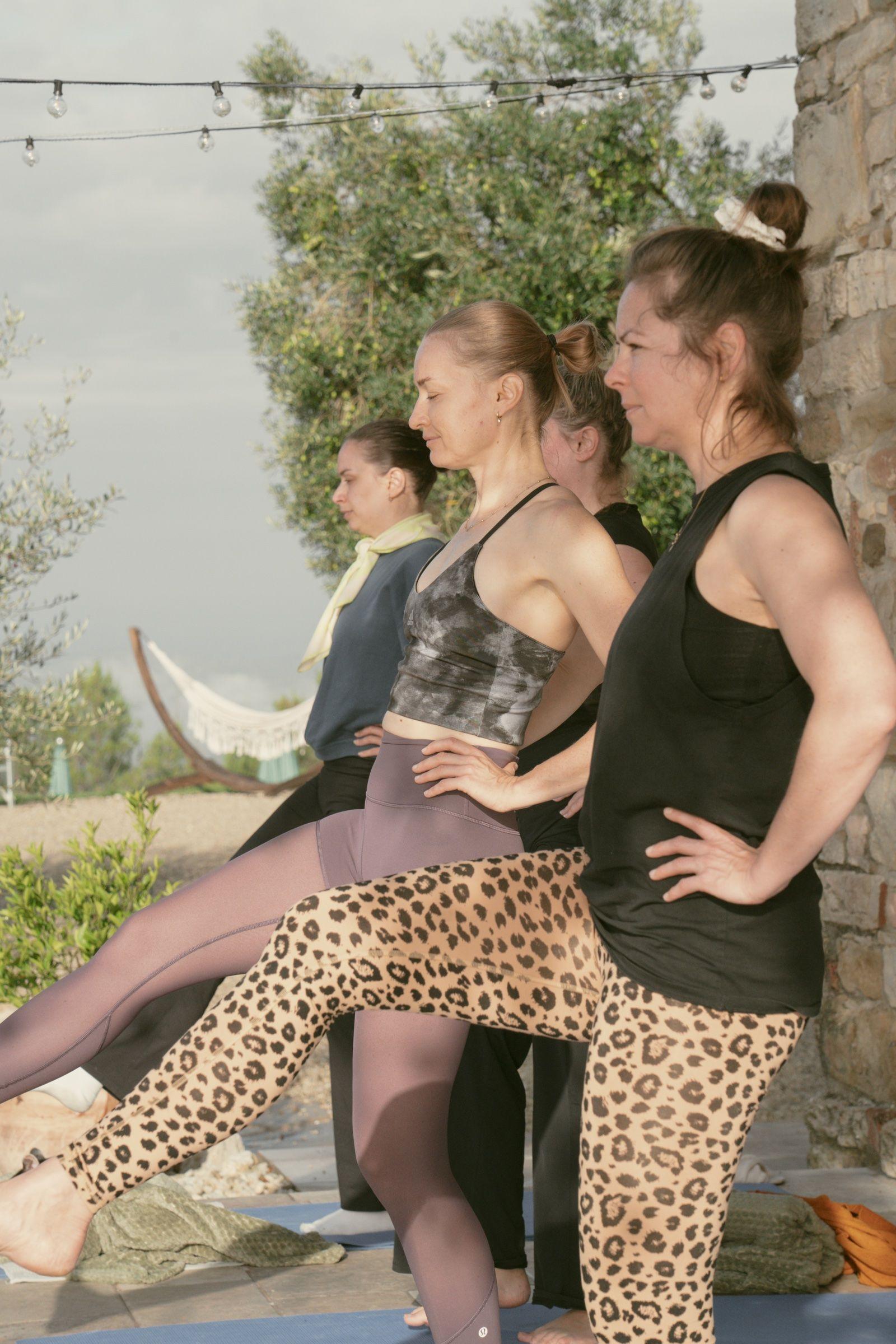
Picture a Tuesday evening class where the first thirty minutes are sweaty sun salutations, and the last thirty are spent lying on the floor with a bolster under your knees, barely moving, for five full minutes at a time. That's Yin Yang Yoga in a nutshell: two opposite energies, one mat, one hour.
The name sounds almost too simple, like a yoga marketing slogan. But it points to something real about how bodies and nervous systems actually work. We need movement to build strength and heat. We also need stillness to let the deeper tissue and the mind finally unclench. Yin Yang Yoga is built around giving you both, often in the same session.
Yin Yang Yoga mixes two opposite styles in one class. You move through active, muscle-warming postures (the "Yang" part), then settle into long, still holds where the muscles stay relaxed (the "Yin" part). It suits almost anyone: beginners who want variety, and stressed-out Berliners who need to move first and sit still second. At Yogicescape you'll find both halves of that balance across Vinyasa Flow and Yin Yoga classes.
Key statistics
- A randomized controlled trial found five weeks of yin yoga-based practice lowered plasma adrenomedullin, a stress-linked hormone, and improved psychological wellbeing in stressed adults.
- A study during the COVID-19 pandemic found yin yoga practice reduced both state and trait anxiety in participants.
- A review of stretching studies found that flexibility gained over a few weeks comes mainly from higher stretch tolerance, not from changes in the tissue itself.
What does 'Yin' and 'Yang' actually mean in yoga?
Yin and Yang come from an older idea about balance: active and passive, hot and cool, moving and still. In yoga, Yang styles move you through postures quickly and build heat, strength, and sweat. Think Vinyasa Flow, Power Vinyasa, or Ashtanga Yoga.
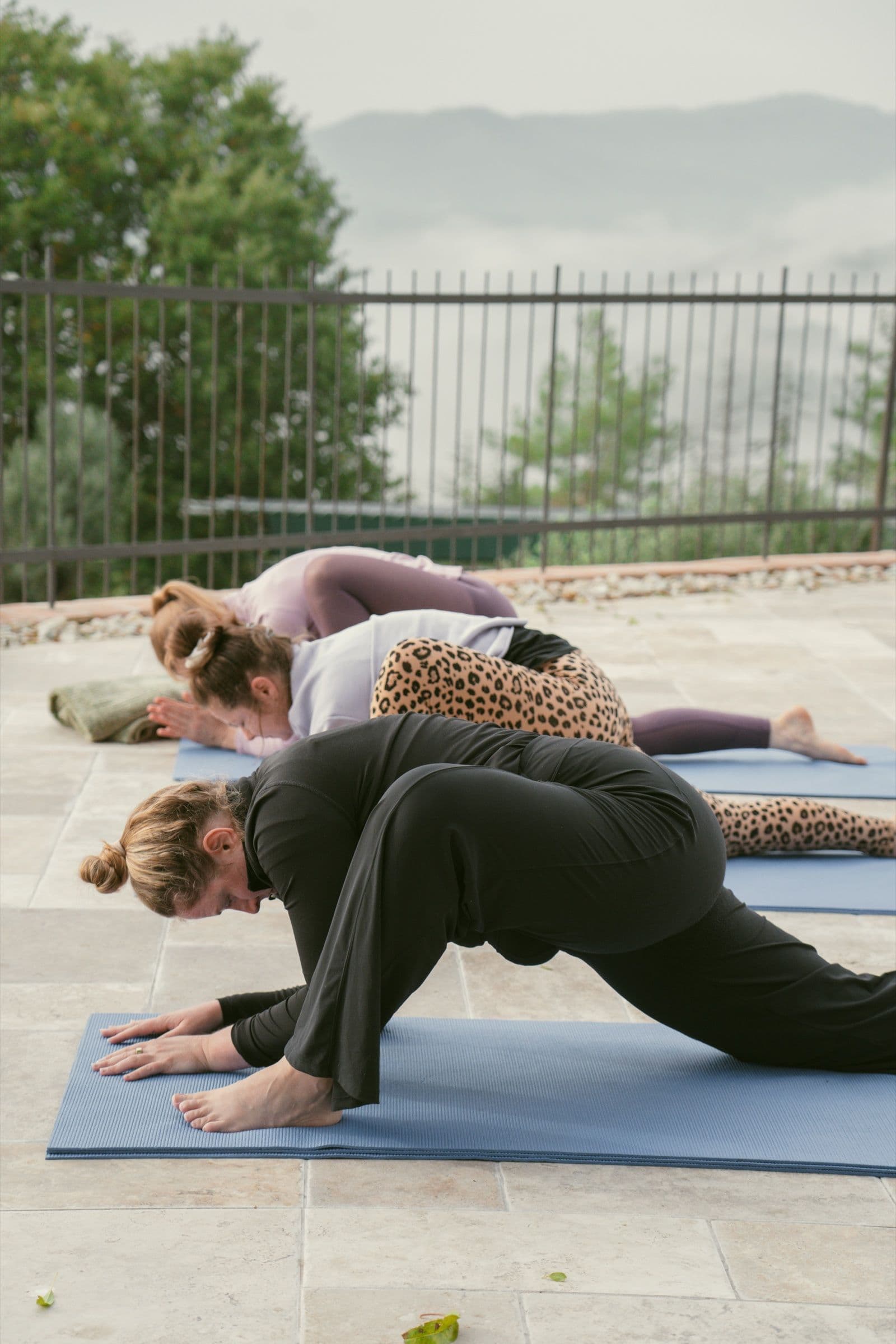
Yin styles do the opposite. You hold a pose passively for minutes, letting gravity and time do the work instead of your muscles. The goal isn't a deep stretch, it's patience: staying with discomfort long enough for something to soften, in the body and in the mind.
Yang moves and builds heat. Yin holds still and lets things settle. Together they cover both ends of what a body needs.
What actually happens in a Yin Yang Yoga class?
Most classes split roughly in half. The first part is active: sun salutations, standing poses, maybe some core work to build heat and strength. The second part slows right down. You move into floor-based shapes like a seated forward fold or a supported twist, and you stay there for three to five minutes, sometimes longer.
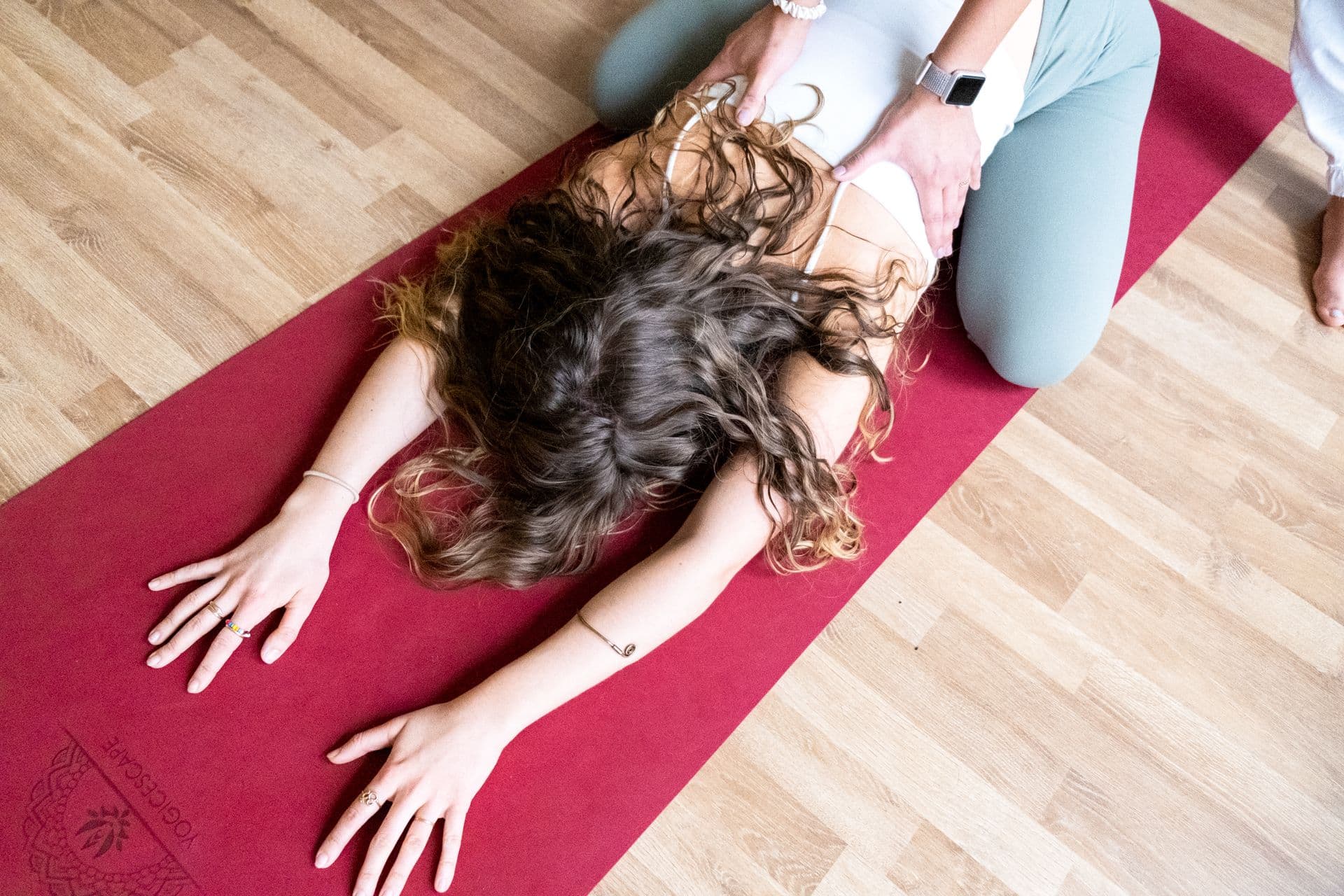
Props do a lot of the work in the still half. Bolsters, blocks, and blankets support your body so your muscles can properly let go. You're not stretching hard, you're just staying, breathing, and waiting it out.
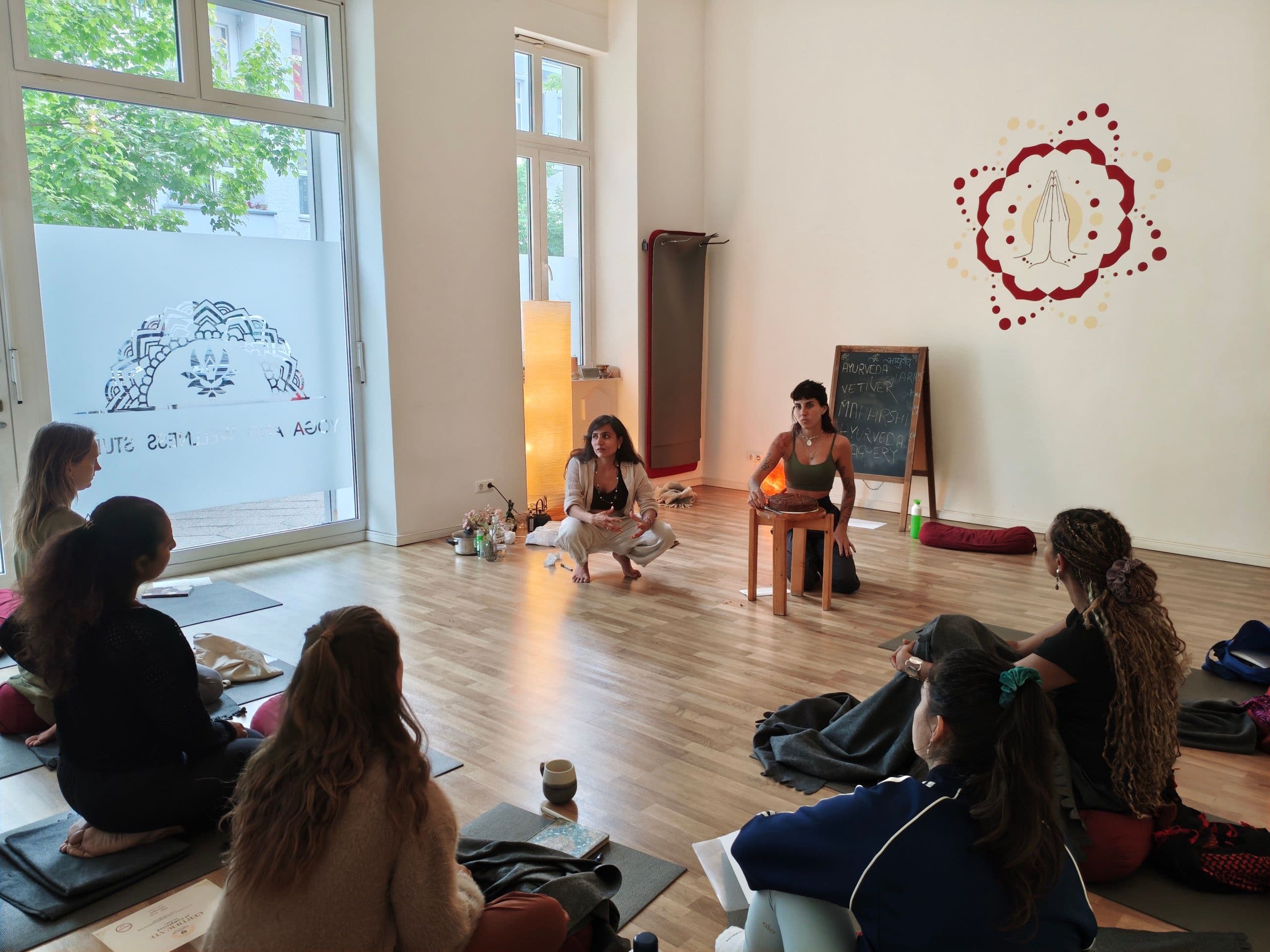
At Yogicescape, check the current timetable for Yin Yang sessions. You can also build the same rhythm yourself: a Vinyasa Flow for the active half and a Yin Yoga class with singing bowls for the still half, on the same day or across the week.
A Yin Yang class, or a Yin Yang week, simply pairs active movement with long, supported stillness.
Does Yin Yang Yoga actually help with stress?
There's real research behind the still half specifically. A five-week randomized controlled trial found that yin-based practice lowered plasma adrenomedullin, a hormone linked to stress, while also improving psychological wellbeing in adults who were under pressure. That's not a small claim: it's a measured change after just over a month of practice.
A separate study done during the COVID-19 pandemic found that yin yoga reduced both state anxiety (how you feel right now) and trait anxiety (how anxious you tend to be generally). The active half matters too. Moving first, through something like Vinyasa Flow, burns off restless energy, which can make the following stillness easier to sit with rather than fight.
If breathwork is more your focus than movement, Yogicescape also runs dedicated Breathwork & Pranayama classes, which work on the nervous system from a different angle entirely.
A randomized trial found five weeks of yin-based practice lowered a stress hormone and improved wellbeing in stressed adults.
Who is Yin Yang Yoga actually for?
Honestly, it suits more people than either style alone. If you find a full hour of fast flow draining, the still half gives you permission to stop. If you find a full hour of holding poses boring or restless, the active half gives you something to do with that energy first.
It also works well for anyone juggling a desk job and a busy mind. The movement half clears physical tension, and the stillness half gives the nervous system a chance to downshift before you head back into the evening. New practitioners often do better easing into stillness after some movement, rather than sitting still cold.
If you're newer to yoga generally and want a clearer sense of where to start, our piece on Hatha vs Yin Yoga for beginners breaks down the gentler end of the spectrum in more detail.
Yin Yang Yoga suits people who need both an outlet for restless energy and permission to finally sit still.
What's happening in the body during the Yin half?
The long holds in Yin Yoga are not about working muscles. In the yin tradition they are said to reach the connective tissue around the joints. What studies show is more modest: regular stretching improves range of motion mainly because you tolerate the stretch better, and long, quiet holds give the nervous system time to settle. That is reason enough to hold Yin poses for minutes, not seconds.
Over time, regular practice is linked to better joint mobility and a calmer baseline nervous system. That's a slower kind of progress than a sweaty flow class gives you, but it's a real one. If you want to go deeper into this specific style on its own, 10 Yin Yoga poses for beginners is a practical place to start.
Long Yin holds mean staying relaxed in a stretch for minutes, which is why patience matters more than effort.
How do I actually build a Yin Yang rhythm into my week?
You don't need a single class labeled 'Yin Yang' to get the benefit. A simple approach: pick one or two active classes a week, like Power Vinyasa or Ashtanga, and pair them with one slower session, like Yin Yoga or Hatha Yoga. The two halves don't have to happen back to back on the same day.
Some weeks you'll crave more movement. Other weeks, especially stressful ones, you'll want more stillness. That flexibility is kind of the point: Yin Yang isn't a fixed formula, it's a balance you adjust as you go. Described plainly, it's about building strength, flexibility, and stillness across the whole body rather than picking just one.
You don't need one labeled class. Mixing active and still sessions across your week builds the same Yin Yang balance.
FAQ
Is Yin Yang Yoga good for complete beginners?
Yes. The active part warms you up and teaches basic shapes, and the still part needs no flexibility at all, just patience. Many beginners find the mix easier to follow than a full hour of either style alone.
How long do you hold poses in the Yin part?
Typically between three and five minutes per pose, sometimes longer. The point isn't to stretch hard but to let muscles soften and let the mind settle, which research on state anxiety has linked to real stress relief.
What's the actual difference between Yin and Yang yoga?
Yang styles like Vinyasa Flow or Ashtanga Yoga move continuously and build heat and strength. Yin styles hold passive shapes for minutes at a time, with relaxed muscles, for range of motion and a calmer nervous system.
Can Yin Yang Yoga help with stress?
A randomized trial found five weeks of yin-based practice lowered a stress-linked hormone and improved psychological wellbeing in stressed adults. The active half also burns off nervous energy before you slow down.
Where in Berlin can I try a class like this?
Yogicescape runs classes at both the Prenzlauer Berg and Friedrichshain studios. You can take Yin Yoga and Vinyasa Flow separately, or alternate between them across the week to build your own Yin Yang rhythm.
Do I need to be flexible to try Yin Yoga?
No. Yin Yoga works with whatever range you already have. Props support the body so your muscles can stay relaxed for several minutes.
Sources
- Can chronic stretching change the muscle-tendon mechanical properties? A review (Freitas et al., 2018)
- The effect of yin yoga intervention on state and trait anxiety during the COVID-19 pandemic
- Five-week yin yoga-based interventions decreased plasma adrenomedullin and increased psychological health in stressed adults: A randomized controlled trial - PMC