
Back & Neck · All levels · 45 min · English
Back & Neck · All levels · 45 min · English
Back & Neck · All levels · 45 min · English
Back & Neck · All levels · 45 min · English
Back & Neck · All levels · 45 min · English
Back & Neck · All levels · 45 min · English
Your Desk Shaped Your Shoulders. 45 Minutes Can Loosen Them.
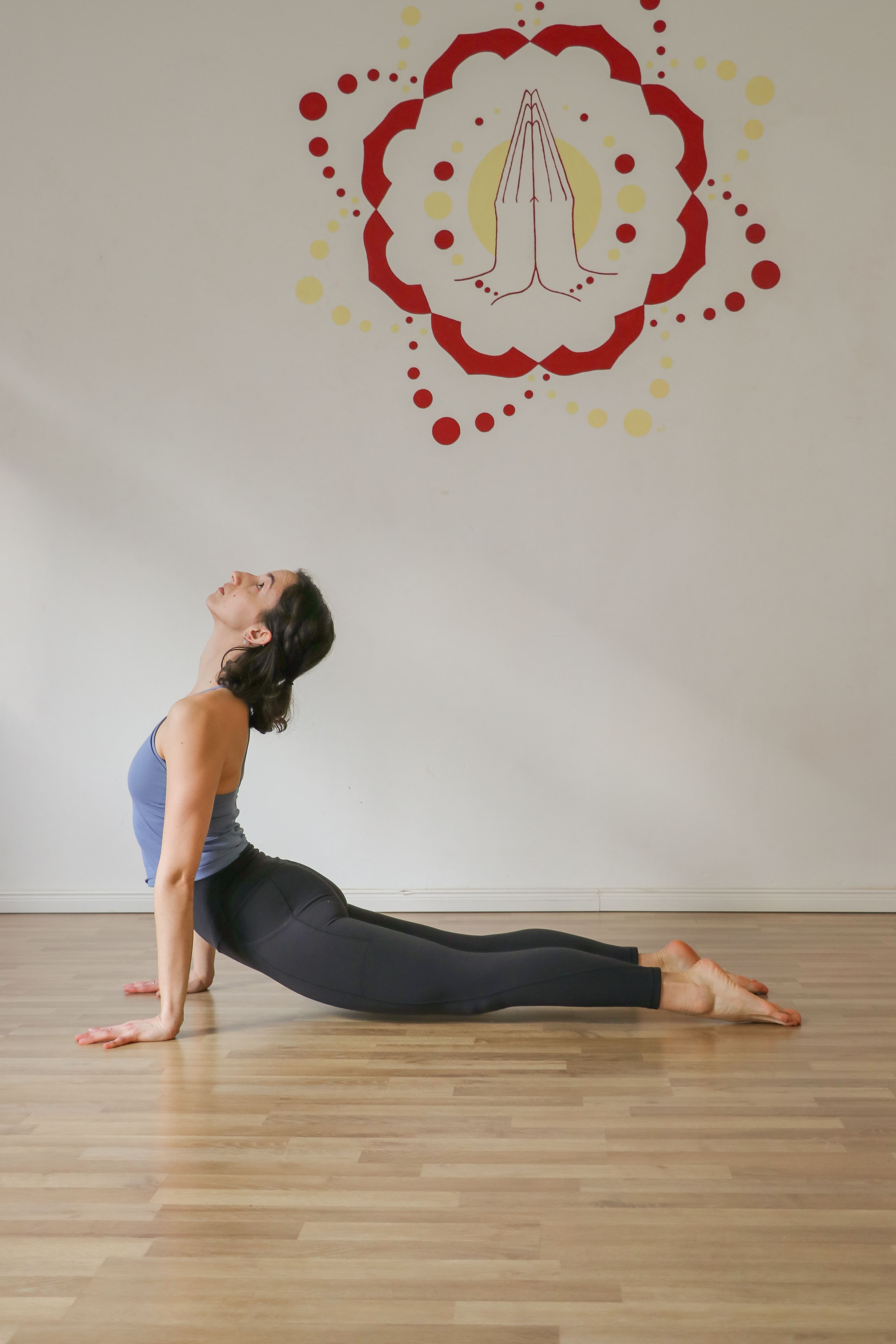
Yoga for Back & Neck is a slow, 45-minute class for the parts of you that carry a working day: lower back, upper back, shoulders and neck. You mobilise the spine, strengthen the muscles that hold you upright, and finish with supported stretches and a few minutes of rest. It is made for everyday stiffness and recurring tension, not for diagnosing or treating an injury.
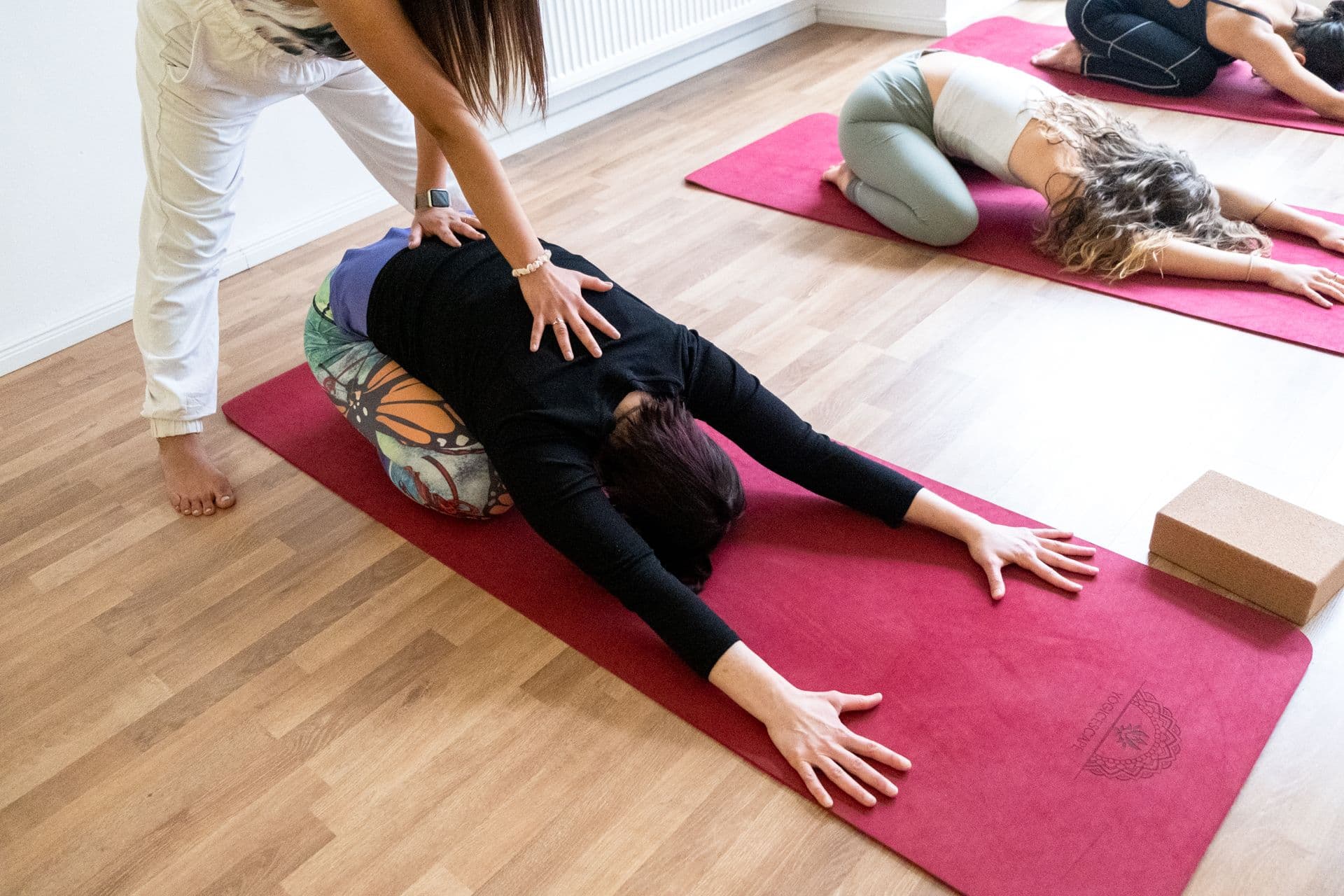
The approach is alignment-focused and prop-supported. Poses are built step by step, held long enough to find a good position, and set up with blocks, belts, blankets, bolsters or the wall, so a stiff back can reach a useful shape without strain. The teacher gives clear verbal cues and offers modifications, and nothing is about how far you can bend.
Most people arrive with a similar week behind them: hours at a laptop, a phone in hand on the U-Bahn, shoulders creeping towards the ears by Thursday. The class does not promise to correct your posture. It builds awareness and strength for how you sit and move. Research shows yoga helps long-lasting back pain about as much as other back exercise, so the best option is the one you keep doing. That is why every class is 45 minutes, with slots early in the morning, at lunchtime and after work.
Most back programmes in Berlin are 8 to 12-week courses in German or physiotherapy on prescription. At Yogicescape you book a single class in English, at Prenzlauer Berg or Friedrichshain, with mats and props ready. Tell your teacher about any pain or diagnosis before class, and you will get options, not a push.
What happens in a Yoga for Back & Neck class
0–10 min
Arrive and mobilise
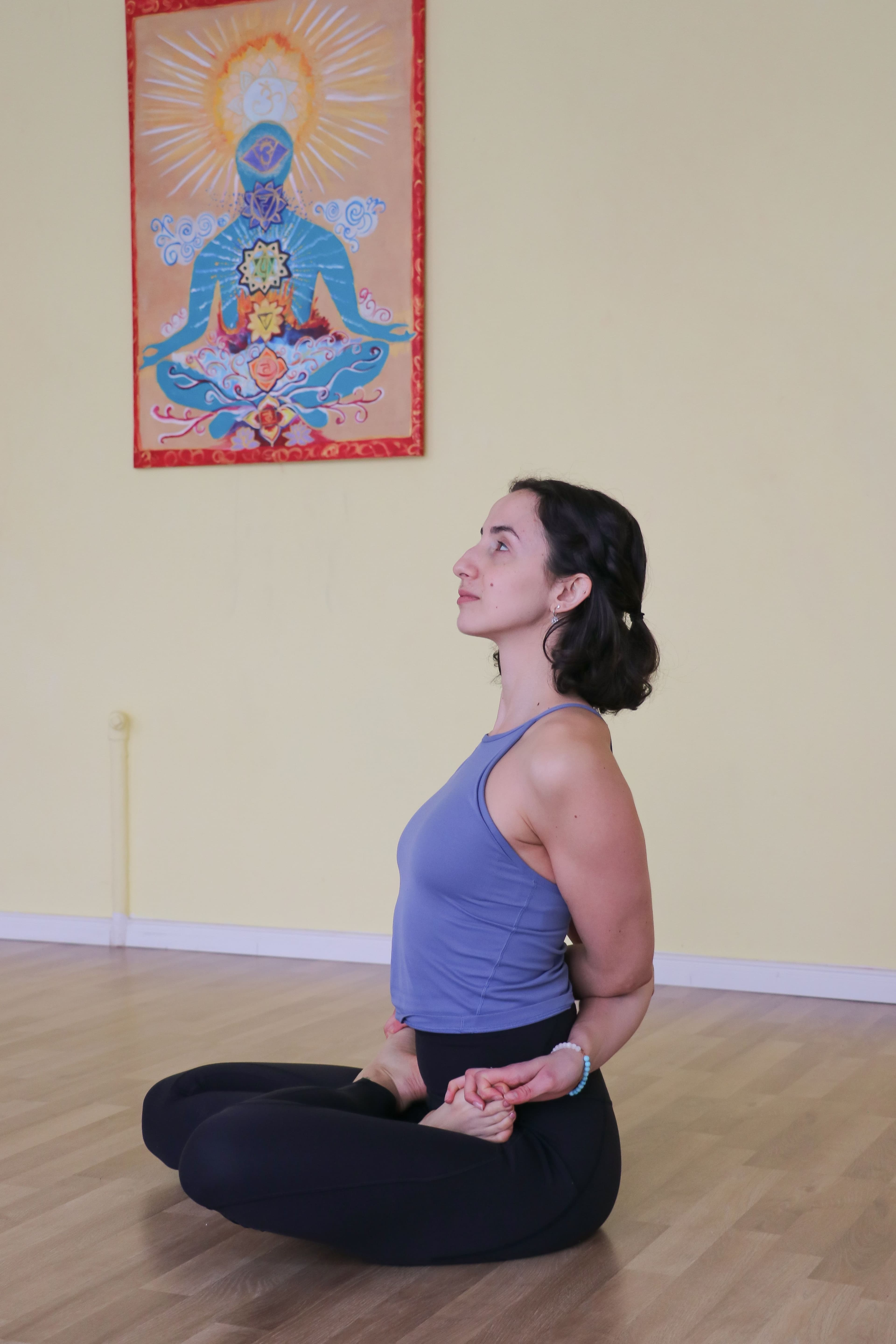
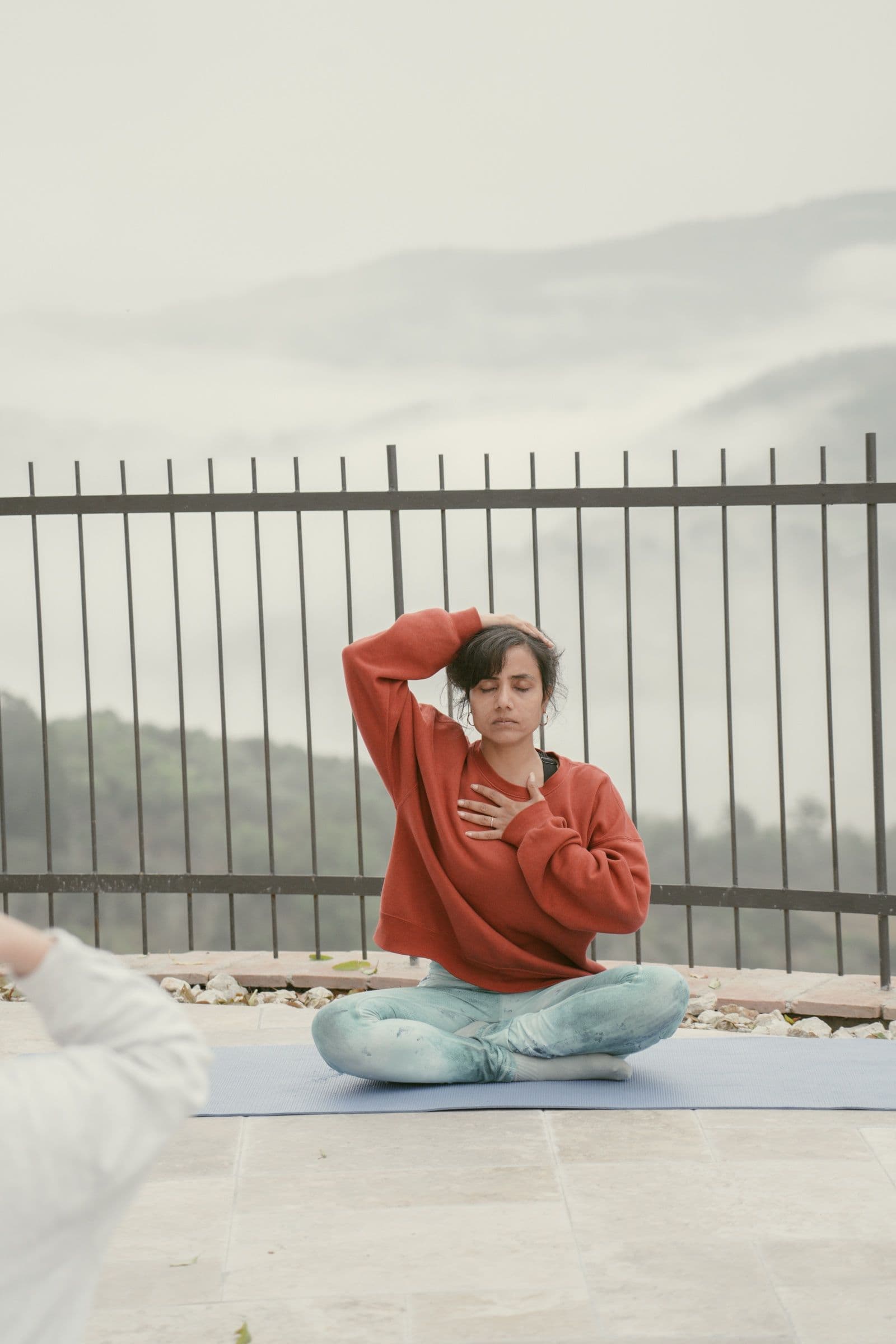
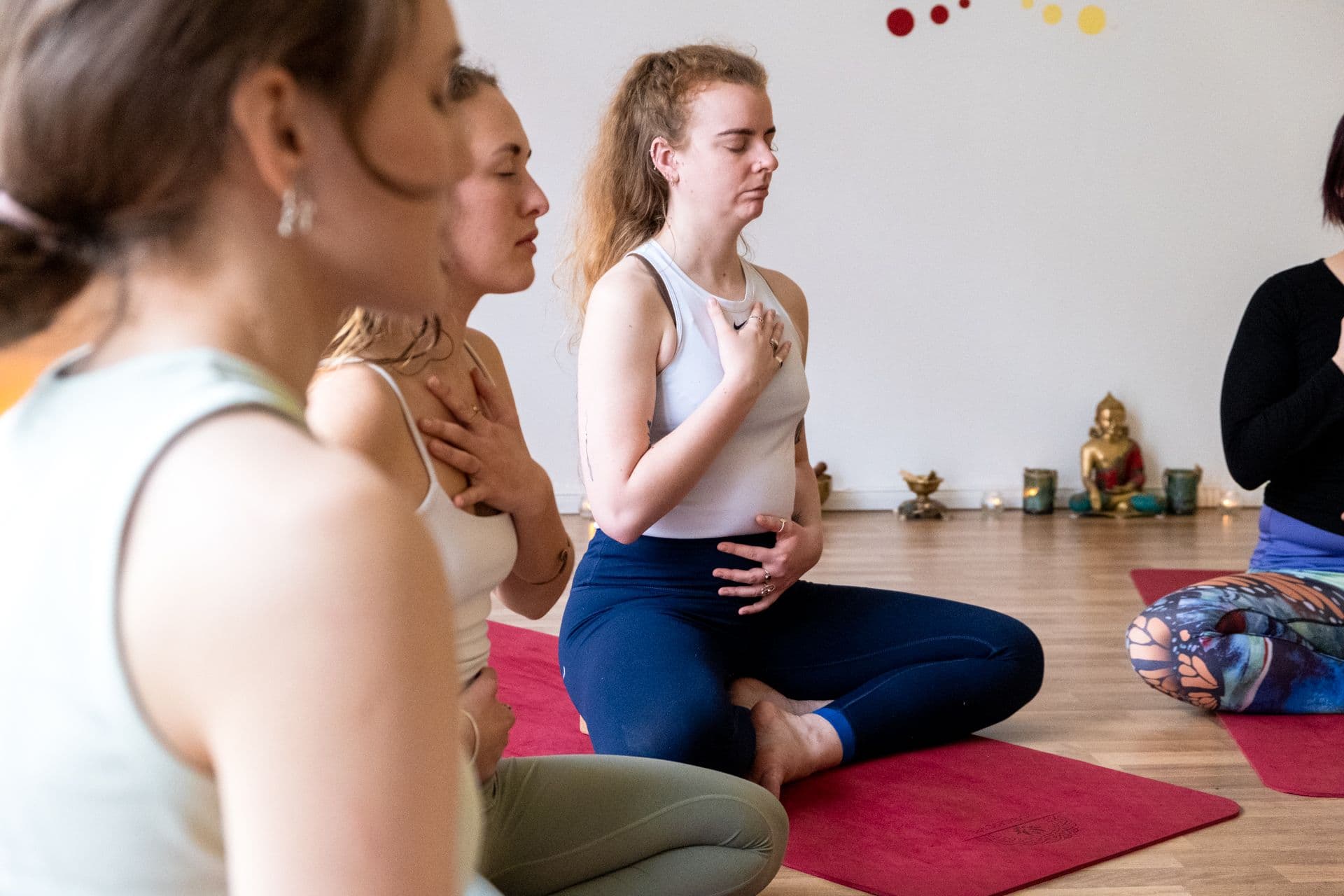
A few minutes of breath awareness lying or sitting, then gentle movement: pelvic tilts, cat-cow, easy twists, shoulder and neck circles. The aim is to find out how your back feels today.
10–25 min
Strengthen and align
Supported standing poses, bridge, bird-dog-style core work and upper-back strengthening. Blocks, belts or the wall help you find a good position rather than the deepest one.
25–38 min
Release
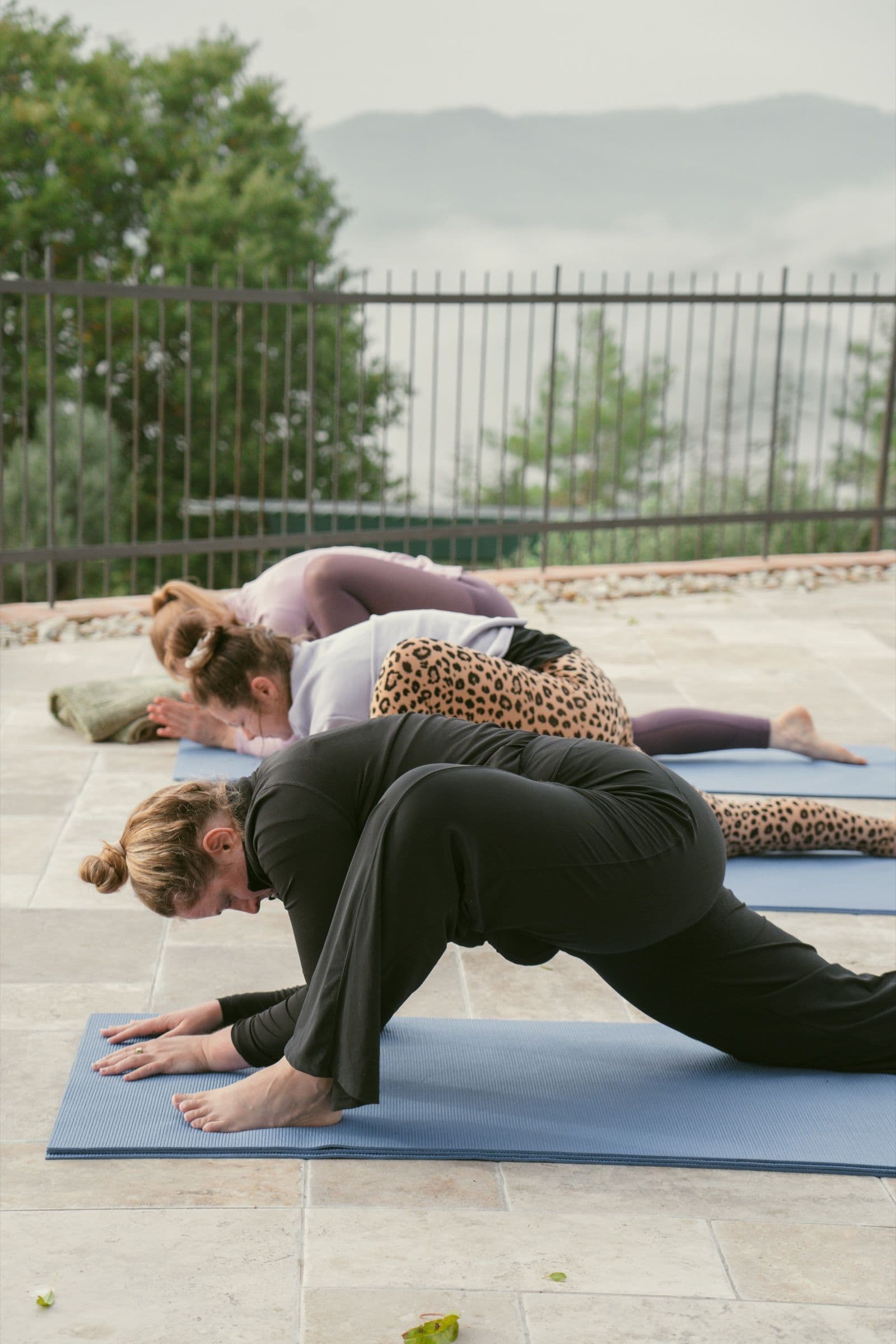
Supported forward bends and twists, chest opening for rounded shoulders, a hip flexor stretch for long sitting days, often legs up the wall.
38–45 min
Rest
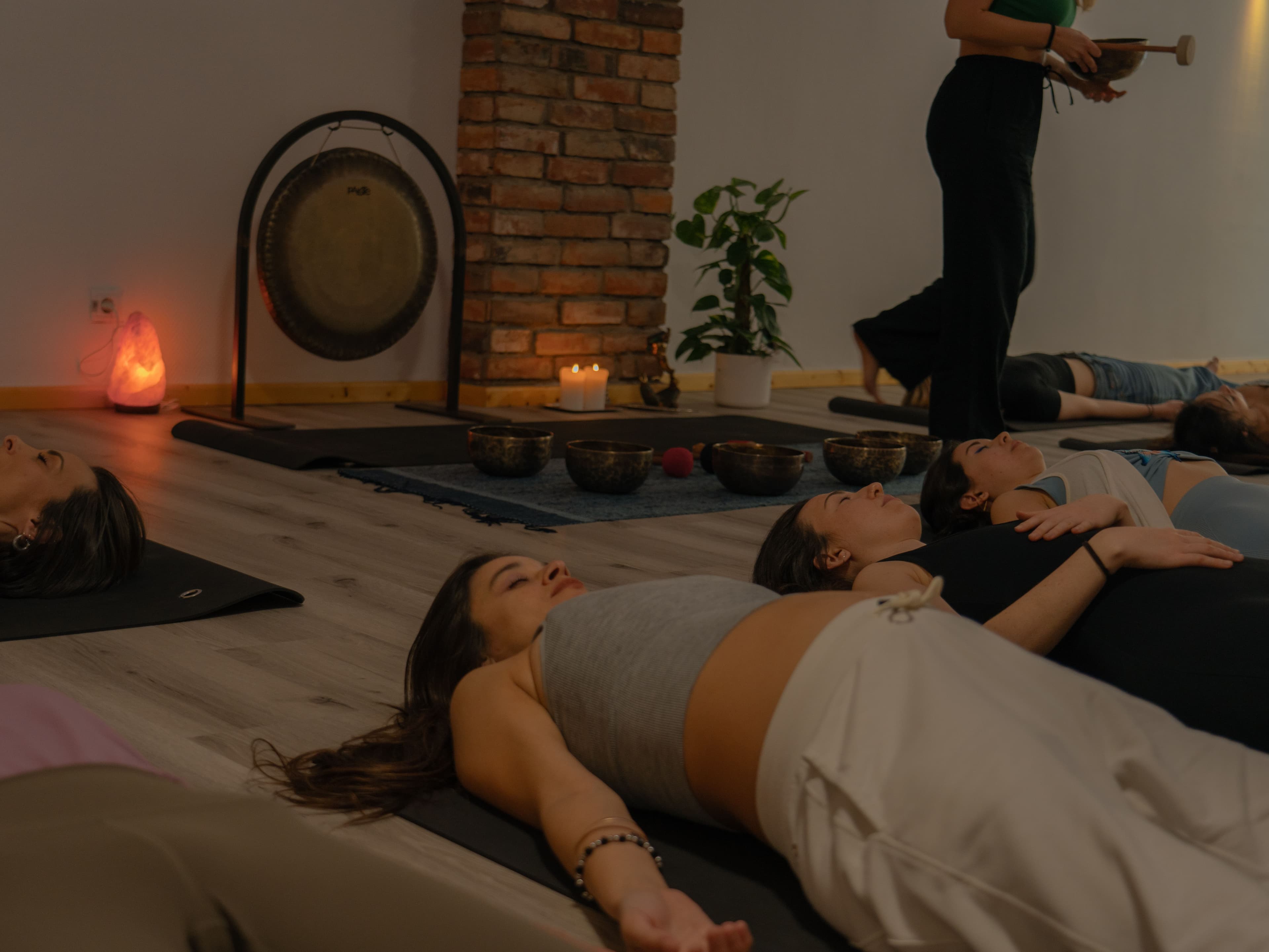
Supported rest on your back or side with a bolster and blanket, so you leave calmer rather than tired.
One principle, six ways in
All variants are 45 minutes, slow and prop-supported. The name on the schedule tells you where the class puts its focus.
Does yoga help back and neck pain?
Short answer: for long-lasting, non-specific back pain, yoga brings small but real improvements, about as much as other back exercise. For neck pain, small trials show short-term benefits. It does not cure structural problems. Here is the research in plain language, with sources.
Easing chronic low back pain
Some evidenceA Cochrane review of 21 trials with over 2,200 adults found that, compared with no exercise, yoga gave small improvements in back function and pain after three months, and more people rated their back as better. The effects were smaller than what doctors consider clearly noticeable, so expect gradual change, not a quick fix. Cochrane 2022
Compared with other back exercise
Good evidenceThe same review found little or no difference between yoga and other back-focused exercise. The practical takeaway: regular movement helps, and the best kind is the one you keep doing. Cochrane 2022
Recommended by medical guidelines
Some evidenceThe American College of Physicians recommends starting chronic low back pain care with non-drug options, including exercise, tai chi and yoga. The quality of evidence for yoga was rated low, but the recommendation is strong. ACP guideline 2017
Yoga or physiotherapy?
Some evidenceIn a trial with 320 adults, 12 weekly yoga classes worked about as well as 15 physiotherapy visits for chronic low back pain. That makes yoga a reasonable way to stay active, not a replacement for a physiotherapist who examines and treats you. Saper 2017
Easing neck and shoulder pain
Limited evidenceA meta-analysis of three small trials found less neck pain and disability in the short term. One of them, at the Charité in Berlin, ran nine weekly classes. There is no long-term data yet, so these results are promising but not conclusive. Cramer 2017
Is it safe?
Some evidenceAcross 94 trials, yoga was about as safe as usual care or other exercise. The most common side effect was a temporary increase in back pain, which is why pain that sharpens or spreads means stopping, not pushing through. Cramer 2015
Fixing posture, realigning the spine or healing a disc
Not supportedNo study shows that yoga realigns the spine, corrects posture permanently or repairs a herniated disc. What classes can do is build strength and awareness for how you sit and move.
Is Yoga for Back & Neck for you?
A good fit if you …
- spend hours at a desk, laptop or phone and feel it in your neck, shoulders or upper back
- get recurring tension or a dull lower-back ache without any of the warning signs listed on this page
- have long-lasting back or neck pain that a doctor has checked and encouraged you to stay active
- have finished physiotherapy and want a regular way to keep moving
- are new to yoga or not very flexible: props and modifications are part of every class
- cannot fit 60 to 90-minute classes into your day and want 45 minutes before work, at lunch or after work, in English
Choose something else, or adapt, if you …
- need a diagnosis or treatment: these classes are not a substitute for physiotherapy or medical treatment
- have pain spreading into a leg or arm with numbness, tingling or weakness: see a doctor first, and urgently if you notice new bladder or bowel problems or numbness in the groin area
- have back or neck pain together with fever, unexplained weight loss, a history of cancer or severe pain at night: see a doctor before you come to class
- have pain after a fall, accident or other injury, or neck pain with dizziness or blurred vision when you move your head: get checked first
- have an acute herniated disc, sciatica, recent spinal surgery or severe pain that started in the last few days: get medical clearance and tell the teacher before class
- are pregnant: start with prenatal yoga and speak to your midwife or doctor
Yoga for Back & Neck compared
| Style | Pace | How it feels | Best for |
|---|---|---|---|
| Yoga for Back & Neck | Slow and active, 45 min | Mobility, strength and supported release for back, neck and shoulders | Desk tension, stiffness, staying active after a check-up |
| Yin Yoga | Very slow, 3–5 min passive holds | Muscles relaxed, long stretches, stillness | Stress and winding down in the evening |
| Pilates | Controlled and active | Precise core and postural strength | Building core control and strength |
| Vinyasa Flow | Flowing, breath-linked | Heat, effort, continuous movement | Fitness and energy once your back feels good |
| Physiotherapy / back school | Individual sessions or 8–12-week course | Examination, targeted treatment and exercises | Acute injury, a diagnosis, any warning signs |
When and where
Back and neck classes run at both studios as 45-minute classes early in the morning, at lunchtime and after work. You can book a single class or use any class pass. The live schedule shows this week's times and variants.
Updated: September 2026
Frequently Asked Questions