
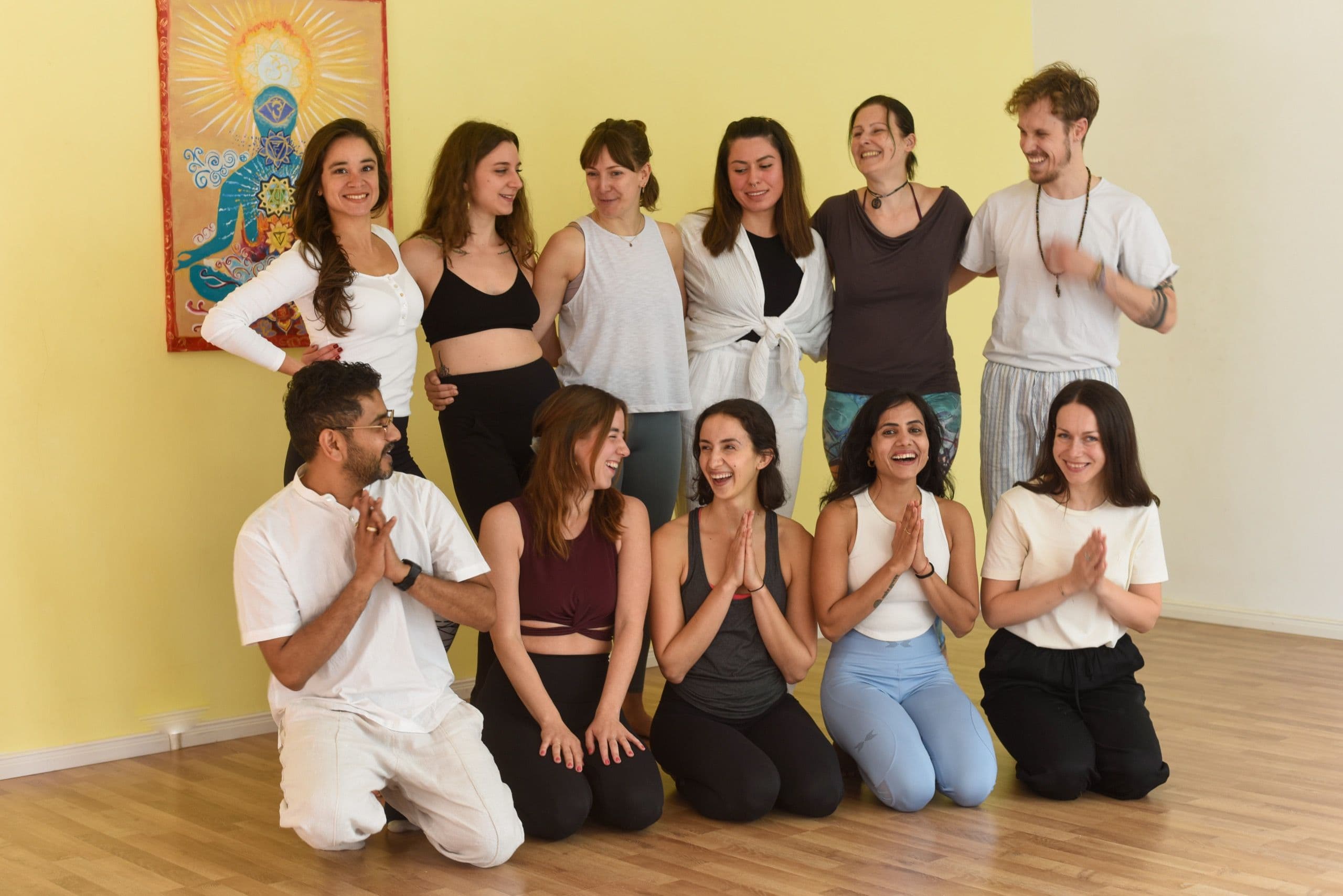
14 October 2026 · Yogicescape Team
200-hour vs. 300-hour yoga teacher training: which is right for you?
A 200-hour training gives you the foundational skills to teach a well-rounded public class and is the entry point Yoga Alliance requires before any advanced credential. A 300-hour training builds on that base with deeper anatomy, subtle body study and teaching practice, leading toward the 500-hour RYT distinction. Most people start at 200 hours, teach for a while, then return for 300 once they know what they want to specialise in.
You're scrolling through yoga teacher training options at midnight, and every listing throws a different number at you: 200 hours, 300 hours, sometimes 500. Nobody explains what actually separates them, or which one you're supposed to pick first.
Here's the short version: it's not really a choice between two competing paths. It's a sequence. One builds on the other, and knowing how they fit together makes the decision much less confusing than the course catalogues make it seem.
A 200-hour training gives you the foundational skills to teach a well-rounded public class and is the entry point Yoga Alliance requires before any advanced credential. A 300-hour training builds on that base with deeper anatomy, subtle body study and teaching practice, leading toward the 500-hour RYT distinction. Most people start at 200 hours, teach for a while, then return for 300 once they know what they want to specialise in.
Key statistics
- Yoga Alliance's RYT-200 credential requires a minimum of 200 contact hours across five core curriculum categories before a teacher can register.
- A 300-hour training combined with a prior 200-hour certificate qualifies a teacher for the RYT-500 distinction.
- Yoga Alliance updated its 200-hour standards in recent years to place more emphasis on practicum teaching hours rather than passive lecture time.
What's the real difference between 200 and 300 hours?
A 200-hour training is the foundation. It covers five required categories: teaching methodology, anatomy and physiology, yoga philosophy, technique practice and supervised practicum teaching. By the end, you should be able to plan and lead a balanced public class with confidence.
A 300-hour training doesn't repeat that material. It assumes you already have it and goes further: more detailed anatomy, deeper philosophy and often a specialisation, whether that's a particular style, population, or therapeutic focus. Think of 200 hours as learning to drive, and 300 hours as learning to handle difficult roads and specific vehicles.
200 hours builds the foundation; 300 hours deepens and specialises it, not repeats it.
Who should start with a 200-hour training?
If you've never taught before, or you're still new enough to yoga that you're discovering which styles you even like, start at 200 hours. This is where you learn the mechanics: how to cue a pose safely, how to sequence a class that makes sense from warm-up to savasana, and how to talk to a room without reading off a script.
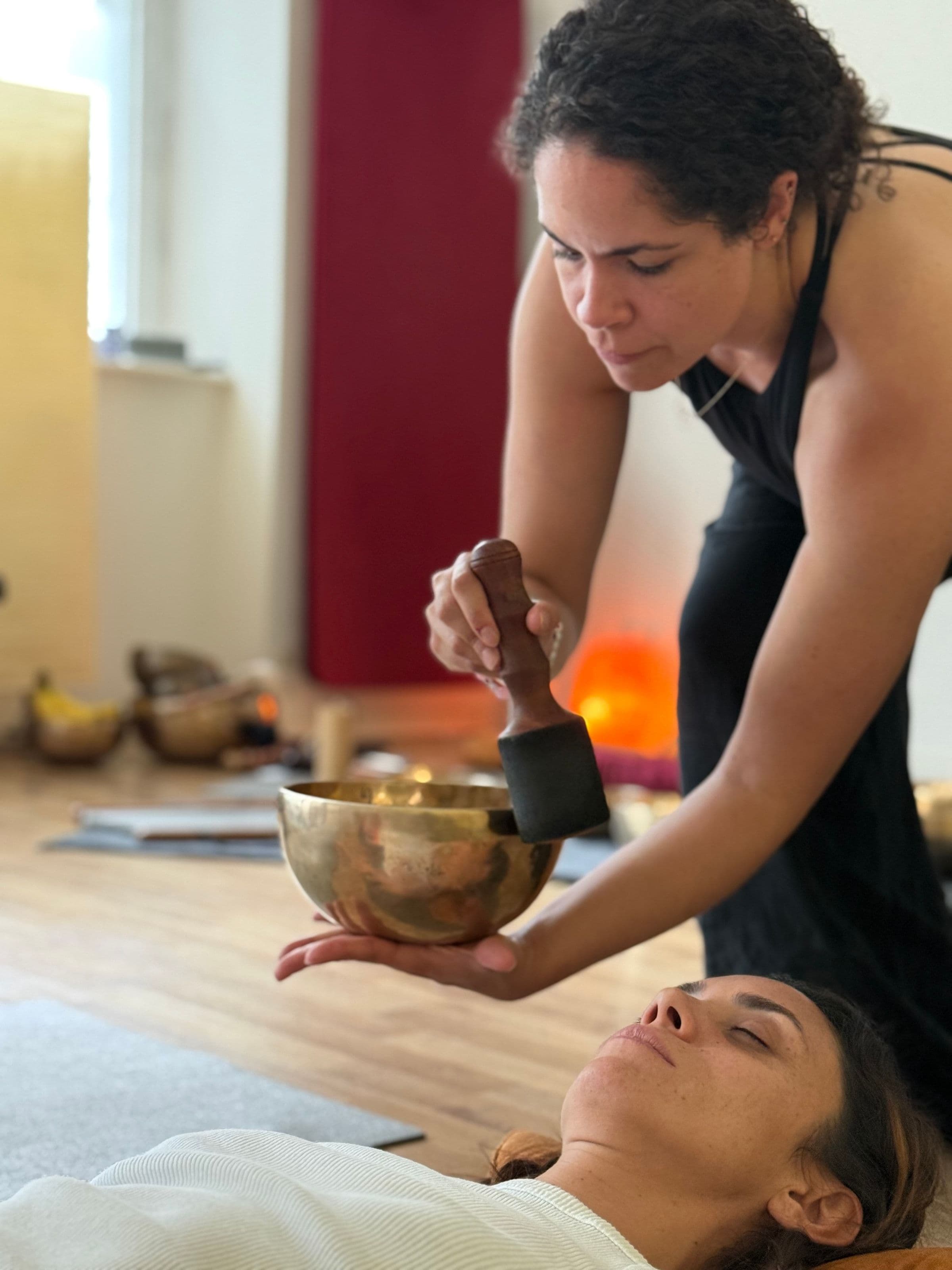
Our Abhyasa 55H Multi-Style Yoga Teacher Training at the studio on Naugarder Strasse isn't a full 200-hour programme, but it's a good way to test whether teaching is something you actually want to pursue before signing up for a longer commitment. Many people in Berlin use a shorter, focused course like this to decide if they're ready for the bigger step.
If you're comparing a home practice to in-person training as your next move, our piece on yoga at home vs. studio yoga is worth a read before you commit to any teacher training path.
Start at 200 hours if you're new to teaching; it's the entry point every credential builds on.
Who actually needs 300 hours?
300-hour trainings are for people who already hold a 200-hour certificate and know what direction they want to grow in. Maybe you've been teaching general Vinyasa Flow classes for a year and want to go deeper into anatomy, or you've realised you want to specialise in something like prenatal work or somatic movement.
It's also the path toward the RYT-500 distinction, which Yoga Alliance awards once your total registered training hours reach 500. That's not required to teach, but it does signal a more advanced level of study to studios hiring teachers or students choosing between instructors.
If your interest leans toward breath-based or subtle-body work specifically, it might make more sense to go deeper in that direction rather than a general 300-hour course. Our Pranayama & Breathwork Teacher Training is one example of a focused advanced path that complements a base 200-hour certificate.
300 hours is for teachers who already have experience and a clear direction to specialise in.
Does the curriculum structure actually matter?
Yes, more than the hour count itself. Yoga Alliance requires every 200-hour programme to hit five categories, and the recent standards update shifted more weight toward actual practicum teaching rather than sitting and listening. That means two 200-hour trainings can look very different depending on how a school balances those hours.
When you're comparing programmes, ask how many hours are spent actually practising teaching versus how many are lecture-based. A training heavy on practicum will leave you more prepared to stand in front of a room on day one.
The same logic applies at 300 hours. A specialised 300-hour course should go genuinely deeper into its focus area, not just add more general asana practice. If you're trying to choose a style focus before training, our comparison of Vinyasa and Hatha yoga can help narrow that down.
How hours are spent, teaching practice versus lecture, matters more than the total number.
Can you skip straight to 300 hours?
Generally no, and this trips a lot of people up. Most 300-hour trainings are designed as a continuation, not a standalone starting point, so they assume foundational knowledge from a 200-hour course. Walking into a 300-hour training without that base usually means struggling to keep up with anatomy terms and sequencing concepts that are treated as already known.
There are occasional combined 200+300 programmes that take you through both in one continuous arc, but even then, you're completing the full 200-hour curriculum first. There's no real shortcut here.
If you're weighing whether a longer upfront commitment makes sense for your schedule, our guide on what to know before signing up for teacher training in Berlin covers the practical planning side.
Most 300-hour trainings require a completed 200-hour certificate first; there's rarely a shortcut.
What if you want to specialise rather than just add hours?
Not every advanced step has to be a generic 300-hour course. If sound work is calling you, a dedicated path like our Sound Healing Training Berlin builds a specific skill set that a broad 300-hour anatomy-and-philosophy course won't cover in the same depth.
The same goes for breath-focused teaching. If you're drawn to pranayama specifically, our article on starting your journey with pranayama teacher training walks through what that specialised route looks like compared to a general advanced certificate.
The point isn't that specialisation replaces the 500-hour path, it's that your 300 hours (or equivalent specialised training) should match what you actually want to teach, not just what adds up to a bigger number on paper.
Choose advanced training based on what you want to teach, not just which course adds the most hours.
FAQ
Can I teach yoga with only a 200-hour certification?
Yes. A 200-hour Registered Yoga Teacher (RYT-200) credential from a Yoga Alliance school qualifies you to register as a teacher and lead general public classes.
Do I need to finish 200 hours before starting 300?
Generally yes. Most 300-hour programmes are built as advanced study and assume you already hold a 200-hour certificate, since the curriculum goes deeper rather than repeating basics.
What is the 500-hour RYT distinction?
It's awarded once you've completed a 200-hour training plus an additional 300 hours, either through one school's continuous programme or combined separately, totalling 500 hours of registered training.
Is Yoga Alliance the only certifying body?
No, but it's the largest and most widely recognised credentialing organisation for yoga teachers globally, which is why its 200/300-hour framework has become the industry standard.
How long does a 200-hour training usually take?
It varies by school and format, from an intensive few weeks to a part-time course spread over several months, as long as the full contact-hour requirement is met.
Will a 300-hour training make me a better teacher, not just more qualified on paper?
It deepens your knowledge of anatomy, subtle body concepts and teaching methodology, which can translate into more confident, specific instruction, though real growth also comes from time spent actually teaching.