
2 September 2026 · Yogicescape Team
Kundalini yoga: a complete guide and where to practice in Berlin
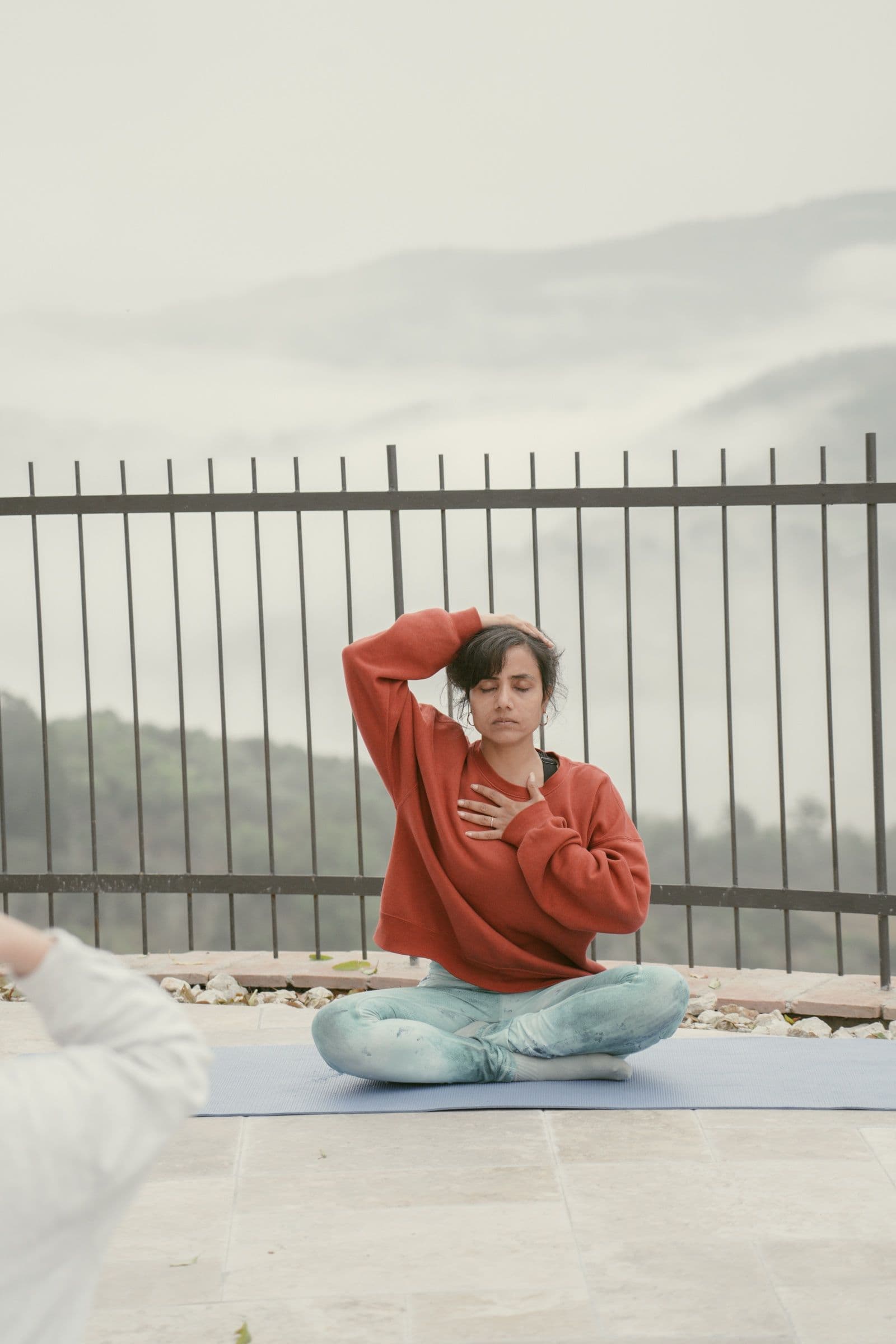
Kundalini yoga mixes movement, breath, chanting and meditation in short, repeated sets called kriyas. Berlin has a real scene for it, from small dedicated studios to city-wide platforms listing dozens of classes. Yogicescape doesn't run Kundalini specifically, but if you like its breath-and-energy focus, our Breathwork & Pranayama classes and Sound Bath sessions offer a similar path into stillness and energy work.
You're sitting cross-legged on a mat, breathing in short, sharp bursts through your nose, arms stretched overhead, and the teacher hasn't stopped calling out counts. This is a typical few minutes inside a Kundalini yoga class. It looks nothing like a slow Hatha class or a sweaty Vinyasa flow, and that's the point.
Kundalini yoga has quietly built a following in Berlin. Small studios run dedicated courses, and city-wide booking platforms list dozens of classes across neighbourhoods. If you're curious about trying it, or wondering how it fits next to the yoga styles already on offer at Yogicescape, this guide walks through what it actually involves and where to find it in the city.
Kundalini yoga mixes movement, breath, chanting and meditation in short, repeated sets called kriyas. Berlin has a real scene for it, from small dedicated studios to city-wide platforms listing dozens of classes. Yogicescape doesn't run Kundalini specifically, but if you like its breath-and-energy focus, our Breathwork & Pranayama classes and Sound Bath sessions offer a similar path into stillness and energy work.
Key statistics
- Eversports lists Kundalini yoga classes across roughly two dozen studios and providers in Berlin.
- ClassPass includes Kundalini yoga among its searchable Berlin studio categories, alongside Vinyasa and Hatha.
- Dedicated Kundalini teachers like Carolin Hoffmann run regular weekly courses in Berlin, not one-off sessions.
What exactly is Kundalini yoga?
Kundalini yoga uses set sequences called kriyas. Each kriya combines a specific posture, a breath pattern, sometimes a chant or mantra, and a fixed length of time or number of repetitions. A class usually moves through a short warm-up, one or two kriyas, and ends with relaxation and a few minutes of meditation.
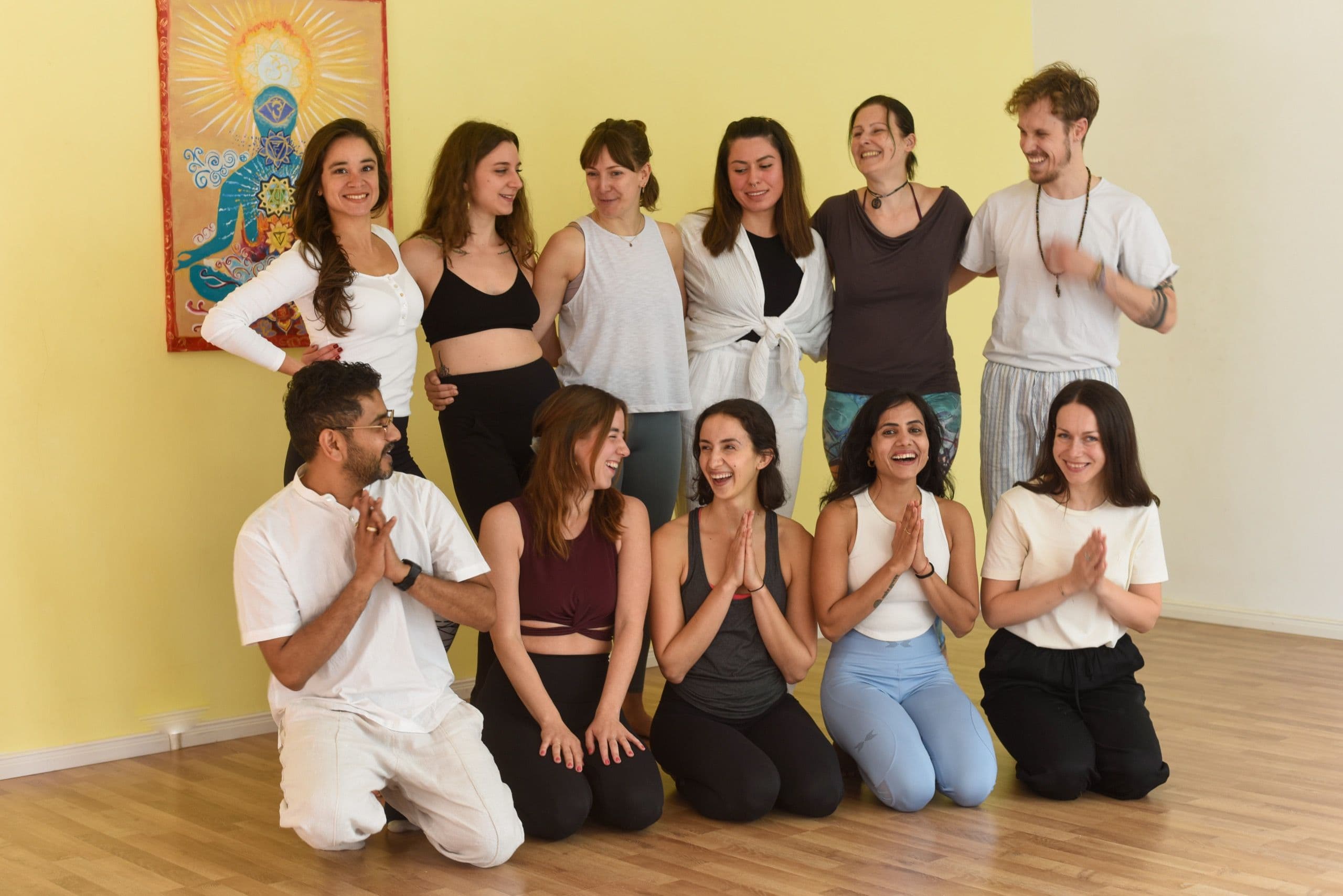
This makes Kundalini feel more structured than a typical Vinyasa Flow class, where the sequence changes with the teacher's mood. It's closer in spirit to following a recipe: the steps are fixed, but the outcome is still your own experience. If you want a wider look at how yoga styles differ across Berlin, our guide to the top yoga styles at Yogicescape breaks down several approaches side by side.
Kundalini yoga follows fixed sequences of breath, posture and sound, so every class has a set shape.
How is it different from other yoga styles in Berlin?
The clearest difference is the pace and the mental focus. Vinyasa and Power Vinyasa link breath to movement in a flowing way, often building heat and strength through the class. Kundalini works differently: it holds a single breath pattern or movement for a set count, which can feel repetitive at first but tends to settle the mind through that repetition.
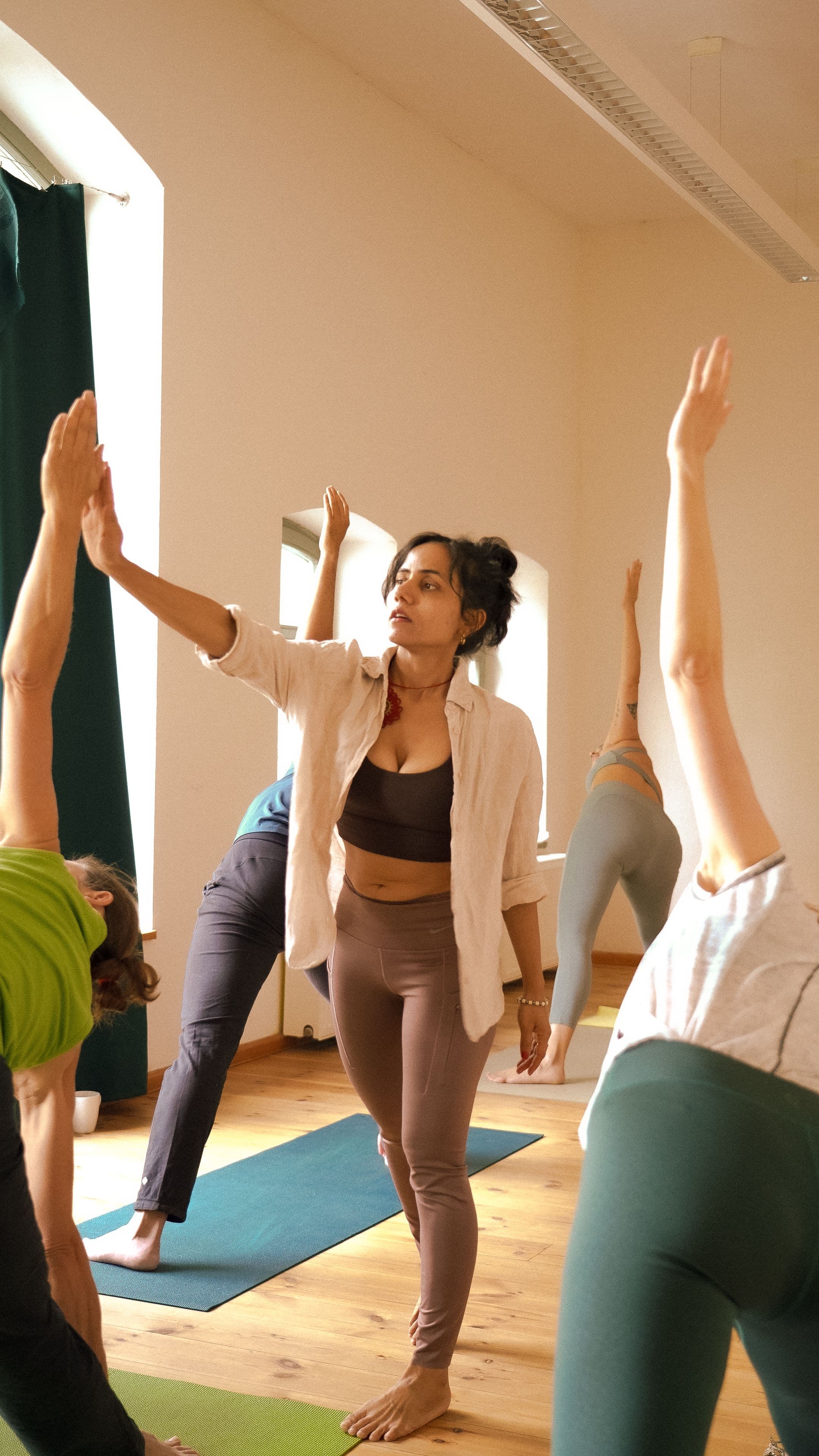
Hatha Yoga, by comparison, slows things down further and holds classical postures for longer stretches, without the chanting or fixed kriya structure. None of these approaches is better. They're built for different moods and different days. If you're still deciding which class suits you, our guide to choosing a yoga studio in Berlin walks through what to consider before booking your first session.
Kundalini's fixed, repetitive kriyas set it apart from the flowing pace of Vinyasa or the held stillness of Hatha.
Where can you actually practice Kundalini yoga in Berlin?
Berlin has a genuine, if scattered, Kundalini scene. Booking platforms like Eversports list around two dozen studios and independent teachers offering it across the city, and ClassPass includes it as a searchable category too. Dedicated teachers such as Carolin Hoffmann run their own regular weekly courses rather than sporadic pop-up classes.
In Friedrichshain specifically, teacher Anja runs a structured Kundalini course booked over multiple weeks rather than single drop-ins. That neighbourhood also happens to be home to one of Yogicescape's two studios, alongside our Prenzlauer Berg location. For a closer look at what else is happening in that part of the city, see our complete guide to yoga in Friedrichshain.
Kundalini yoga in Berlin runs mainly through small dedicated teachers and studio listings rather than big chain studios.
What does breath work actually feel like in a Kundalini class?
Breath is the backbone of Kundalini practice. Classes use specific breathing patterns like Breath of Fire, a fast, rhythmic breath through the nose, held for set counts or minutes at a time. It's intense at first, and most teachers build up gradually rather than starting beginners at full intensity.
That kind of breath-first structure is something Yogicescape leans into as well, just through a different door. Our Breathwork & Pranayama classes work with breathing techniques on their own, without the postures or chanting, which can feel more approachable if the full Kundalini format sounds like a lot at once. If pranayama specifically has caught your interest, our Pranayama & Breathwork Teacher Training goes deeper into the mechanics and teaching of it.
Fast, patterned breathing is central to Kundalini classes, and it's a skill you can also build through dedicated pranayama practice.
Does chanting and mantra work fit into Kundalini classes?
Yes, mantra chanting shows up in most Kundalini classes, usually at the start and end. Teachers guide the group through the sounds, so no prior knowledge of Sanskrit or Gurmukhi is expected. It's typically simple, repeated phrases rather than long recitations.
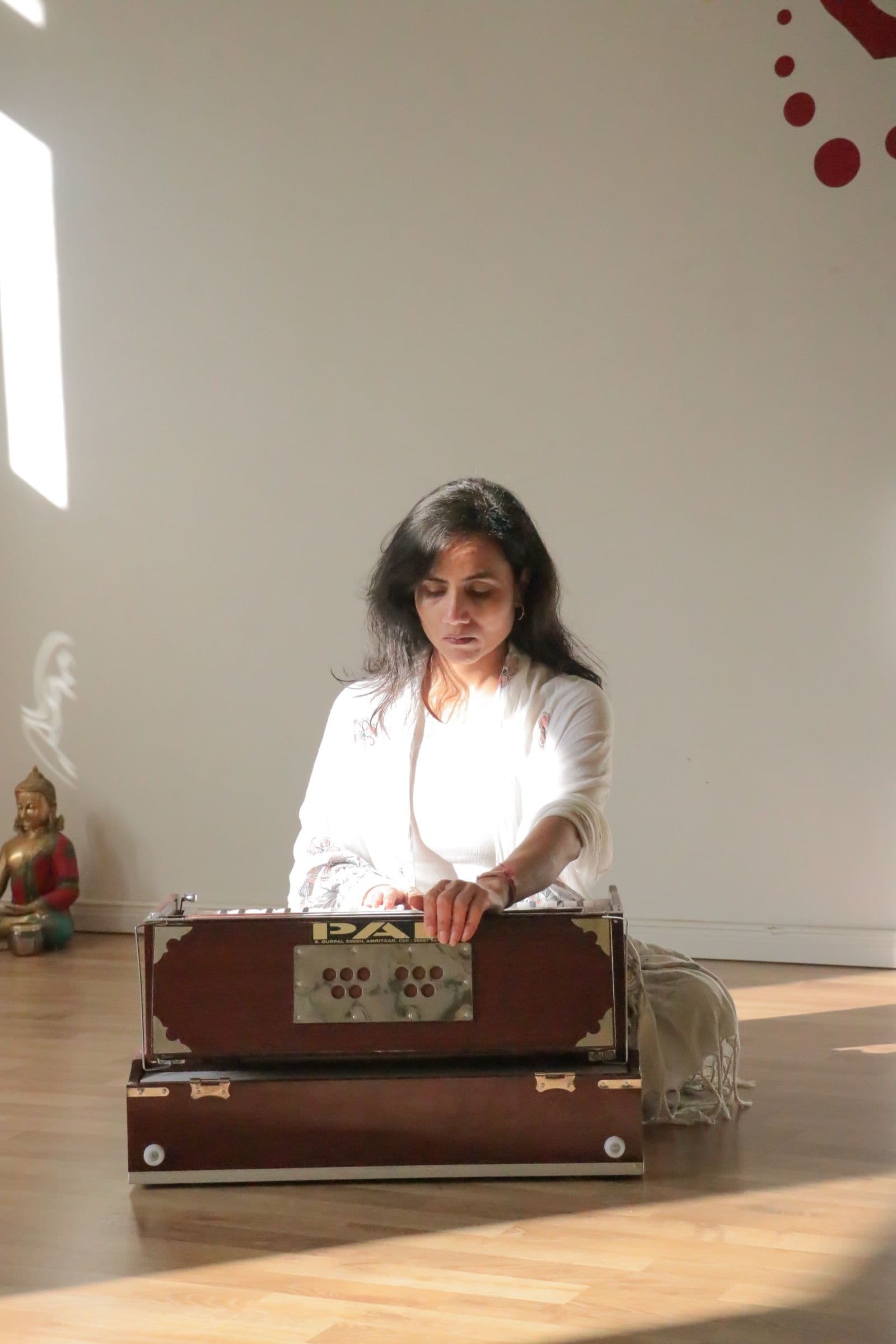
If the sound and chanting side is what draws you in more than the physical postures, that's worth noting. Yogicescape runs a separate Mantra Chanting Workshop that focuses specifically on voice, sound and repetition, without the kriya structure around it. It's a good option if you want to explore chanting on its own terms.
Chanting is a built-in part of most Kundalini classes, guided step by step, with no prior experience required.
Should you try Kundalini, or start somewhere gentler?
There's no single right entry point. Kundalini's structure can actually suit total beginners well, since the sequences are fixed and the teacher walks you through each part. Some people find that easier than a freer-flowing class where they're not sure what's coming next.
If you're newer to yoga altogether and want a slower, more classical starting point instead, Hatha Yoga at Yogicescape is worth a look. And if energy work and stillness are what you're really after, rather than posture practice, a Sound Bath session offers a different route to that same settled, quiet state that many Kundalini practitioners describe experiencing by the end of class.
Kundalini's fixed structure makes it surprisingly approachable for beginners, but it's one path among several toward stillness.
FAQ
Is Kundalini yoga good for beginners?
Yes. Classes are built as repeated sets, so you don't need flexibility or prior yoga experience. Teachers usually explain each posture and breath pattern before starting, which makes it approachable for first-timers.
How is Kundalini different from Vinyasa or Hatha?
Kundalini uses fixed sequences called kriyas that combine breath, movement, chanting and stillness. Vinyasa links movement to breath in a flowing way, while Hatha slows down to hold classical postures. All three work with breath, but the structure and pace differ.
Where can I find Kundalini yoga classes in Berlin?
Berlin has small dedicated Kundalini studios plus wider booking platforms that list many classes across the city. Studios in Friedrichshain and elsewhere also run regular Kundalini courses.
Does Yogicescape teach Kundalini yoga?
Not as a named class. If you're drawn to the breath and energy side of Kundalini, our Breathwork & Pranayama classes and Sound Bath sessions in Prenzlauer Berg and Friedrichshain offer a related, grounded way to explore similar territory.
Do I need to chant or know Sanskrit for Kundalini yoga?
Some classes include mantra chanting, but teachers usually guide you through the sounds. You don't need prior knowledge. If chanting interests you specifically, Yogicescape's Mantra Chanting Workshop is a good place to start.
How often should I practice Kundalini yoga to notice a difference?
There's no fixed rule and results vary by person. Many students find that a steady weekly rhythm, even one class, helps build familiarity with the breath and movement patterns over a few weeks.