
30 January 2025 · YogicEscape Berlin
Yoga and Sound Healing: Find the Right Practice for You
Explore yoga vs. sound healing: Yogicescape’s sessions and retreats (sound/spiritual) transform wellness journeys.
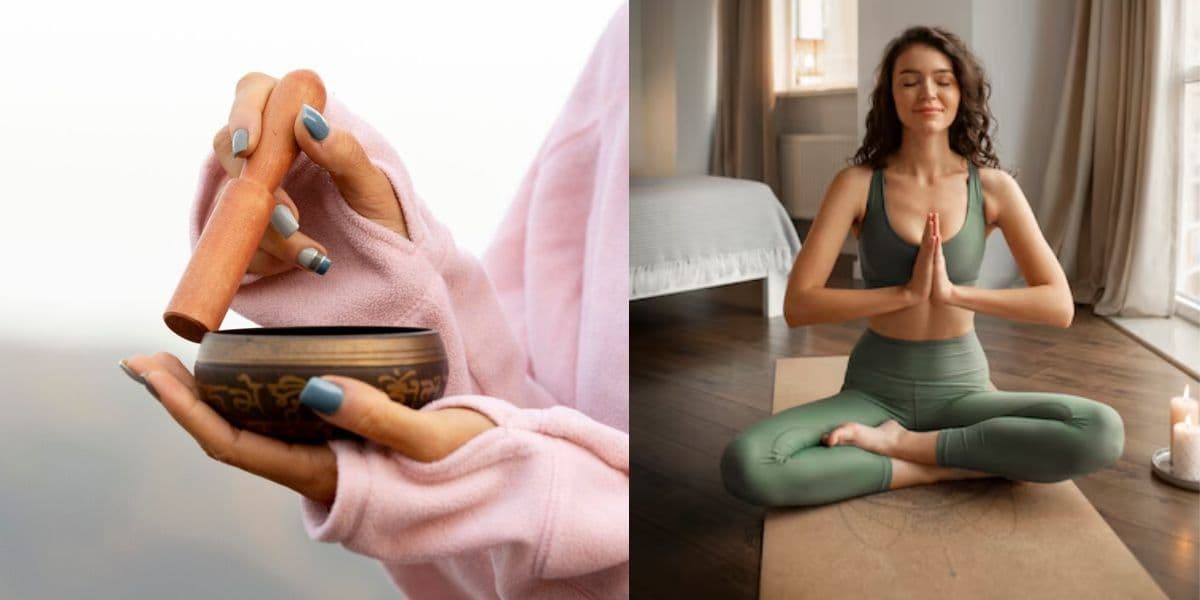
Yoga and sound healing reach the same goal from opposite directions: yoga is an active practice of postures, breathwork and meditation, while a sound bath is entirely receptive — you lie still as Tibetan bowls, gongs and chimes wash over you. Research by Goldsby et al. (2017) found that a single singing-bowl meditation significantly reduced tension, anxiety and depressed mood, with the strongest effect in first-timers. Choose yoga when you want to move and build strength, sound healing when you want deep rest without effort — or combine both in one session.
At Yogicescape, we believe both yoga and sound healing are powerful practices for achieving inner peace and harmony. However, choosing between the two depends on your personal needs and goals. Here's a comparison to help you decide:
Yoga: Movement, Breath, and Mindfulness
Yoga is a holistic practice that combines physical postures, breathing techniques, and meditation to promote mental and physical well-being. Practicing yoga regularly can improve flexibility, strength, and balance while reducing stress. It’s perfect for those looking for an active, movement-based approach to relaxation and self-awareness.
Sound Healing: Vibrations and Deep Relaxation
Our sound healing Berlin sessions offer a unique way to achieve deep relaxation through vibrations. Instruments like Tibetan bowls, gongs, and chimes create sound waves that help release emotional and physical tension. A Berlin sound bath or Berlin sound therapy session is ideal for those who prefer a passive experience to calm the mind and rejuvenate the soul.
When to Choose Yoga
If you want to build physical strength and flexibility while also working on mindfulness, yoga is the way to go. Many of our yoga and sound healing sessions combine both practices for a well-rounded experience.
When to Choose Sound Healing
Sound healing is perfect for anyone seeking emotional and spiritual healing, profound relaxation, and inner peace. Whether you're visiting a soul healing retreat or attending everyday sessions at our studio, sound healing can help realign your energy and restore balance to your mind and body.
Combining the Two
Some of our retreats, such as a sound healing retreat, integrate both yoga and sound healing. These combined practices offer a balanced approach to wellness by harmonizing the body and mind through movement and sound.
Conclusion
Whether you’re drawn to the physical benefits of yoga or the deep relaxation of Tibetan sound healing, both practices offer unique paths to wellness. At Yogicescape, we provide the best experiences in Berlin, combining yoga and sound therapy for a transformative journey. Explore a spiritual healing retreat with us visit our studio in Prenzlauer Berg Studio or Friedrichshain Studio and discover what resonates with your needs as you embark on a path of healing and self-discovery.
FAQs
Sound healing meditation primarily focuses on using sound frequencies (such as singing bowls, gongs, and mantras) to induce deep relaxation and healing, while yoga is a physical, mental, and spiritual practice that involves postures (asanas), breath control (pranayama), and meditation for overall well-being.
Absolutely! Many practitioners integrate sound healing into their yoga sessions, using sound therapy during meditation or savasana (final relaxation pose) to enhance relaxation and mindfulness.
Both are effective for stress relief. Yoga helps release physical and mental tension through movement and breath control, while sound healing meditation calms the nervous system and promotes deep relaxation through vibrations and frequencies.
Yes, studies suggest that sound healing can reduce stress, lower blood pressure, and improve mental clarity by promoting a meditative state and balancing brainwave activity.
While yoga offers physical, mental, and spiritual benefits, sound healing specifically targets vibrational healing, which can penetrate deeper into the subconscious mind and energetic body. However, yoga itself is highly therapeutic and transformative.
Both are beginner-friendly. Sound healing meditation requires minimal effort—simply listening and receiving the sounds—while yoga may require some physical engagement but can be modified for all levels.
If you prefer a more active practice that involves movement and breathwork, yoga is ideal. If you seek deep relaxation and effortless meditation, sound healing may be a better fit.
Yes, sound healing is known to improve sleep quality by reducing stress, slowing brainwave activity, and inducing a state of deep relaxation, making it beneficial for insomnia and sleep disturbances.
Yes, yoga improves flexibility, strength, and endurance, whereas sound healing meditation does not involve physical movement but supports mental and emotional well-being.
Many wellness centers and yoga studios, including Yogicescape in Berlin, offer both yoga classes and sound healing therapy, allowing you to explore and find what resonates best with you.
What the Research Says
Research in the Journal of Evidence-Based Complementary & Alternative Medicine (Goldsby et al., 2017) found that a single Tibetan singing-bowl meditation significantly reduced tension, anxiety and depressed mood — with the strongest effect in people who had never tried it before.
A 2017 meta-analysis in Psychoneuroendocrinology (Pascoe et al.) found that yoga practice measurably lowers physiological stress markers, including cortisol, blood pressure and resting heart rate.
FAQ: Sound Healing vs. Yoga
What is the difference between sound healing and yoga?
Yoga combines physical postures (asanas), breath control (pranayama) and meditation in an active practice. Sound healing uses the frequencies of singing bowls, gongs and mantras to induce deep relaxation — you simply lie down, listen and receive.
Can sound healing improve sleep?
Yes. Sound healing slows brainwave activity and reduces stress, which is why it is often used for insomnia and restless sleep.
Can yoga and sound healing be combined?
Yes — many teachers play singing bowls during meditation or savasana at the end of a yoga class, and some retreats build entire sessions around the combination of movement and sound.
Which is easier for beginners?
Both are beginner-friendly. Sound healing requires nothing more than lying down and listening, while yoga poses can be modified for any level of fitness or flexibility.