
10 June 2026 · Yogicescape Team
Holotropic Breathwork in Berlin: What to Know Before You Try It
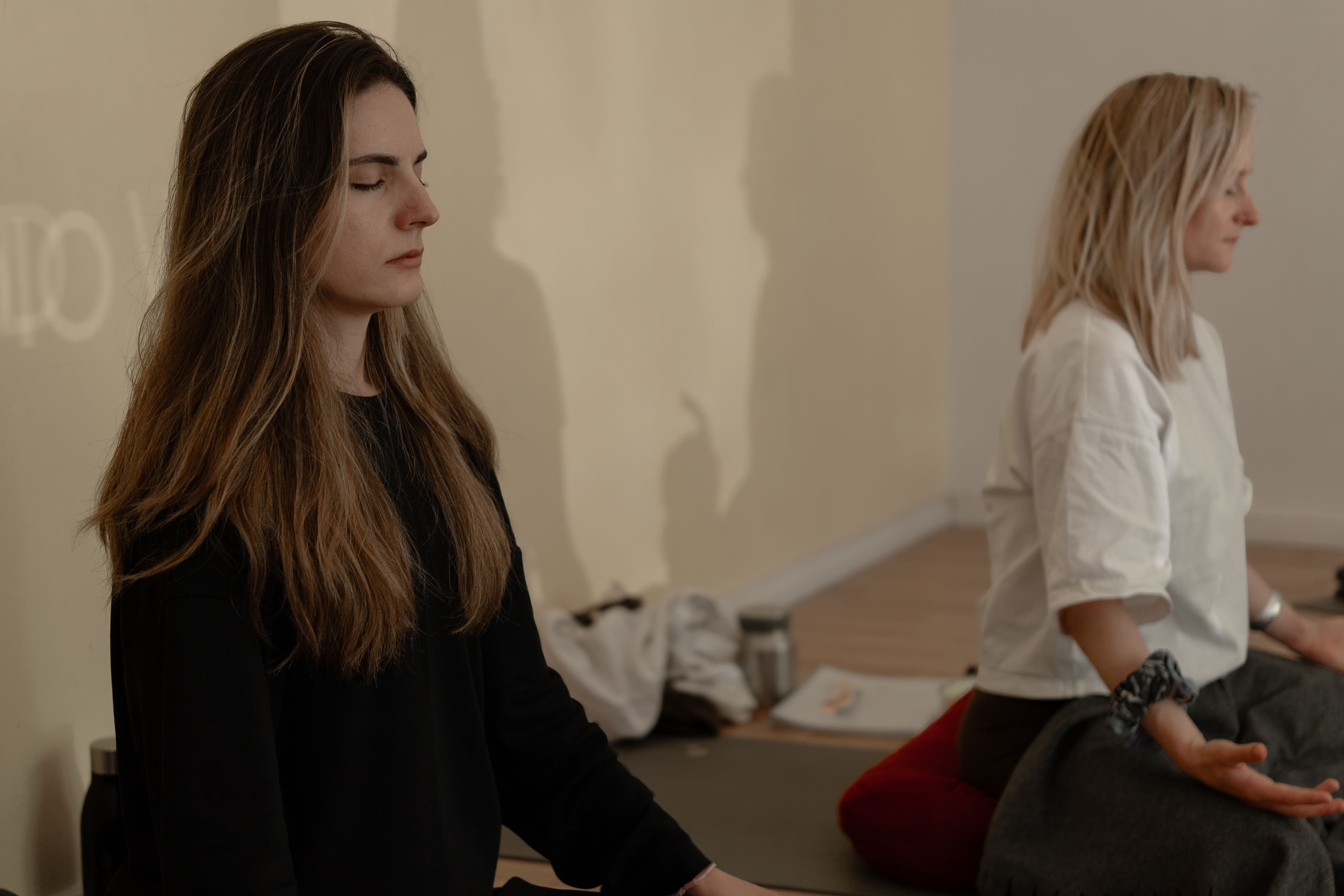
Holotropic breathwork is a guided practice of fast, deep breathing — usually done lying down, with music and a trained facilitator. It can bring on vivid inner experiences, emotional release, and a sense of expanded awareness. Berlin has a small but dedicated scene for it, and Yogicescape's Breathwork & Pranayama classes and workshops offer a grounded entry point for curious beginners.
Picture this: you're lying on a mat in a dim Berlin room. Music fills the space — tribal drums, then sweeping strings. You breathe faster and deeper than you ever do in daily life. Within twenty minutes, your hands are tingling. Your mind starts to drift somewhere unexpected.
That is the world of holotropic breathwork. It is not a relaxation technique. It is not a gentle wind-down class. It is something closer to an inner journey — one that uses nothing but your own breath. Thousands of people across Berlin seek it out each year, drawn by word of mouth and a growing body of research. If you are curious but unsure where to start, this guide lays it all out plainly.
Holotropic breathwork is a guided practice of fast, deep breathing — usually done lying down, with music and a trained facilitator. It can bring on vivid inner experiences, emotional release, and a sense of expanded awareness. Berlin has a small but dedicated scene for it, and Yogicescape's Breathwork & Pranayama classes and workshops offer a grounded entry point for curious beginners.
Key statistics
- A 2025 study found that circular breathwork significantly lowered CO2 levels in participants — and that drop correlated with the strength of altered states they reported.
- A meta-analysis of randomised controlled trials found that breathwork interventions produced significant reductions in stress and anxiety compared to control groups.
- A scoping review found breathwork to be a promising intervention for adults with clinically diagnosed anxiety disorders.
- A clinical report on holotropic breathwork used with over 11,000 psychiatric inpatients noted it was generally well-tolerated in a supervised hospital setting.
- Research on holotropic breathwork found significant improvements in self-awareness scores among participants who completed a structured programme.
- Preliminary results from a study on Holorenic breathwork — a related method — found reductions in anxiety scores alongside improvements in heart rate variability.
What exactly is holotropic breathwork?
The name comes from the Greek words for 'moving toward wholeness.' Psychiatrist Stanislav Grof developed the practice in the 1970s after LSD-assisted therapy was banned. He noticed that deep, rhythmic breathing could produce similarly profound inner states — without any substance at all.
A typical session lasts two to three hours. You lie down, close your eyes, and breathe faster and fuller than normal. A facilitator guides the room. Evocative music carries you through phases of the experience. You might feel deep emotion, vivid imagery, or physical sensation. Some people laugh. Some cry. Some feel nothing unusual at all.
It is different from pranayama or box breathing. Those practices are precise, controlled, and often gentle. Holotropic breathwork is more open-ended. The intention is to let whatever arises, arise — and to meet it with curiosity rather than control.
After the breathing, participants do a short bodywork session if needed, then draw or paint a mandala to ground the experience. Integration — making sense of what came up — is considered just as important as the session itself.
Holotropic breathwork uses sustained fast breathing and music to access deeper layers of inner experience, without any substances.
What does the science say about breathwork?
The research is young but growing. A 2025 study published in Communications Psychology found that circular breathwork — a close cousin of holotropic breathing — significantly reduced CO2 in participants' blood. That physiological shift strongly correlated with how vivid and altered their inner experience felt. [2]
Beyond altered states, breathwork shows real promise for everyday wellbeing. A meta-analysis of randomised controlled trials found meaningful reductions in stress and anxiety among people who practised breathwork regularly. [17] A separate scoping review pointed to breathwork as a promising tool for adults living with anxiety disorders. [16]
The self-awareness angle is interesting too. A study measuring holotropic breathwork's effect on personal development found significant gains in participants' self-awareness scores after a structured programme. [9] And preliminary data from a related method found both lower anxiety scores and better heart rate variability after sessions. [22]
Scientists are careful to note that most studies are still small. More large-scale research is needed. But the direction of the evidence is consistent: breathing practices that alter your physiology tend to shift your mental and emotional state in measurable ways.
Early research consistently links deep breathwork to lower stress, reduced anxiety, and measurable gains in self-awareness.
Is holotropic breathwork safe? Who should be careful?
For most healthy adults, holotropic breathwork is considered safe when practised with a trained facilitator. A clinical report covering over 11,000 psychiatric inpatients found the method was generally well-tolerated in a supervised hospital setting. [19] That is a significant data point — these were not typical wellness participants.
That said, the practice is intense. The rapid breathing raises your heart rate and changes your blood chemistry. Tingling, muscle cramps, and strong emotion are common. These usually pass quickly once normal breathing resumes.
Certain conditions require caution or mean you should avoid the practice entirely. These include cardiovascular conditions, epilepsy, a history of psychosis, pregnancy, and recent surgery. A responsible facilitator will always screen participants beforehand and make space to discuss individual situations.
If you are drawn to breathwork but want a gentler entry point first, Yogicescape's Breathwork & Pranayama classes offer a softer introduction. You learn how the breath affects your nervous system, build awareness, and develop a foundation before stepping into anything more intense.
Holotropic breathwork is generally safe for healthy adults with a trained facilitator — but always disclose any health conditions beforehand.
What is the holotropic breathwork scene like in Berlin?
Berlin has one of the most active alternative wellness scenes in Europe. Holotropic breathwork fits right in. There are dedicated facilitators running certified weekend workshops in the city, particularly in and around the central districts. [1] The Holotropic Association Europe also lists Berlin-area retreats and workshops, including multi-day formats north of the city. [5]
The community is small but serious. Most practitioners have trained with Grof-certified teachers and follow a clear ethical framework. Sessions are typically run in pairs — one person breathes while the other sits as a 'sitter,' offering gentle support if needed. Then you swap. This buddy system is a defining feature of the method.
Berlin's yoga and breathwork studios increasingly offer related practices that sit on the same spectrum. Yogicescape runs Breathwork & Pranayama classes at both its Prenzlauer Berg and Friedrichshain studios. These are not holotropic sessions, but they build genuine breath awareness and nervous system literacy — a smart foundation for anyone curious about deeper work.
For those ready to go further, the Pranayama & Breathwork Teacher Training at Yogicescape's Prenzlauer Berg location (Naugarder Str. 14) offers structured, in-depth study of breathwork traditions and techniques.
Berlin has a dedicated holotropic breathwork community, and local studios like Yogicescape offer a genuine foundation through regular breathwork classes.
How is holotropic breathwork different from what yoga studios offer?
This is a fair question. Breathwork shows up across many yoga classes, but it usually means something quite different from holotropic practice.
In a yoga class, pranayama is typically used to prepare the body and mind for movement or meditation. Techniques like alternate nostril breathing or kapalabhati are precise, relatively short, and grounded in classical tradition. They are valuable — but they are not designed to induce non-ordinary states.
Holotropic breathwork is deliberately open-ended. It runs for two to three hours. It uses music to guide emotional responses. It is specifically designed to move you out of ordinary waking consciousness and into a deeper layer of experience.
Yogicescape's Breathwork & Pranayama classes and the Pranayama & Breathwork Teacher Training sit closer to the yoga tradition. They are excellent for building real skill and understanding. Think of them as building the foundation — deepening your relationship with breath before you step into more intensive territory.
The two approaches complement each other well. Many people who eventually try holotropic breathwork find that their yoga and pranayama practice made the experience richer and easier to integrate.
Yoga pranayama and holotropic breathwork are different tools — both valuable, and often complementary when practised over time.
What should you expect at your first session?
A genuine holotropic session is typically a full weekend. Friday evening covers group introductions, theory, and safety guidelines. Saturday and Sunday each include one breathing session — you breathe in the morning, sit for a partner in the afternoon, or vice versa.
The room is usually darkened. Mattresses and blankets are laid out. Music starts softly, then builds. The facilitator guides you into the breathing pattern — deeper and faster than normal, but not forced. Your only job is to follow your breath and stay open to what arises.
Expect the unexpected. Some people experience intense emotion or vivid imagery. Others feel deep physical sensation or unusual calm. A small number feel very little in their first session. All of these are valid responses.
Afterwards, time is given for rest, sharing in small groups, and drawing a mandala. Integration conversations continue through the weekend. Most participants describe feeling raw but clear by Sunday evening — like something has shifted, even if they cannot yet name what.
If you want to get a feel for what deep breathwork does to your system before committing to a full weekend, Yogicescape's Breathwork & Pranayama classes are a real and accessible starting point in Berlin.
A first holotropic session is a full weekend of preparation, breathing, integration, and rest — go with curiosity and no fixed expectations.
How do you integrate the experience afterwards?
Integration is the part that many beginners underestimate. The breathing session itself is two or three hours. But processing what came up can take days or even weeks.
Most facilitators recommend keeping a journal. Write down images, emotions, or physical sensations as soon as possible after the session — before the details fade. Drawing or painting is encouraged for the same reason. The mandala you create at the end of a session is a visual record of your inner state.
Gentle movement helps too. Somatic Movement classes — which Yogicescape offers — are particularly well-suited here. They help the body process and release what the breath stirred up, without forcing or analysing.
Talking with a therapist or integration coach who understands non-ordinary states is valuable if strong material surfaced. Some experiences are joyful and easy to absorb. Others raise questions that deserve careful attention.
Finally: be patient. Integration is not a problem to solve. It is a process of letting the experience settle into your life at its own pace. The breath opened a door. Walking through it thoughtfully is how the real work happens.
Integration — journalling, gentle movement, and reflection — is where a breathwork session becomes lasting personal insight.
FAQ
Is holotropic breathwork the same as Wim Hof breathing?
No. They share fast, deep breathing as a mechanism, but the intention and format are different. Wim Hof focuses on cold tolerance, breath retention, and performance. Holotropic breathwork is a guided, long-form practice aimed at accessing non-ordinary states of consciousness and deeper self-awareness. They produce different physiological and experiential results.
Do I need experience in yoga or meditation before trying holotropic breathwork?
No prior experience is required. That said, even a few weeks of yoga pranayama or a Breathwork & Pranayama class — like those at Yogicescape in Berlin — gives you a helpful head start. You arrive already familiar with how your breath affects your nervous system, which makes the deeper experience easier to navigate.
How long does a holotropic breathwork session last?
A full session typically runs two to three hours of active breathing, plus time for bodywork, integration, and mandala drawing. Most workshops are spread across a full weekend to allow proper preparation beforehand and genuine integration time afterwards. One-day taster sessions are sometimes available but are less common.
Can holotropic breathwork be done alone?
Not safely, no. The practice is specifically designed to be done with a trained facilitator and a partner 'sitter.' The intensity of the experience — emotional, physical, and psychological — means having skilled, present support is not optional. Always seek a certified facilitator with recognised training.
Where can I try breathwork in Berlin if I am not ready for a full holotropic session?
Yogicescape's Breathwork & Pranayama classes at its Prenzlauer Berg and Friedrichshain studios are an accessible starting point. The Pranayama & Breathwork Teacher Training at Naugarder Str. 14 goes deeper for those ready to study seriously. Both offer genuine breath education in a safe, grounded Berlin setting.
What is the difference between holotropic breathwork and pranayama?
Pranayama is a classical yoga practice using precise breathing techniques to regulate energy and prepare for meditation. Holotropic breathwork is a modern therapeutic method using sustained fast breathing to access non-ordinary states. Both work with breath as a tool, but their goals, formats, and depths of intensity are quite different.
Are there any risks I should know about?
Intense physical sensations — tingling, muscle cramps, strong emotion — are common and usually pass quickly. The practice is not recommended for people with cardiovascular conditions, epilepsy, psychosis, pregnancy, or recent surgery. Always complete a health screening with your facilitator beforehand and disclose any relevant medical history honestly.
How often should I do holotropic breathwork?
Most practitioners recommend leaving at least four to six weeks between sessions to allow full integration. Rushing from session to session without processing what arose can be counterproductive. Complementing occasional holotropic work with regular yoga pranayama or Breathwork & Pranayama classes helps build a steady, sustainable relationship with your breath.
Sources
- Holotropic Breathwork Berlin
- Decreased CO2 saturation during circular breathwork supports emergence of altered states of consciousness - PMC
- Decreased CO2 saturation during circular breathwork supports emergence of altered states of consciousness | Communications Psychology
- In the beginning was the breath? Breathwork in practice and science | MIND Blog
- Double Holotropic Breathwork® North of Berlin - 01.05. - 04.05.2025
- Comprehensive Research & Studies on Holotropic Breathwork
- Holotropic Breathwork Berlin (@breathworkberlin)
- Group Activities to Support Addiction Recovery
- Measure of Significance of Holotropic Breathwork in the Development of Self-Awareness
- Holotropic Breathwork Europe
- Discover Holotropic Breathwork Events & Activities in Berlin, Germany | Eventbrite
- Holotropic Breathwork® Weekend in Berlin - Holotropic
- Holotropic Association Europe
- Holotropic Breathwork® Berlin - 07.03. - 09.03.2025
- Breathing Therapy - berlinpsychotherapeut
- Breathwork Interventions for Adults with Clinically Diagnosed Anxiety Disorders: A Scoping Review
- Effect of breathwork on stress and mental health: A meta-analysis of randomised-controlled trials
- Somatic Breathwork: The Benefits of Slow Breathing - Neurology Advisor
- (DOC) A Clinical Report on Holotropic Breathwork in 11,000 Psychiatric Inpatients in a Community Hospital Setting
- A Clinical Report on Holotropic Breathwork in 11,000 Psychiatric Inpatients in a Community Hospital Setting – breathwork-science
- Effects of High Ventilation Breathwork With Retention (HVBR) on Health
- Effects of Holorenic Breathwork on Anxiety and Heart Rate Variability: Preliminary Results – breathwork-science
- This Study Explores the Mental Health Impact of Two Akashic Records Sessions.